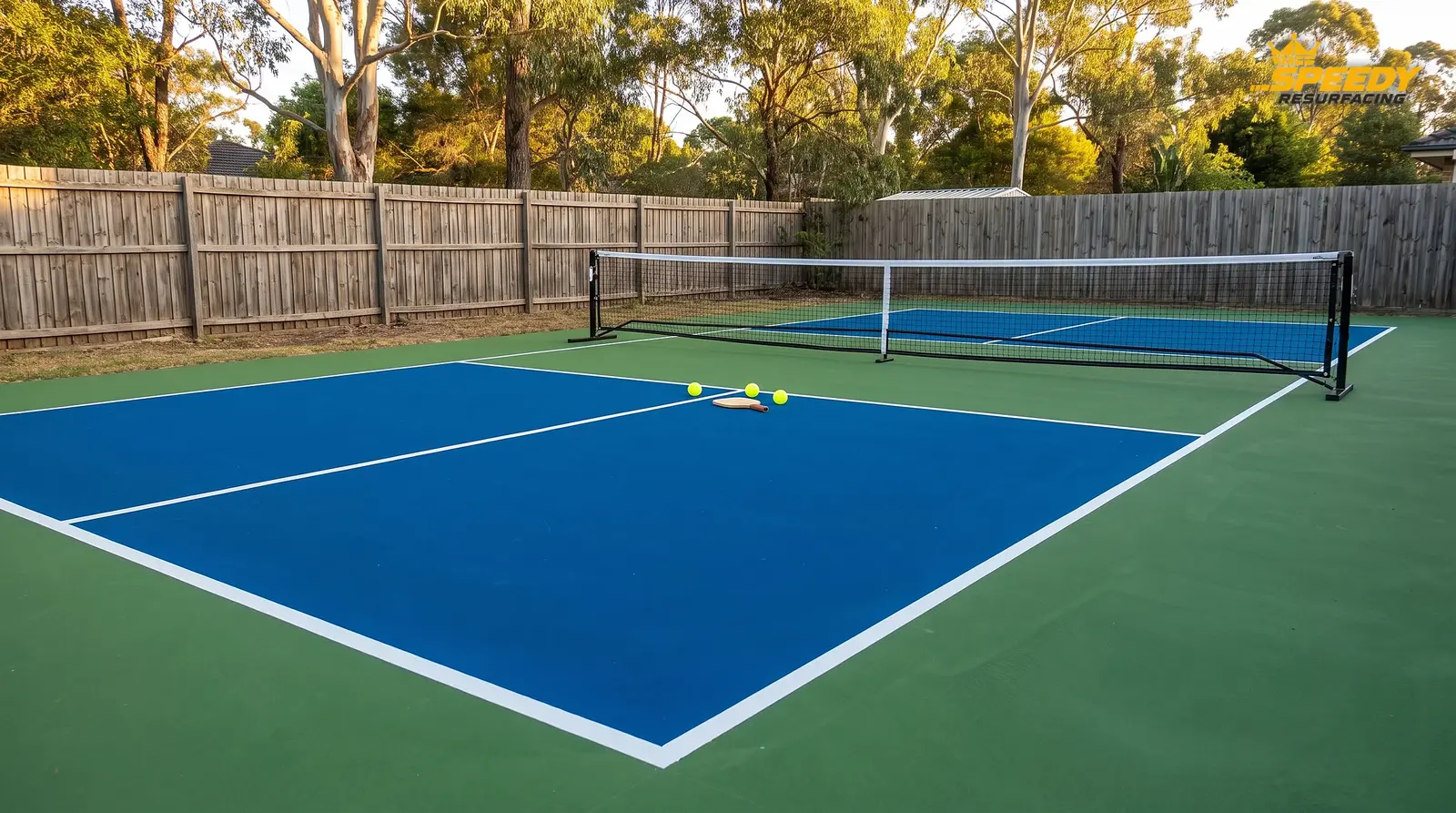

Pickleball Court Resurfacing Sydney: Colours, Layouts & Shared-Court Options
Existing concrete and asphalt courts across Sydney can be restored, resurfaced and repurposed for pickleball — if the base is sound, drained and has room to move. This guide covers what the substrate check involves, how the acrylic system is built up, which colour palettes give the best ball contrast, dedicated courts versus shared basketball and tennis overlays, how much space you really need, and when the court is ready to play again.
- Existing asphalt or concrete courts can be resurfaced for pickleball when the base is structurally sound, drains properly and has sufficient clearance — a five-factor inspection decides it.
- Acrylic resurfacers fill voids and seal sound pavement; they cannot stabilise a shifting sub-base, which needs civil repair first.
- Pickleballs are optic yellow or lime green, so choose a court palette with strong contrast — two-tone blue/green, charcoal with light-blue or red accents, or tournament green with terracotta.
- On shared courts, primary sport lines stay bold white and pickleball overlays use a distinct colour (light blue, yellow or grey) to create a clear line hierarchy.
- The playing court is 20 × 44 ft (6.10 × 13.41 m) with a 7 ft kitchen each side; allow a 30 × 60 ft (9.14 × 18.29 m) envelope per court for safe run-off.
- Coats touch-dry in 1–4 hours but full system cure for play takes 24–48 hours or more depending on humidity, temperature and sun.
Speedy Resurfacing acknowledges the Traditional Custodians of the land on which we live and work, including the Gadigal people of the Eora Nation across the Sydney basin. We pay our respects to Elders past, present, and emerging, and recognise their continuing connection to the land, waters, and culture of New South Wales.
Existing concrete and asphalt sporting courts across Sydney can frequently be restored, resurfaced and repurposed for pickleball, provided the base substrate is structurally sound, adequately drained and offers sufficient clearance. Whether adapting a private backyard area, upgrading a school facility or reconfiguring a public recreational space, professional court resurfacing restores surface traction, covers minor wear and applies high-visibility boundary lines tailored to how the facility is actually used.
At Speedy Resurfacing, court restoration goes beyond simply rolling a fresh layer of paint over an ageing surface. Operating as a specialised court division built on the foundation of Speedy Line Marking, the team evaluates base conditions, repairs localised surface defects, applies premium acrylic resurfacing systems and executes precise multi-sport line marking.
Can an Existing Asphalt or Concrete Court Be Resurfaced?
Before applying new acrylic coatings, the underlying substrate must undergo a comprehensive evaluation. Existing asphalt or concrete courts across Western Sydney endure heavy UV exposure, rain and temperature fluctuations that can weaken ageing binders over time. A thorough site inspection assesses five key factors:
- Cracks and structural movement: Distinguishing localised surface hairline cracks from deep structural movement joints.
- Low spots and ponding: Identifying areas where water accumulates and fails to drain within standard drying windows.
- Delamination and loose coatings: Checking for flaking, blistering or peeling layers from previous paint applications.
- Surface contamination: Locating oil stains, moss, algae or heavy dirt build-up that prevents coating adhesion.
- System compatibility: Ensuring the existing concrete or asphalt base is compatible with modern, flexible acrylic resurfacing products.
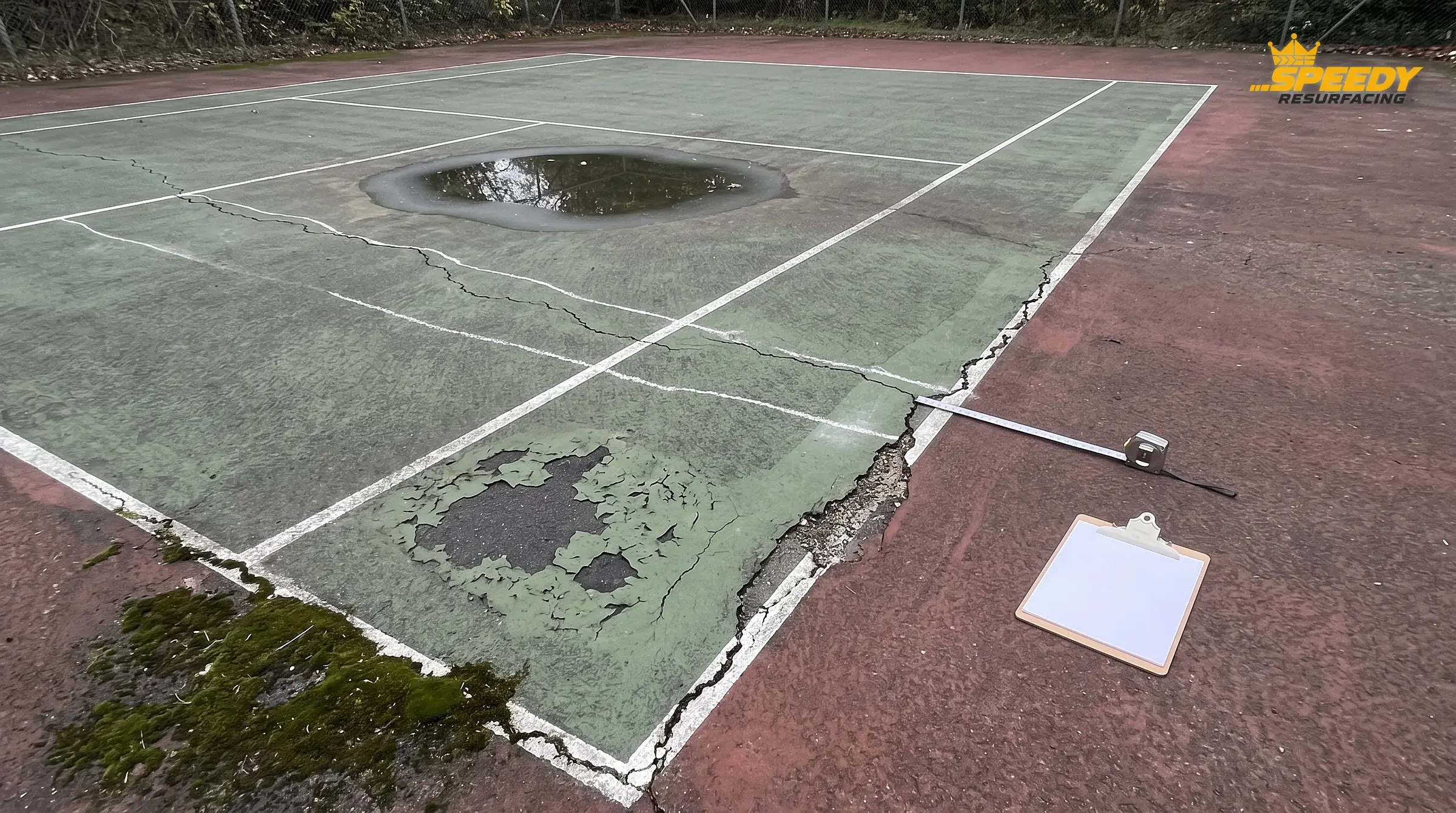
It is essential to distinguish between localised surface repairs, acrylic court resurfacing and full structural reconstruction. Specialised acrylic resurfacing systems fill surface voids, restore uniform texture and seal sound pavement bases against weather ingress. However, topical coatings and acrylic resurfacers cannot stabilise an unstable, shifting or severely cracked sub-base foundation. Where ground movement or severe structural failure is present, deeper engineering or civil reconstruction may be required before resurfacing can occur.
What Surface Restoration Involves
Achieving a durable finish requires a systematic preparation process designed around the specific condition of the site. Surface preparation dictates how well the final acrylic coating system adheres and performs over years of active play.
- 01
Mechanical cleaning & preparation
High-pressure washing and mechanical grinding remove dirt, loose debris, moss and failed existing coatings to establish a clean, textured anchor profile.
- 02
Targeted crack & surface repair
Specialised acrylic patching compounds and crack fillers treat localised surface voids, spalling and inactive cracks.
- 03
Levelling depressions
Low spots where water collects are filled using acrylic levelling coats to encourage uniform drainage across the playing field.
- 04
Acrylic resurfacer base coat
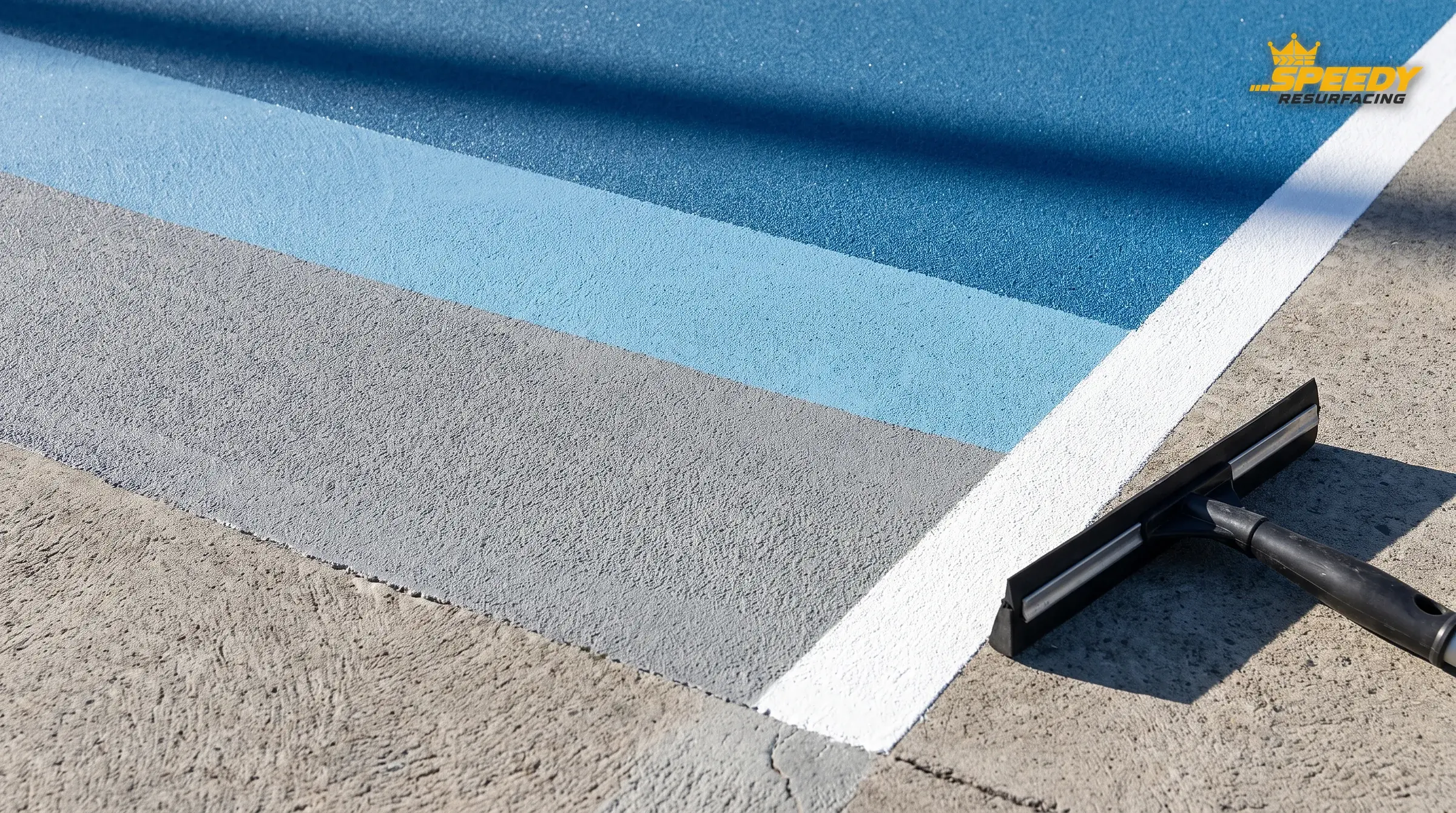
An acrylic resurfacer layer containing graded silica sand is applied across the court to unify the texture and hide minor surface imperfections.
- 05
Multi-layer colour system
UV-stable acrylic pickleball court surfaces are applied in multiple coats, combining premium pigments with fine aggregates to deliver consistent grip and true ball bounce.
- 06
Precision line marking
Specialised, high-durability line marking paint is applied with mathematical accuracy to define the playing zones.
Choosing Colours and Clear Line Contrast
Selecting an effective palette for acrylic pickleball court surfaces balances visual aesthetics with functional playability. Pickleballs are commonly optic yellow or lime green, meaning the playing area should provide sufficient visual contrast so players can track ball movement instantly against the court surface. Popular colour combinations contrast the inner playing area, the non-volley zone (commonly known as "the kitchen") and the surrounding out-of-bounds apron:
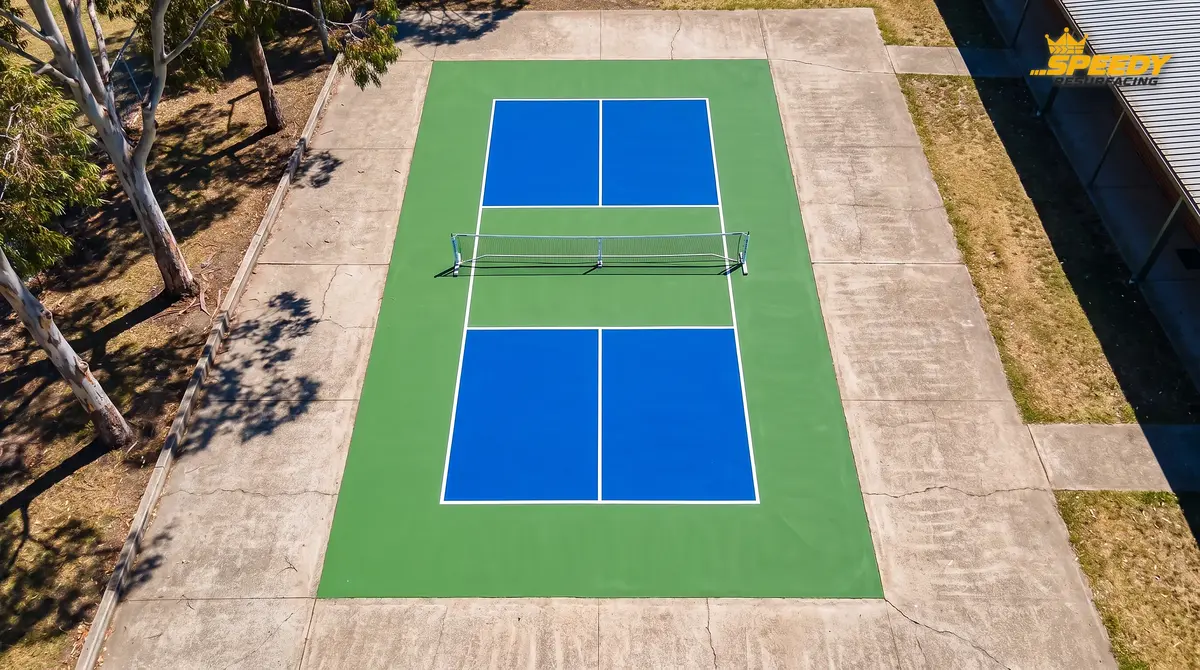
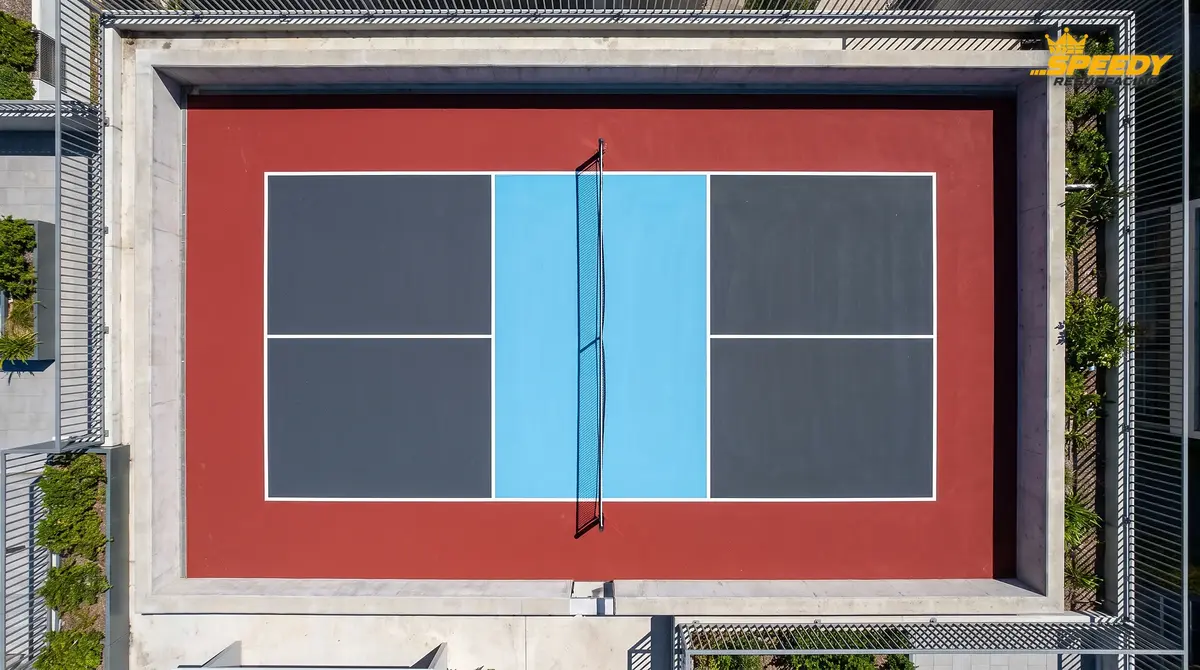
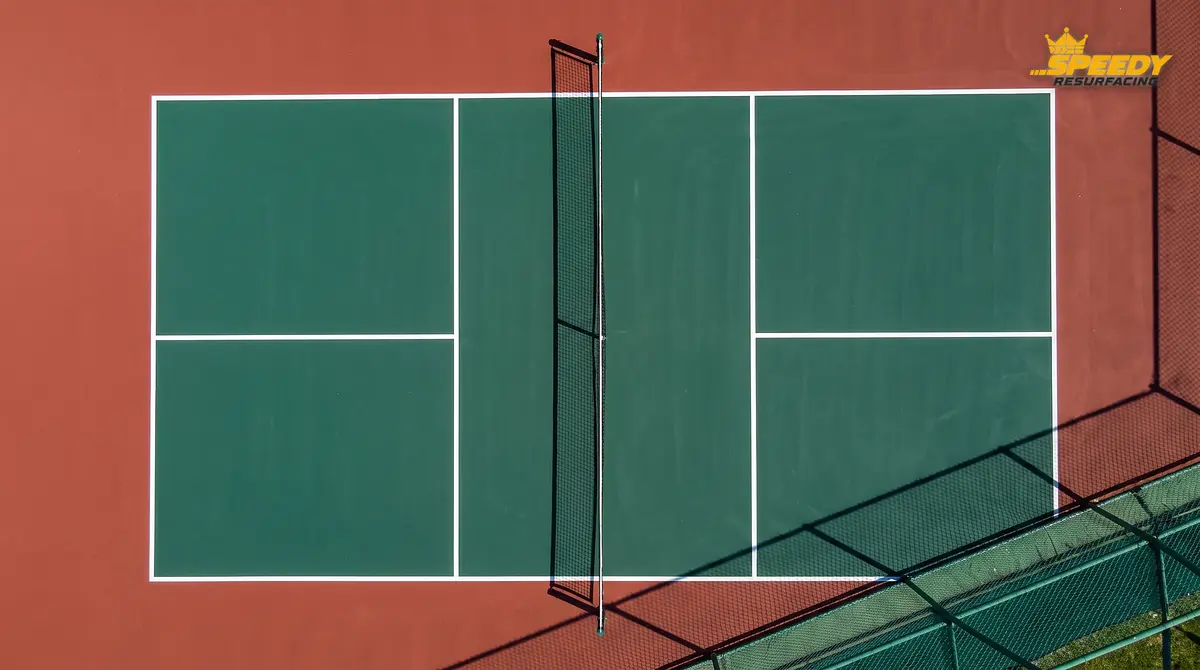
- Two-Tone Classic: Blue in-bounds playing area with green non-volley zones and outer surround.
- Modern Contrast: Dark grey or charcoal playing area paired with vibrant light-blue or red accent zones.
- Traditional Sport Green: Classic tournament green playing boundaries offset by contrasting terracotta borders.
When designing shared basketball and pickleball courts, line colour hierarchy is critical. Primary sport lines (such as full-court basketball markings) are typically applied in bold white, while secondary pickleball overlay lines use distinct, high-contrast colours like light blue, yellow or grey. This visual separation ensures that players on a multi-use surface can clearly distinguish their specific boundaries during fast-paced play.
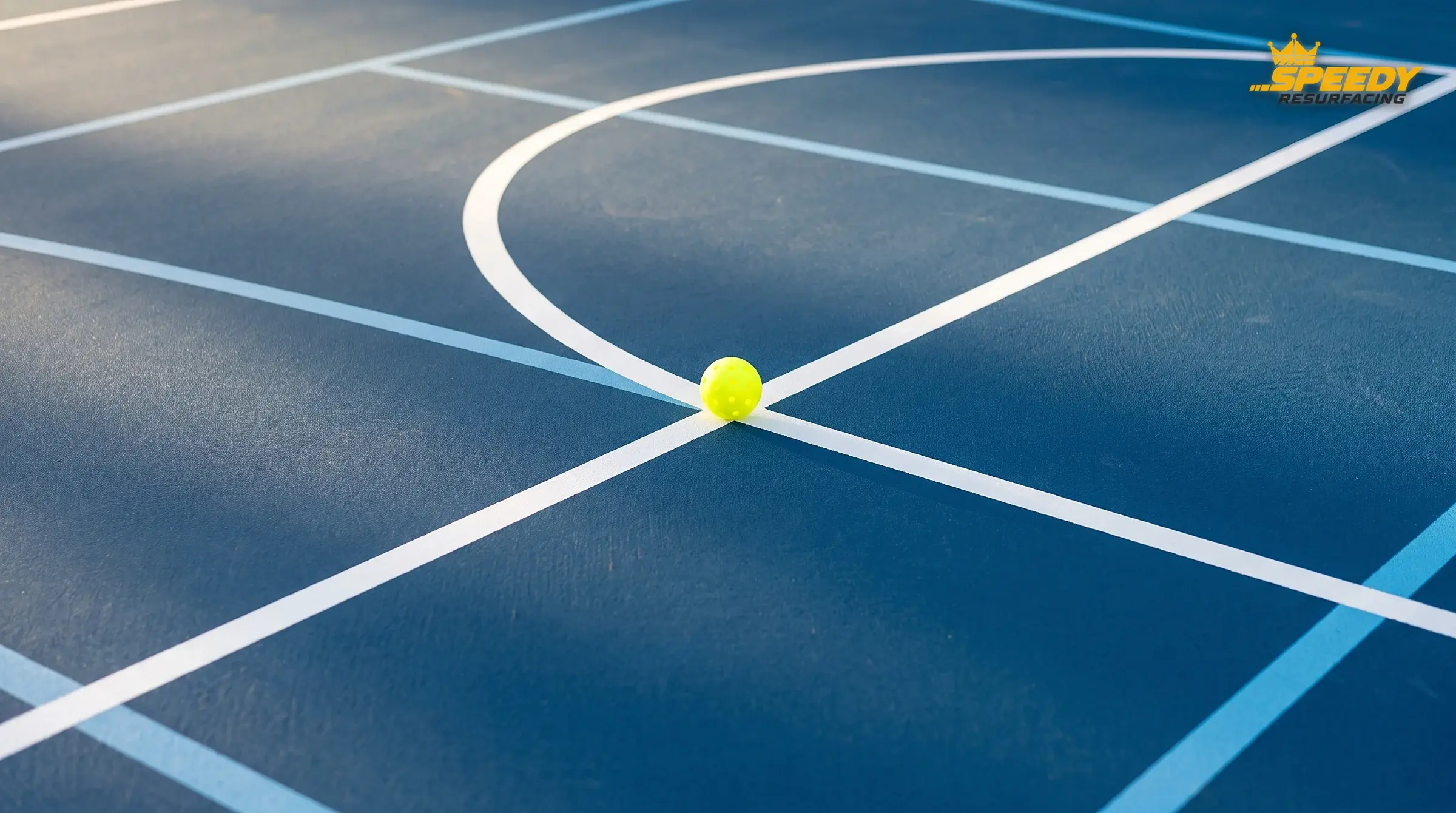
While facility owners can customise colours to match school or club branding, official tournament layouts should adhere to contrast guidelines specified by governing sporting bodies.
Dedicated Pickleball Courts versus Shared Layouts
Facility managers, schools and private property owners in Sydney often weigh the benefits of establishing dedicated single-use pickleball courts against constructing multi-sport court conversions.
Dedicated Pickleball Courts
Dedicated pickleball courts offer an uncluttered, single-purpose layout that provides ideal line visibility and optimal playing conditions. Permanent net set-ups can be integrated seamlessly, making this option ideal for dedicated facilities. However, restricting space to a single sport increases the overall footprint requirement per player capacity, requiring a clear, dedicated area of at least 30 by 60 feet per court during initial site inspections.
Multi-Court Conversions (Tennis / Netball)
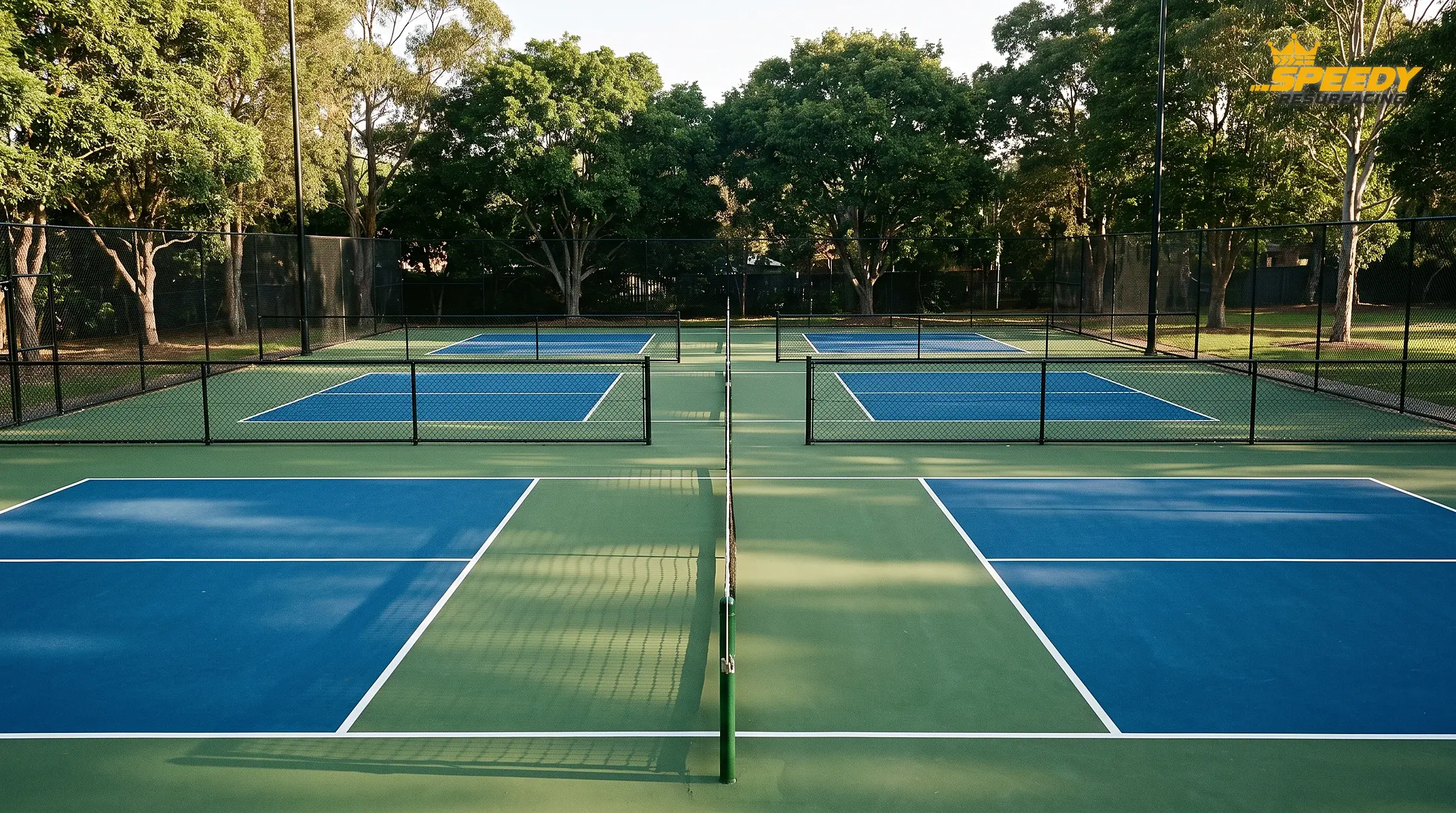
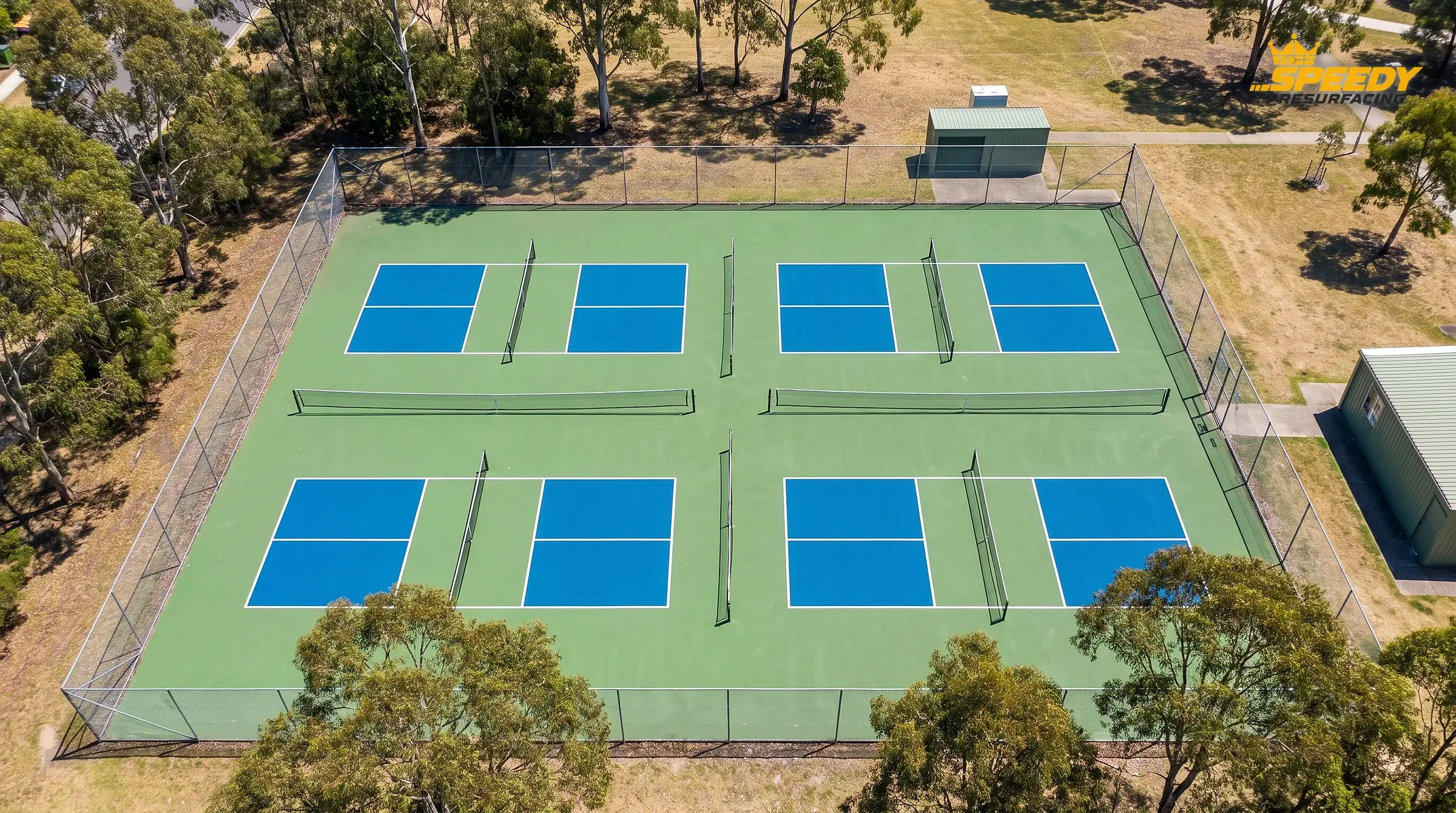
Converting large tennis or netball surfaces into multiple pickleball courts allows facilities to accommodate high player capacities and adaptable scheduling for schools, clubs and local councils. Designing multi-court layouts requires clear site rules for net positioning and line hierarchy. Primary inspection factors include assessing overall site dimensions, perimeter fencing locations and ensuring adequate player movement channels between adjacent courts.
When existing basketball or tennis lines are retained, line weight and colour selection prevent visual confusion. Portable net systems offer flexibility for multi-use facilities, whereas permanent in-ground sleeves provide a robust solution for dedicated recreational spaces.
How Much Usable Space Is Needed?
When planning a court installation or conversion, it is crucial to separate the marked playing rectangle from the total space required for player safety, movement and perimeter clearance. According to the USA Pickleball Official Rulebook, standard playing dimensions are:
- Playing court dimensions: 20 feet wide by 44 feet long (6.10 m × 13.41 m).
- Non-volley zone ("the kitchen"): Extends 7 feet (2.13 m) from the net on both sides across the full court width.
- Net specifications: Set at 36 inches high at the sidelines and 34 inches high at the centre.
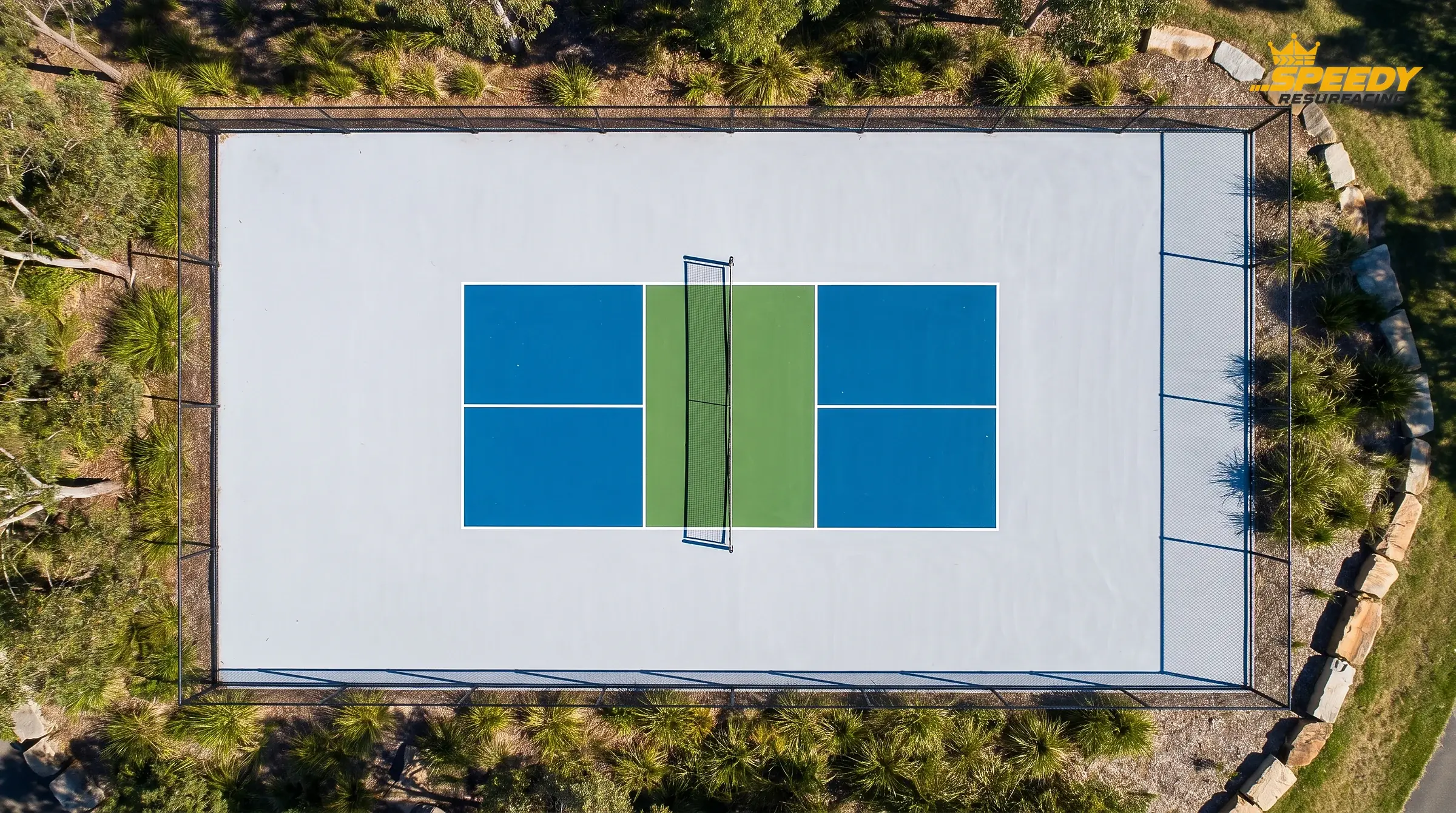
For safe player movement and tournament play, the recommended minimum overall envelope for a single pickleball court is 30 feet wide by 60 feet long (9.14 m × 18.29 m). This total footprint allows adequate run-off clearance beyond the sidelines and baselines, preventing player collisions with fences, light poles or surrounding structures. While multiple pickleball layouts can often be marked across an existing full-sized tennis or basketball court, site-specific measurements, orientation and perimeter access must be verified individually.
Planning Resurfacing in Merrylands and Western Sydney
Executing a successful court project in Merrylands, Blacktown, Penrith and across broader Western Sydney requires accounting for local climate exposure, site access and operational scheduling.
- Urban heat & sunlight exposure: Western Sydney experiences high summer temperatures and strong UV exposure. Premium UV-stabilised acrylic resins prevent premature fading, chalking or binder breakdown under heat stress.
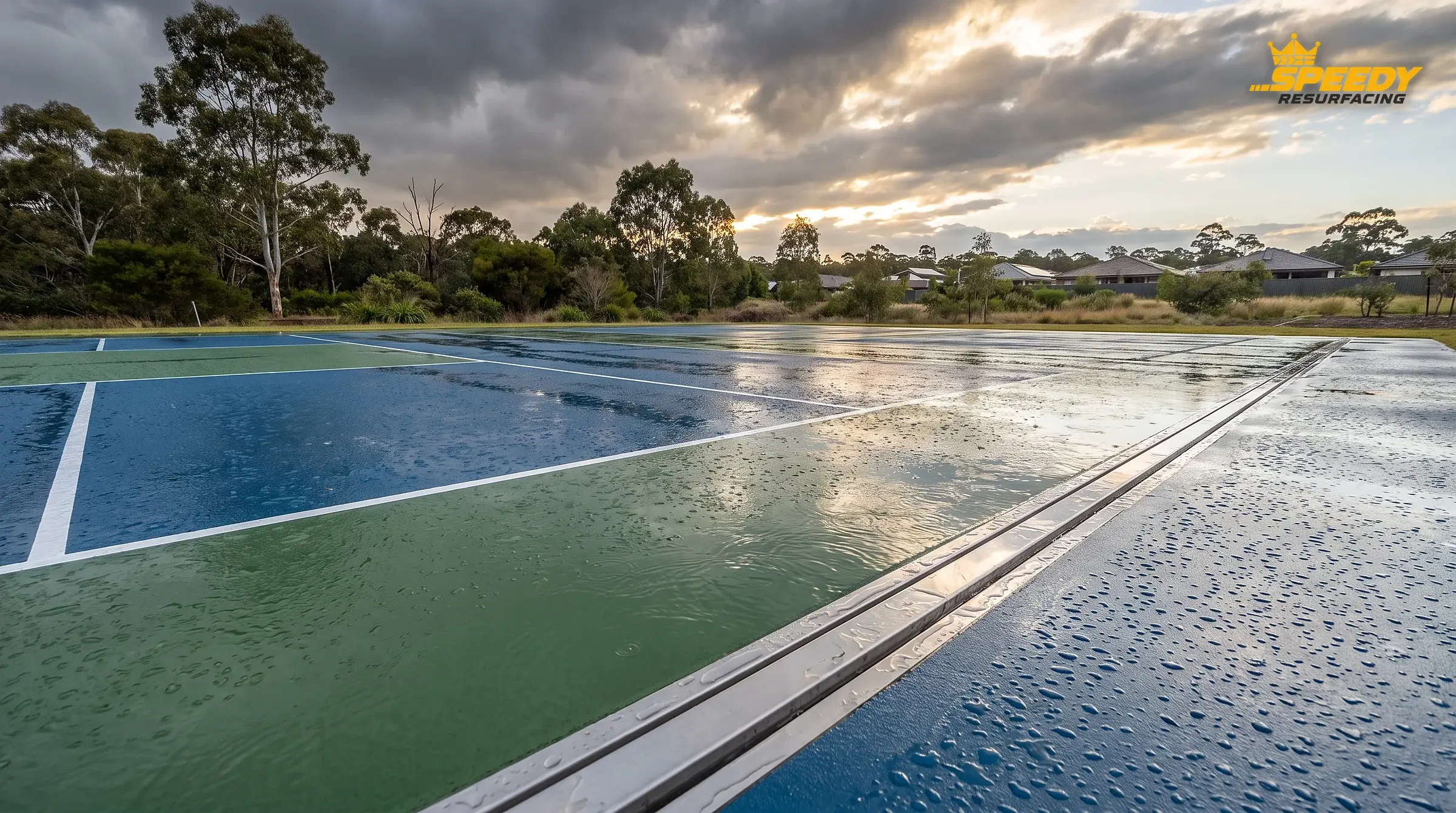
- Drainage & site slopes: Heavy rain events can lead to water pooling if court cross-falls do not shed water efficiently toward sub-drains or perimeter run-offs.
- Facility schedules: For schools and community centres in Merrylands and Western Sydney, resurfacing projects are frequently planned during school holidays or scheduled facility shutdown windows to minimise operational disruption.
- Neighbouring properties & access: Site access for equipment, high-pressure washers and materials must be planned carefully in residential or tight urban spaces to ensure smooth execution.
Application Timing and Return to Play
A complete court resurfacing project requires strict adherence to material curing schedules. Facility managers should distinguish between coating dry times and full system cure times before reopening courts for play.
- Drying between coats: Under favourable weather conditions (warm, dry days with a moderate breeze), individual acrylic coats typically touch-dry within 1 to 4 hours.
- Line marking curing: Boundary lines require adequate curing time to prevent tracking or smudging when subject to foot traffic.
- Reopening for active play: While surfaces may feel dry to the touch within hours, full system curing typically requires 24 to 48 hours or more depending on ambient humidity, temperature and sun exposure before foot traffic and heavy athletic play resume.
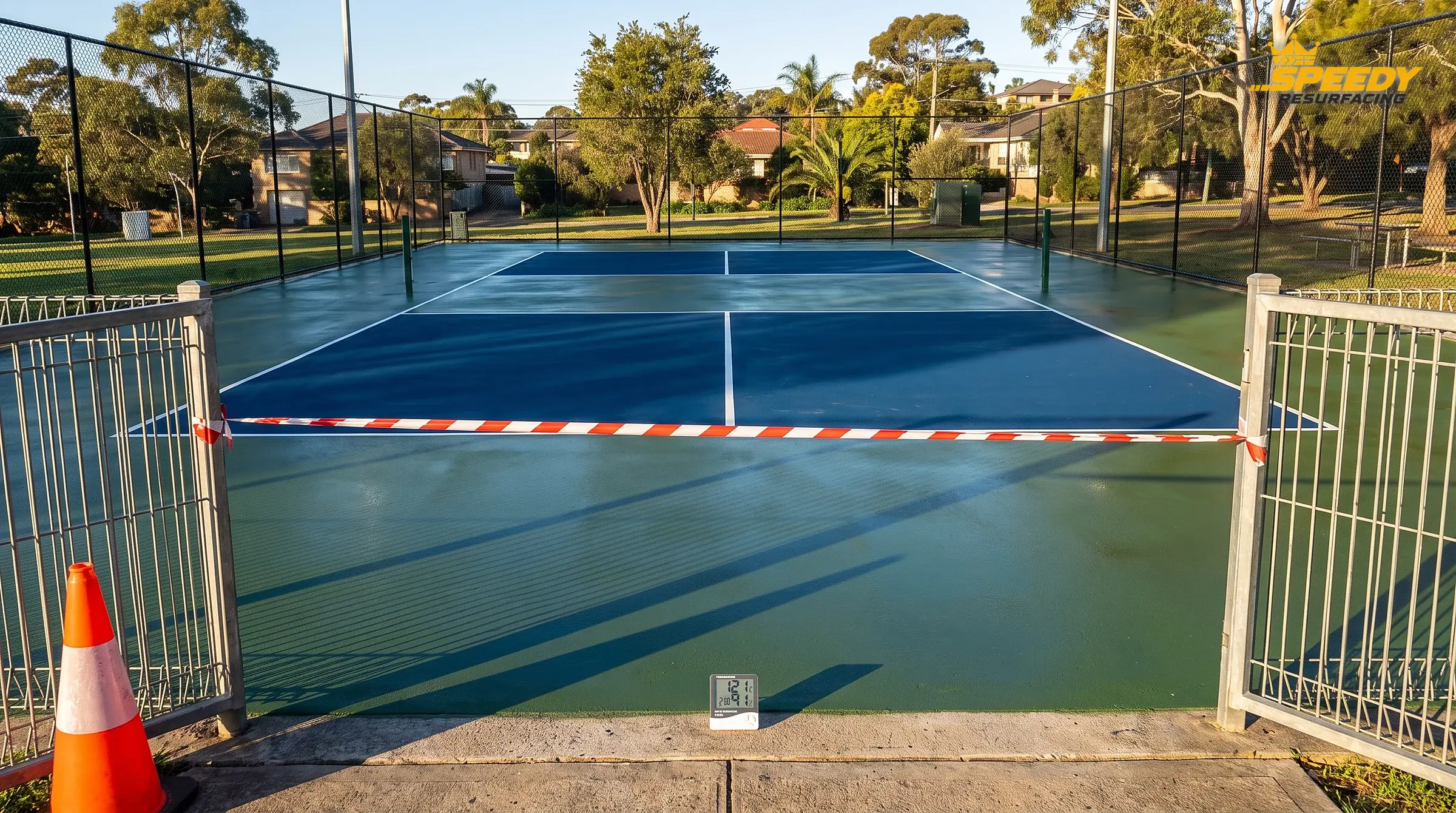
Rain, damp conditions, high humidity or temperatures falling below manufacturer-specified application thresholds will extend drying intervals and adjust the project timeline.
Contrast is a safety feature. If a player can't find the ball or the line in a split second, the palette is wrong.
Speedy Resurfacing
Request a Professional Court Assessment
Ready to restore your existing court or explore custom pickleball layout options? The team at Speedy Resurfacing provides comprehensive site assessments and tailored resurfacing proposals across Sydney and Western Sydney. To help prepare an accurate scope, please have the following information ready:
- 01
Site suburb & location
For example Merrylands, Blacktown, Penrith or anywhere across Western Sydney and Greater Sydney.
- 02
Current surface type
Asphalt, slab concrete, or a previously painted surface.
- 03
Approximate dimensions
Total length and width of the paved area.
- 04
Intended sports
Dedicated pickleball, shared basketball/pickleball, or a multi-court layout.
- 05
Site photographs
Clear photos showing the overall surface condition, drainage areas and existing markings — or upload them to the free Court Scan.
Get in touch with Speedy Resurfacing today — leave your name, mobile and email below, call 0466 495 495 or email info@speedyresurfacing.com.au. Speedy Resurfacing is the specialist court division of Speedy Line Marking.
Frequently Asked Questions
Know a school, club or court owner who needs this?
Send them the article in one tap, and follow Speedy Resurfacing on Instagram @speedyresurfacing and Facebook for before-and-after court transformations across Sydney.