
Multi-Sport Court Colour Design: How to Balance Basketball, Pickleball, Netball, and Tennis Layouts
One slab, four sports, zero confusion. A successful multi-sport court relies on strategic colour contrast, visual zoning and a clear line hierarchy — colour fills first, then 50 mm white primary lines, a receding secondary shade, a dashed tertiary tone. This guide covers ball visibility by sport, school colours done right, dedicated versus shared layouts, ghost-line removal, how much footprint you really need, and planning the job in Merrylands and Western Sydney.
- A two- or three-tone acrylic palette — playing zone, feature zones (keys, kitchens) and perimeter apron — establishes boundaries before any line is applied.
- Choose surface colours for the ball: yellow pickleballs and tennis balls need cool, dark backgrounds (deep blue, slate grey, forest green); avoid yellow or lime-green coatings in pickleball zones.
- Line hierarchy: primary sport in 50 mm solid white; secondary in a receding shade such as sky blue, soft yellow or light orange; tertiary in soft grey or red, or dashed segments.
- Keep school and brand colours on the apron, run-off and centre logo — never inside the active playing zone.
- Dedicated pickleball courts give maximum clarity with in-ground posts; shared overlays host 2–4 sports per slab with portable or sleeve-mounted nets.
- Old lines must be mechanically ground off before recoating or they ghost through; verify 30 × 60 ft per pickleball court and FIBA buffers before committing to an overlay.
Speedy Resurfacing acknowledges the Traditional Custodians of the land on which we live and work, including the Gadigal people of the Eora Nation across the Sydney basin. We pay our respects to Elders past, present, and emerging, and recognise their continuing connection to the land, waters, and culture of New South Wales.
A successful multi-sport court layout relies on strategic colour contrast, visual zoning and a clear line hierarchy. By combining distinct acrylic surface coatings with deliberate line colours, schools, councils, strata managers and private property owners across Sydney can transform a single asphalt or concrete area into a versatile sporting space.
Designing a multipurpose playing space requires balancing multiple court boundaries without creating a confusing layout for players. Proper surface preparation, background contrast, ball visibility and sport-specific line hierarchy ensure the finished court looks clean and functions as intended. Planning a new court surface or layout reconfiguration in Sydney? Leave your name, mobile and email below, or send your site details, surface photos and dimensions to info@speedyresurfacing.com.au.
1. Choosing Colours, Line Contrast and Visual Hierarchy
Designing a multi-sport court involves selecting acrylic surface coatings and line colours that allow each game to remain clearly defined during play.
Surface vs. Line Contrast
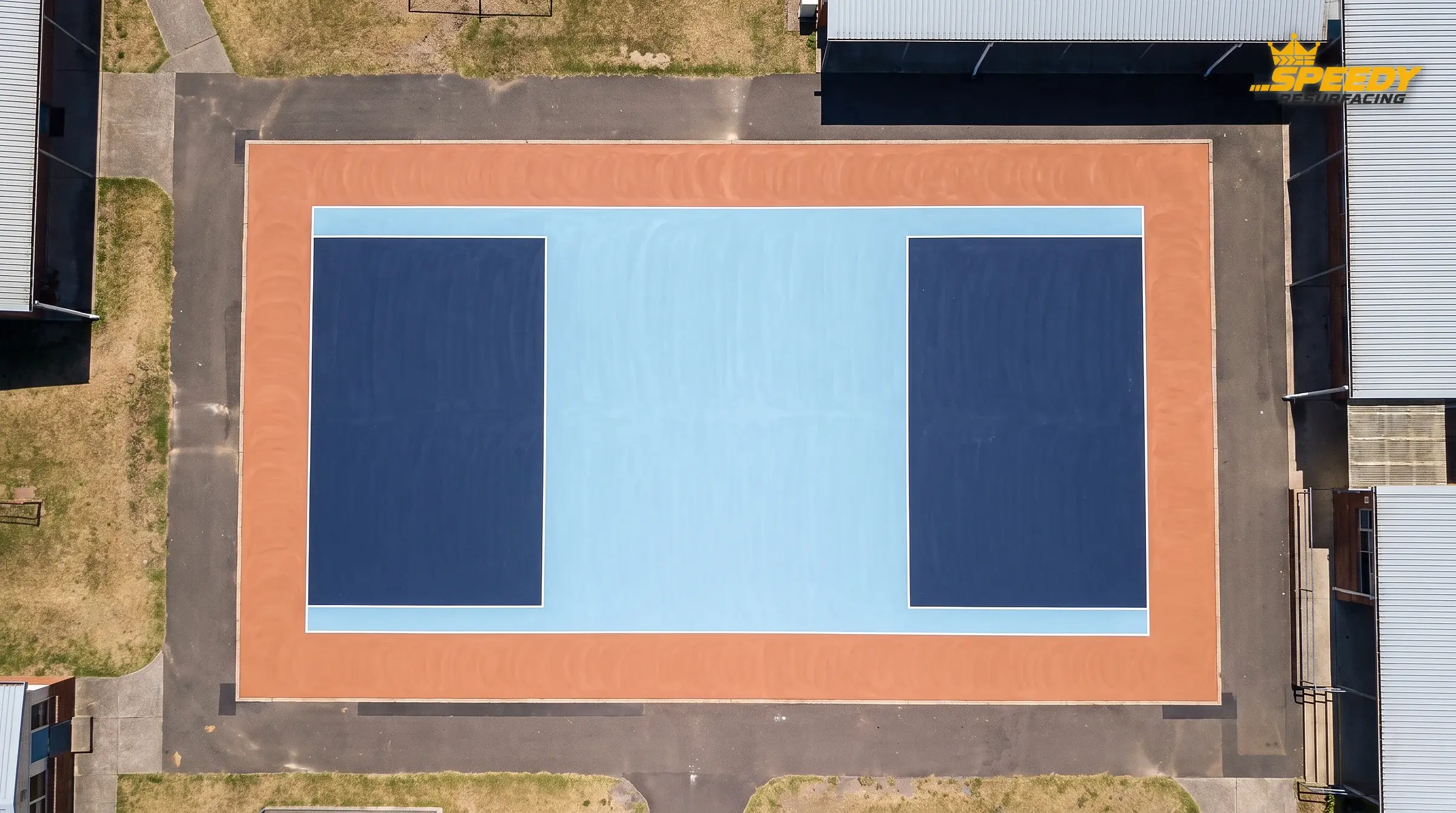
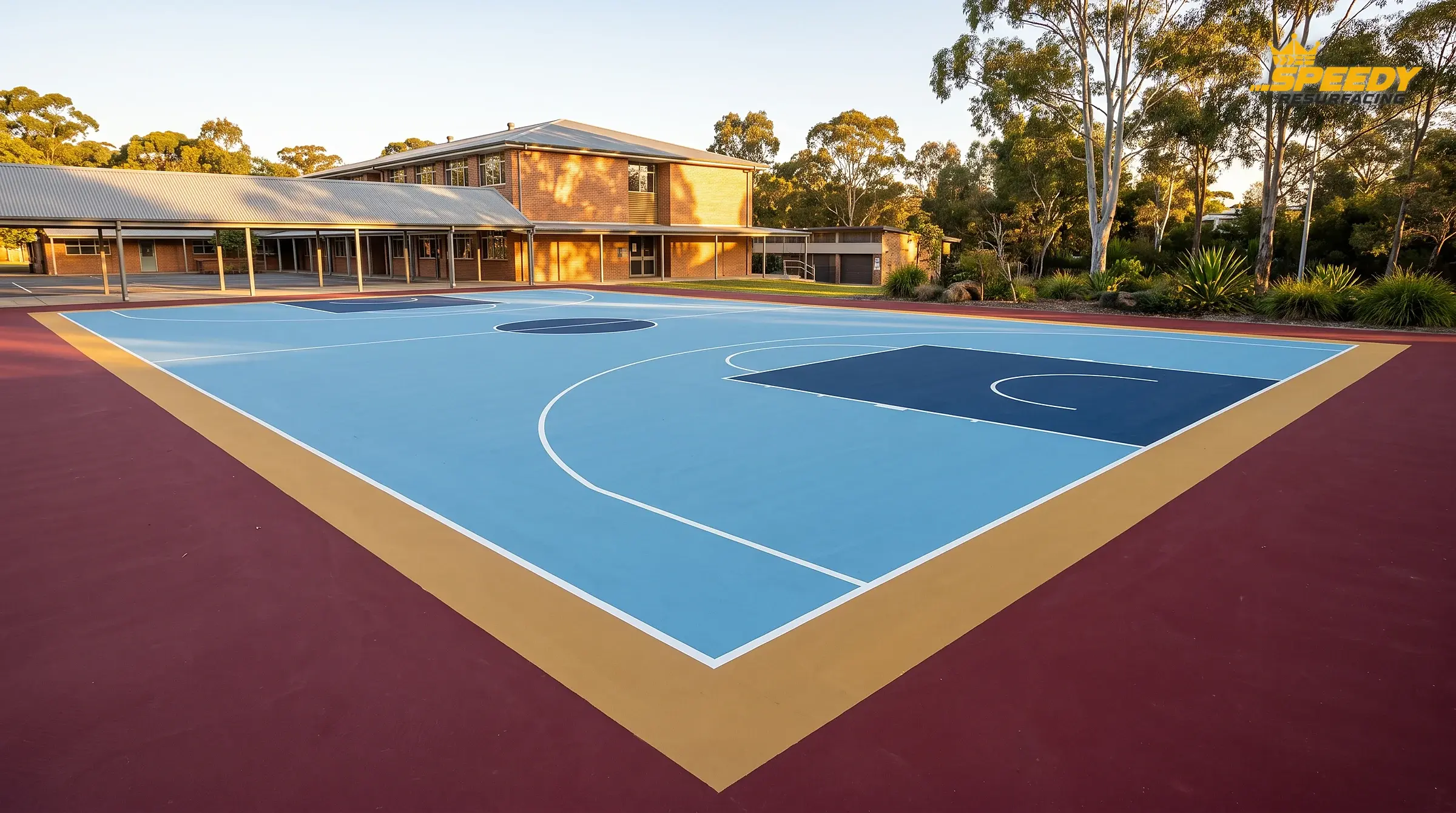
The foundation of a readable court layout is the contrast between the active playing area, feature zones (such as keyways or non-volley zones) and the surrounding perimeter apron. Utilising a two-tone or three-tone colour palette establishes natural boundaries before a single line is applied.
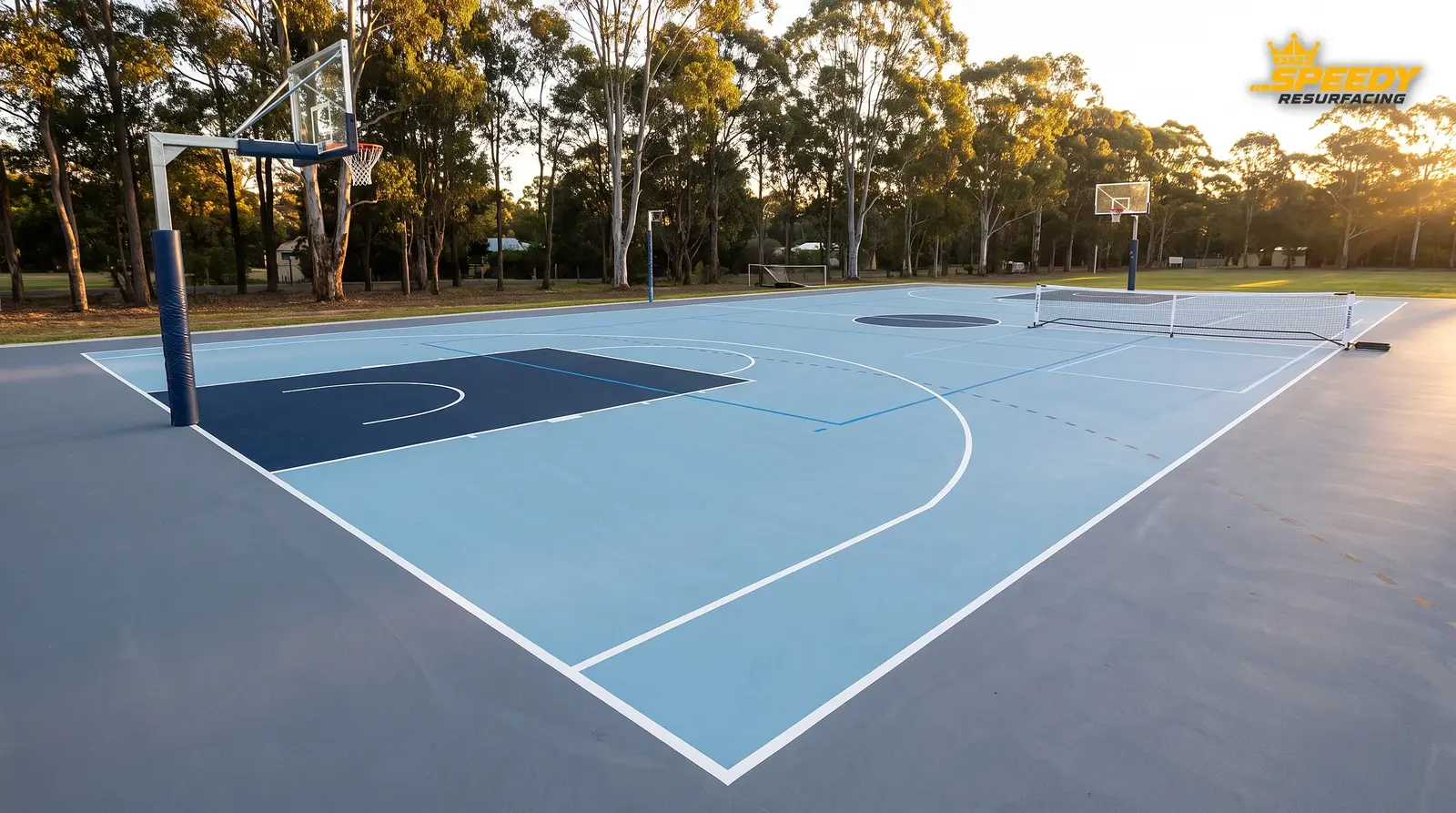
For example, a court featuring dark-blue basketball keyways, light-blue main playing zones and a slate-grey or terracotta perimeter apron clearly defines playing areas while reducing reliance on additional paint lines.
Ball Visibility
Selecting court surface colours requires considering ball visibility for each intended sport:
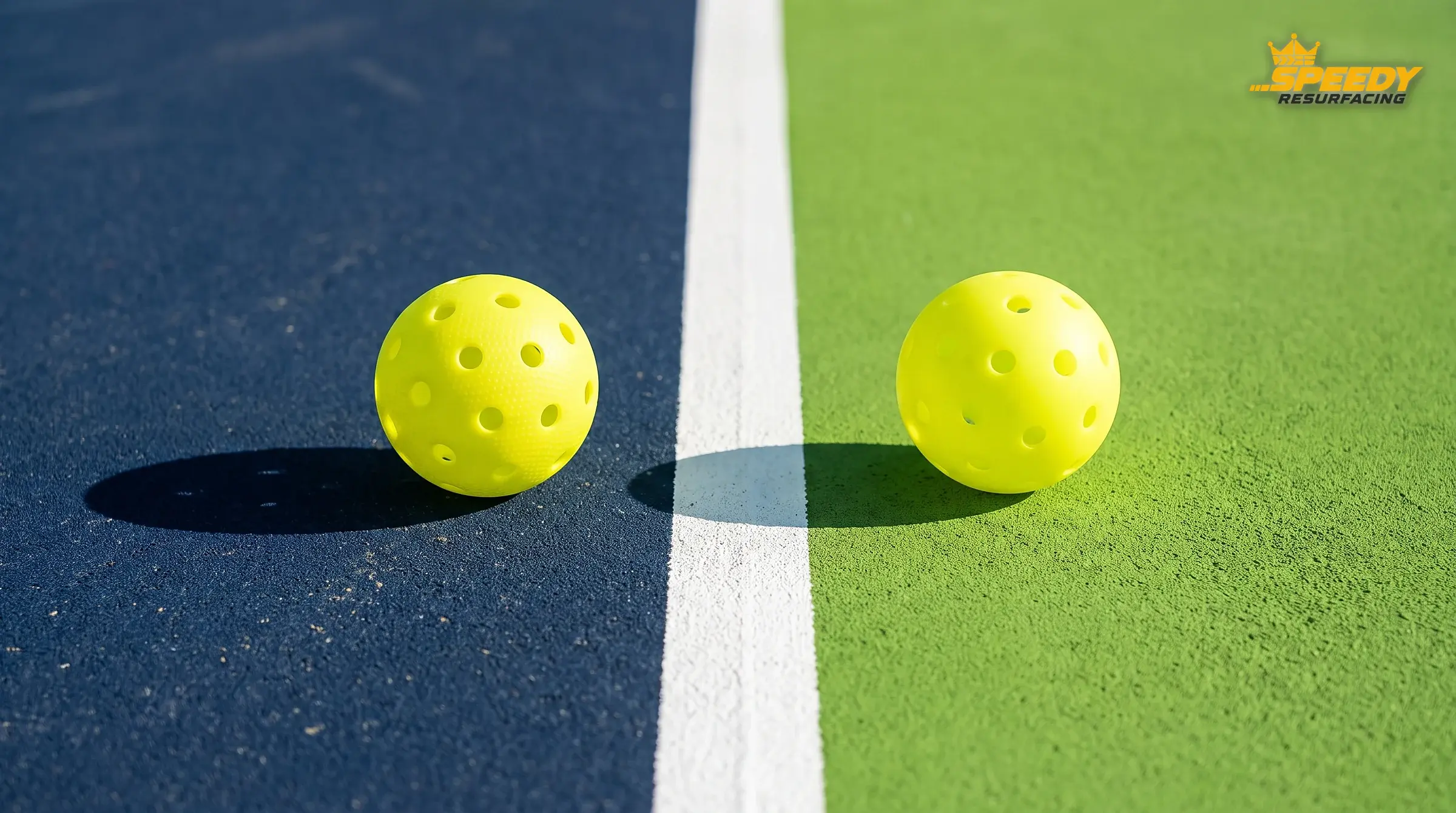
- Pickleball: High-visibility yellow or neon plastic balls stand out best against cool, dark backgrounds such as deep blue, slate grey or dark green. Avoid bright yellow or lime-green surface coatings in pickleball zones, as they compromise ball tracking during fast rallies.
- Tennis: Standard optic-yellow tennis balls require solid contrast against the inner court surface, making traditional US Open blue or classic forest green ideal choices.
- Basketball & netball: Larger orange basketballs and white or yellow netballs remain easily visible across most acrylic surfaces, offering greater design flexibility for keyways and perimeter borders.
Establishing a Line Hierarchy
When multiple sports share a surface, applying identical line widths and colours creates visual clutter. Establishing a distinct line hierarchy ensures players immediately recognise their specific game boundaries:
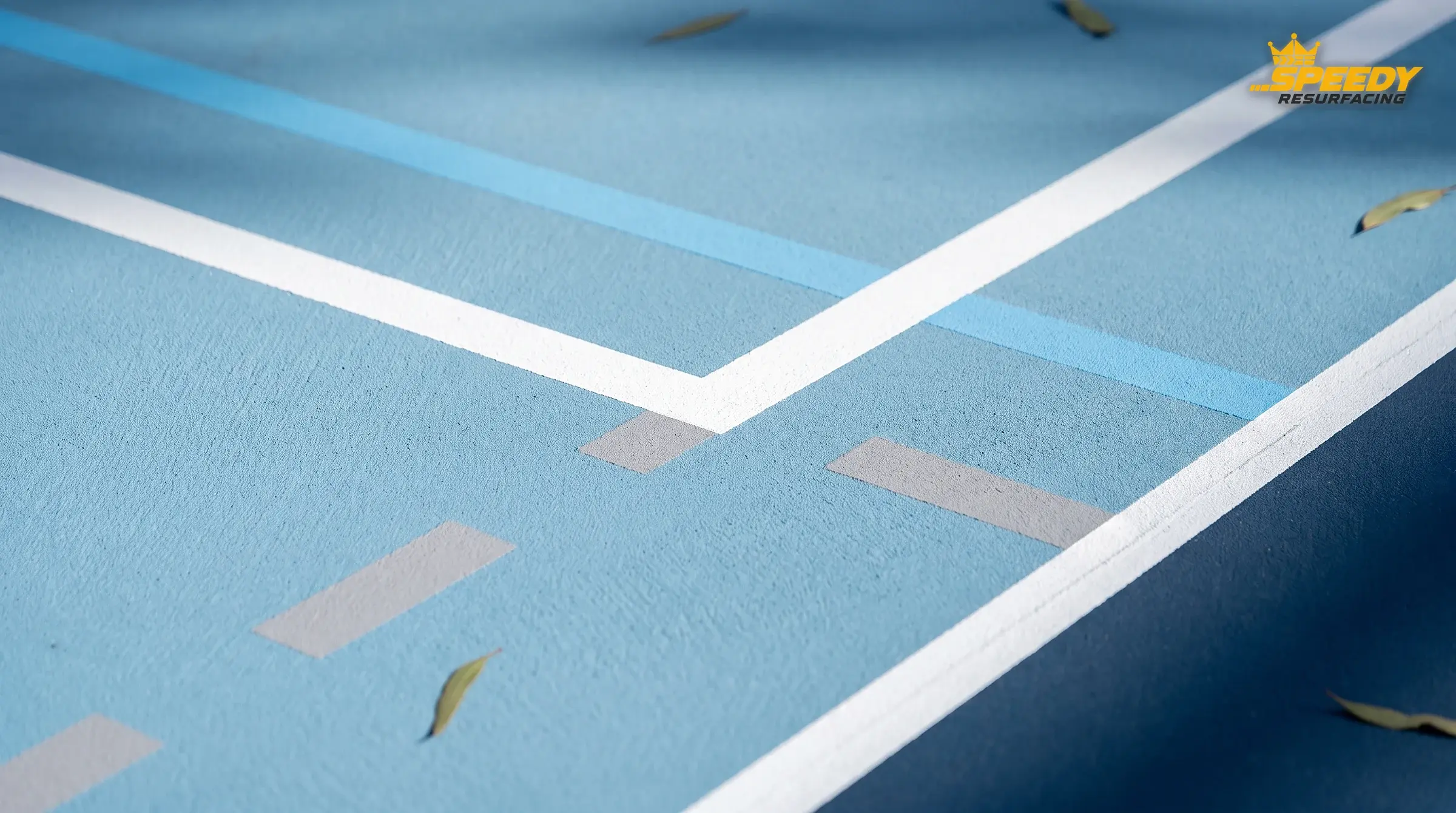
- Primary sport (e.g. basketball or tennis): Marked in standard 50 mm solid white lines to provide sharp, immediate definition for primary competition.
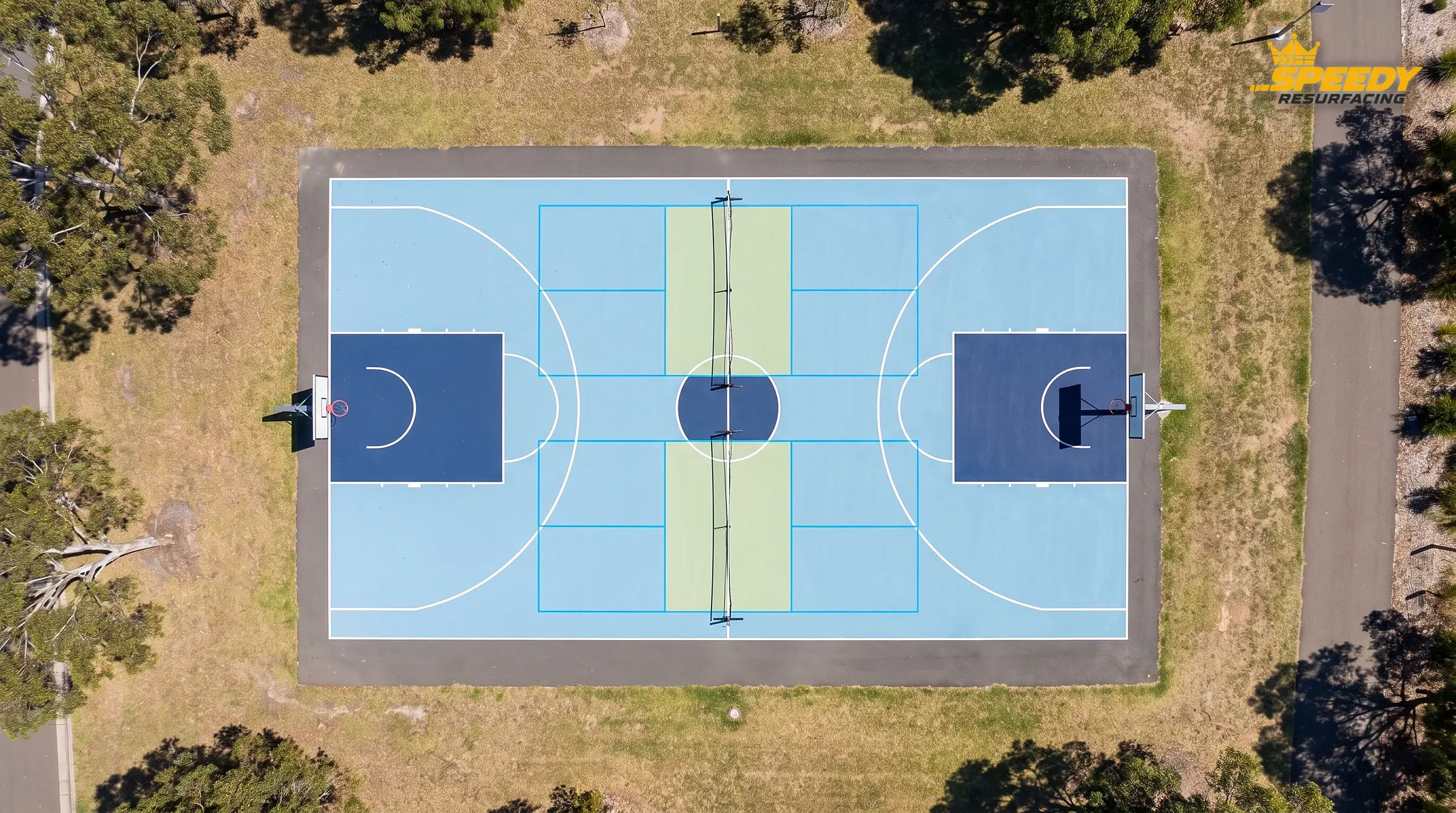
- Secondary sport (e.g. pickleball): Marked in a distinct secondary shade — such as sky blue, soft yellow or light orange — that remains readable when playing pickleball but visually recedes during a basketball match.
- Tertiary sport (e.g. netball): Marked in a third contrasting tone (such as soft grey or red) or applied with dashed line segments for secondary keyways or transverse lines.
Incorporating School and Brand Colours
Educational institutions and commercial sites often align court aesthetics with school crests or corporate identities. School colours are best incorporated into outer perimeters, run-off aprons or centre-court logos, keeping active playing zones clean and high-contrast.
Colour-coded keys, three-point zones and boundary boxes also assist physical-education staff by providing clear visual markers for student drills, station set-ups and spatial training.
Strategies to Avoid Layout Confusion
- 01
Use colour fills first
Define different sports zones using contrasting acrylic surface colours rather than relying solely on painted lines.
- 02
Offset key zones
Where site dimensions allow, position secondary sports (such as pickleball) so their non-volley zone lines do not directly overlap basketball free-throw keys.
- 03
Differentiate line profiles
Combine solid 50 mm lines for primary games with slightly narrower or dashed lines for secondary game boundaries where permitted by regional sport guidelines.
2. Dedicated Pickleball Courts vs. Shared Layouts
Deciding between a dedicated single-sport layout and a multipurpose conversion depends on site usage, user volume and available space.
Comparing Court Configurations
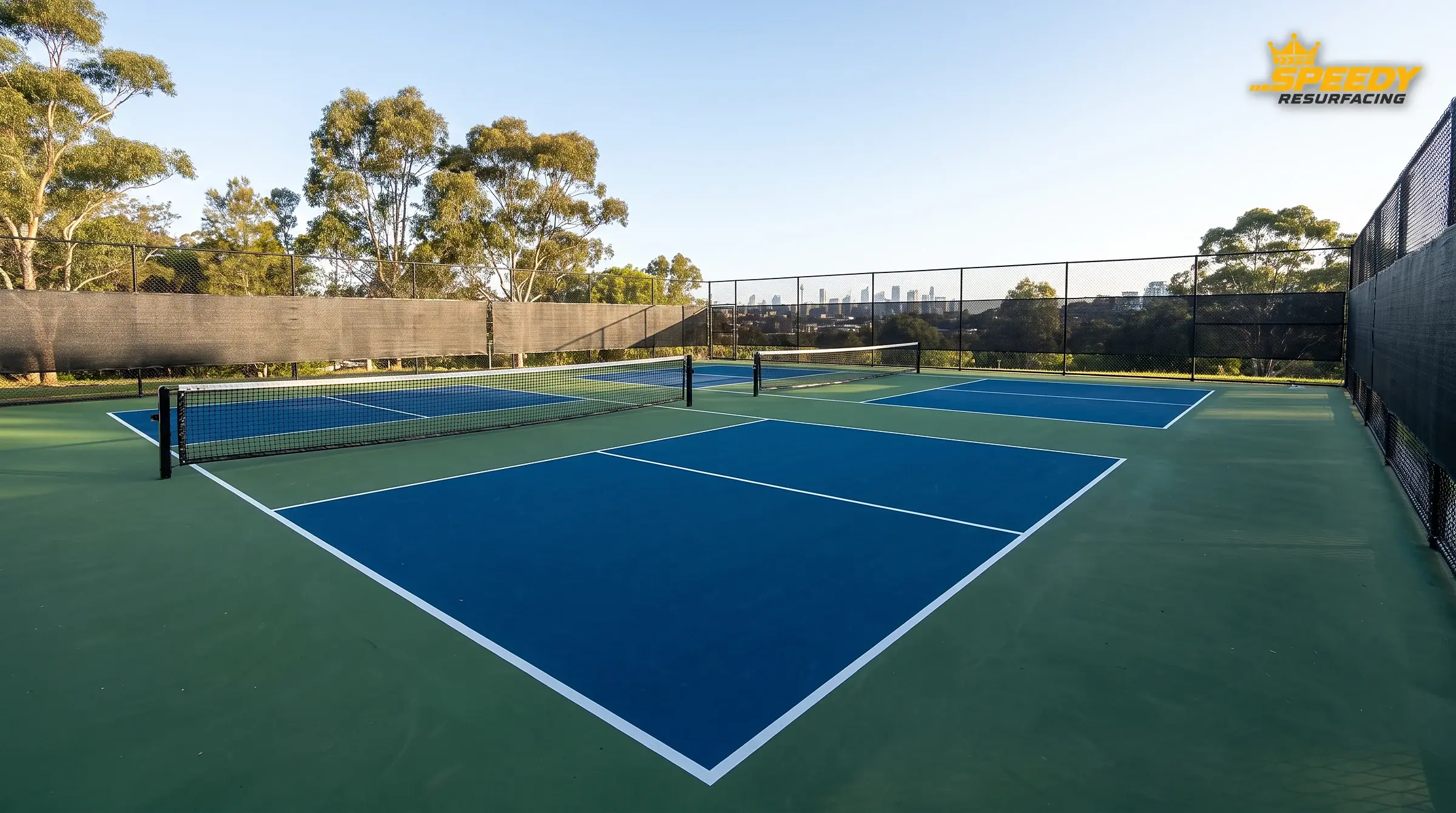
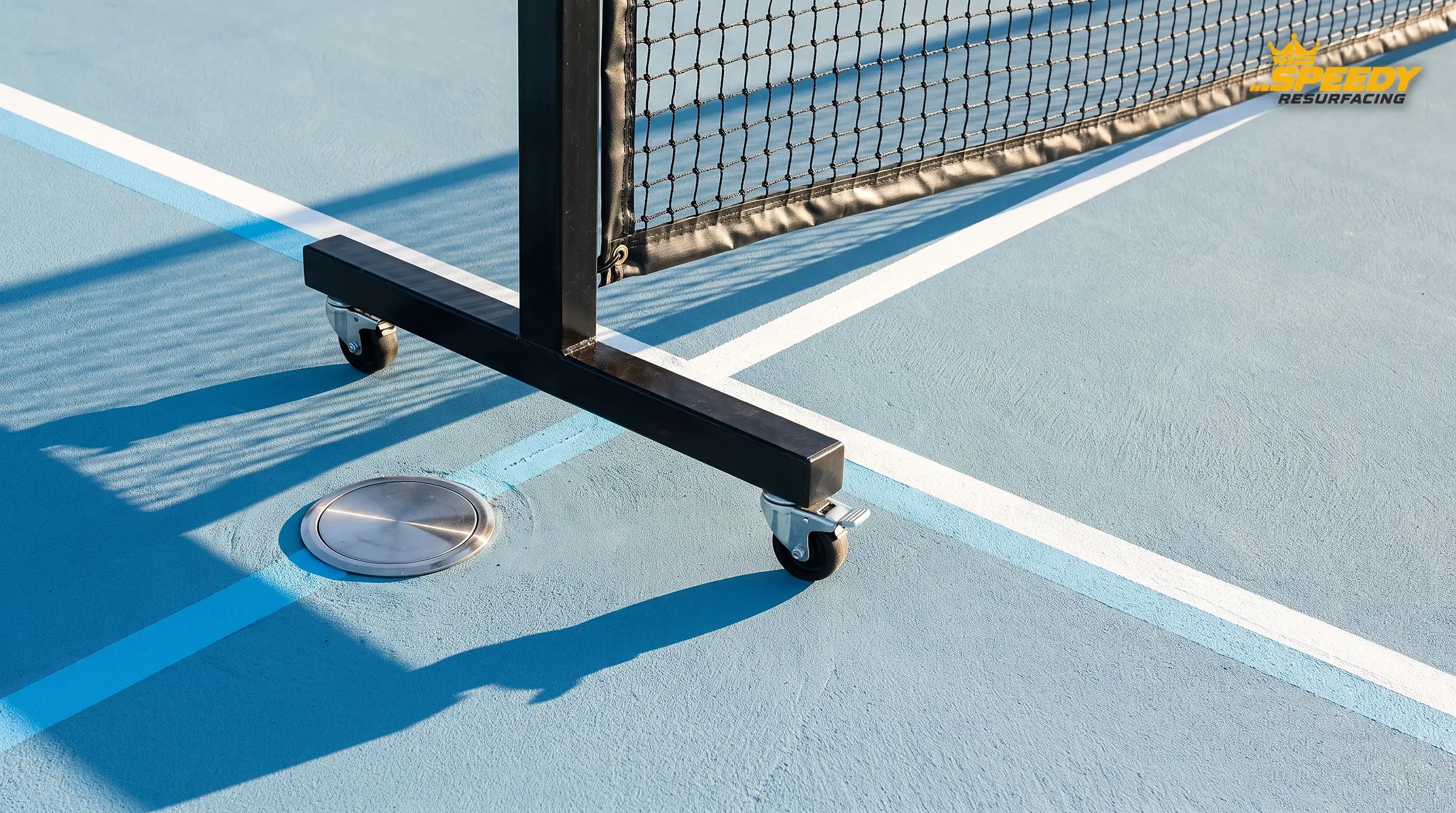
A dedicated pickleball court features fixed in-ground net posts, single-sport line markings and optimised perimeter fencing. In contrast, multi-sport overlays allow a single asphalt or concrete pad to host basketball, pickleball, tennis or netball on a rotating schedule.
Retaining or Removing Old Markings
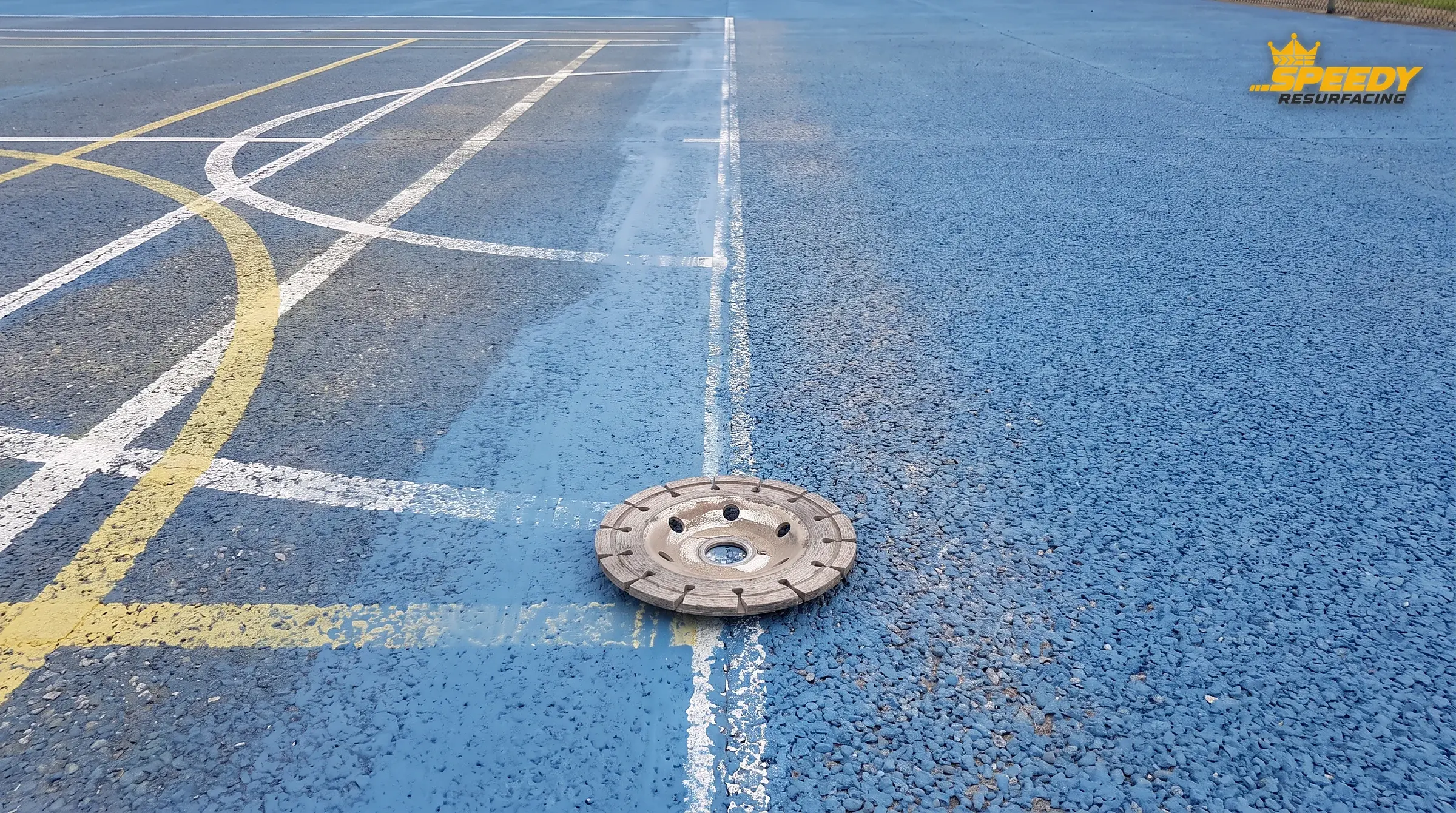
Applying new multi-sport coatings over existing, worn court lines requires assessing the underlying surface. Faded or conflicting paint lines should undergo mechanical line removal — such as precision grinding or scarifying — before applying new acrylic coatings to prevent ghost lines from showing through.
Net Systems and Scheduling
While dedicated courts utilise permanent in-ground posts, multi-sport spaces rely on portable net systems or multi-use post sleeves set flush into the surface. Portable pickleball nets can be rolled or carried onto the court in minutes, allowing seamless transitions between basketball games and pickleball matches.
| Feature / Aspect | Dedicated Pickleball Court | Shared Multi-Sport Overlay |
|---|---|---|
| Primary focus | Single-sport performance | Maximum space versatility |
| Line definition | Single line set (maximum clarity) | Hierarchical multi-colour lines |
| Footprint efficiency | High for pickleball only | Outstanding (2–4 sports per slab) |
| Net hardware | Permanent in-ground net posts | Portable or sleeve-mounted nets |
| Best suited for | Dedicated clubs & sporting hubs | Schools, councils, strata & private courts |
| Inspection focus | Net sleeve alignment & surface traction | Line removal quality & surface repairs |
3. How Much Usable Space Is Needed?
When designing a court layout, distinguish between the marked playing boundary and the total usable footprint required for safe player movement.
According to the USA Pickleball Rulebook, official pickleball playing lines measure 20 ft × 44 ft (approximately 6.10 m × 13.41 m), featuring a 7 ft (2.13 m) non-volley zone on both sides of the net. However, this rectangle represents only the playing lines. For safe play, governing-body guidelines recommend a minimum total court footprint of 30 ft × 60 ft (9.14 m × 18.29 m) to accommodate player run-off, light poles, fences and adjacent structures.
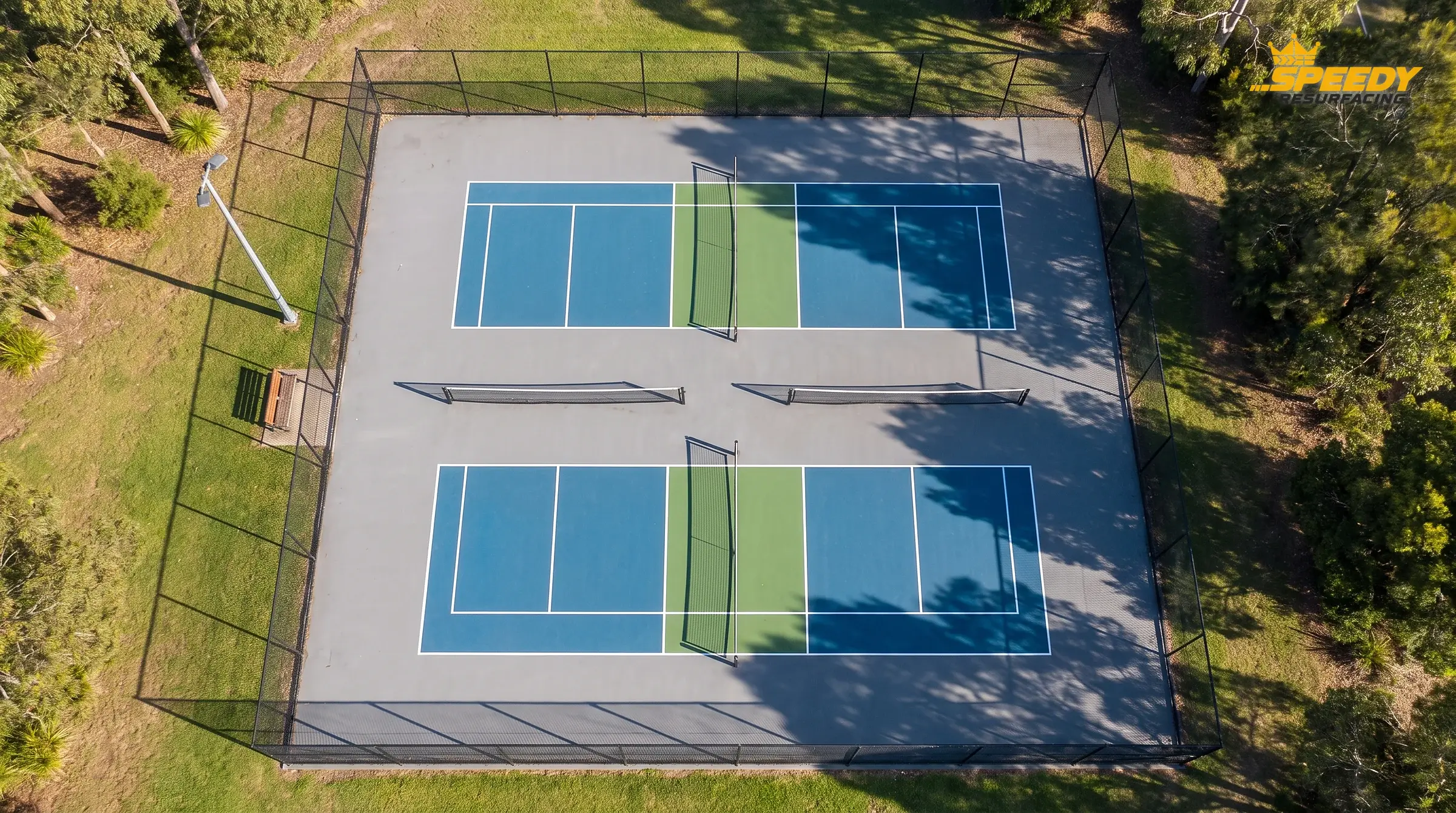
Similarly, the FIBA basketball court standard specifies a 28 m × 15 m marked playing court, which requires surrounding safety buffer zones for referee access, player benches and equipment clearance. Before planning multi-sport overlays — such as placing two pickleball courts over a single basketball footprint — site assessments must verify that the total usable surface accommodates necessary run-off areas without introducing safety hazards.
Paint the colours first and let them do the talking. If the zones are right, the lines only have to whisper.
Speedy Resurfacing
4. Planning Resurfacing in Merrylands and Western Sydney
Executing a successful court resurfacing project in Western Sydney requires evaluating local site conditions before work begins.
Site Access and Logistics
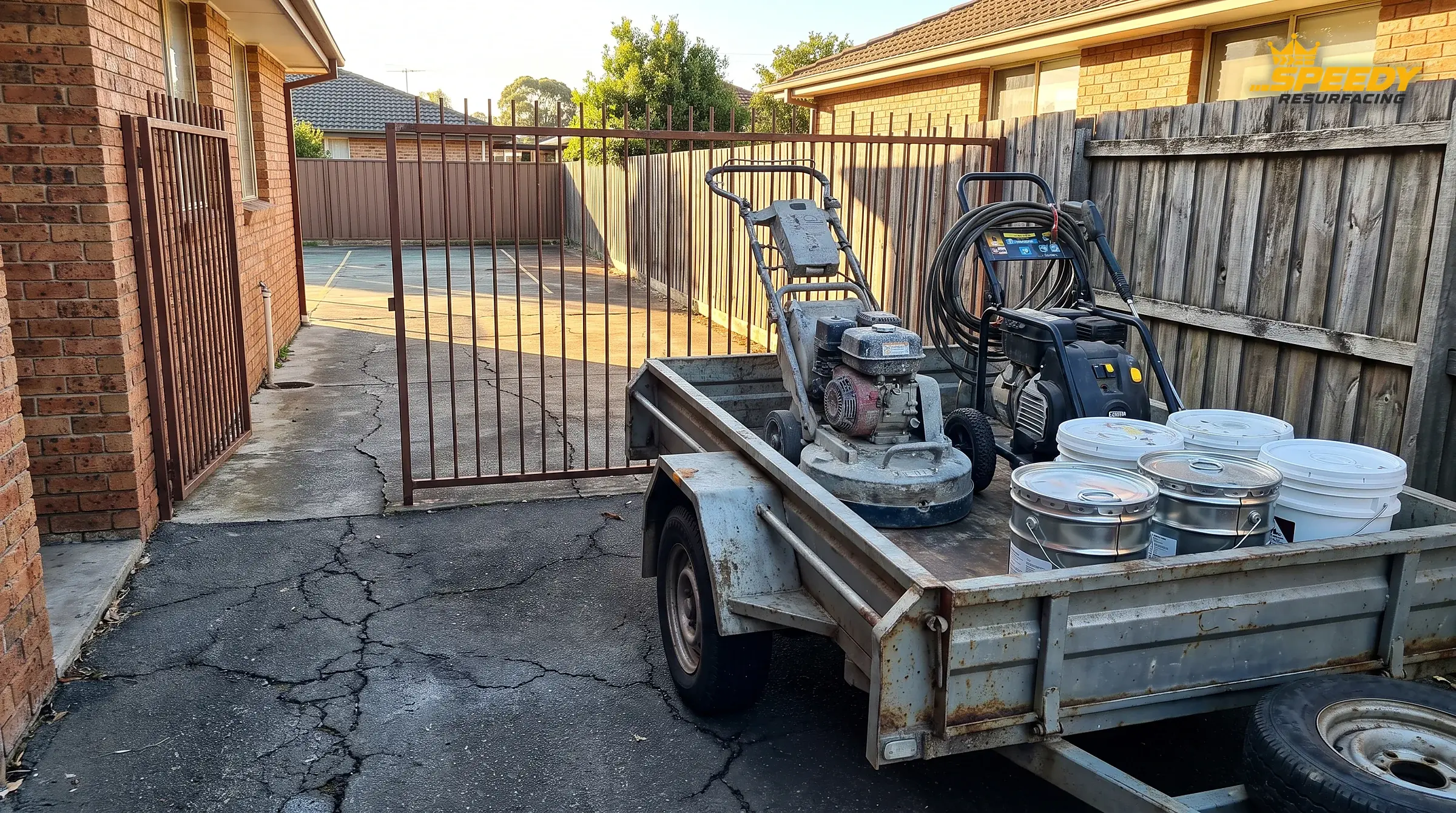
Heavy machinery — including surface grinders, high-pressure washing systems and coating rigs — requires clear access to the court perimeter. Properties in dense residential areas such as Merrylands must plan access routes, equipment storage and material delivery carefully to minimise local impact.
Thermal Exposure and Surface Preparation
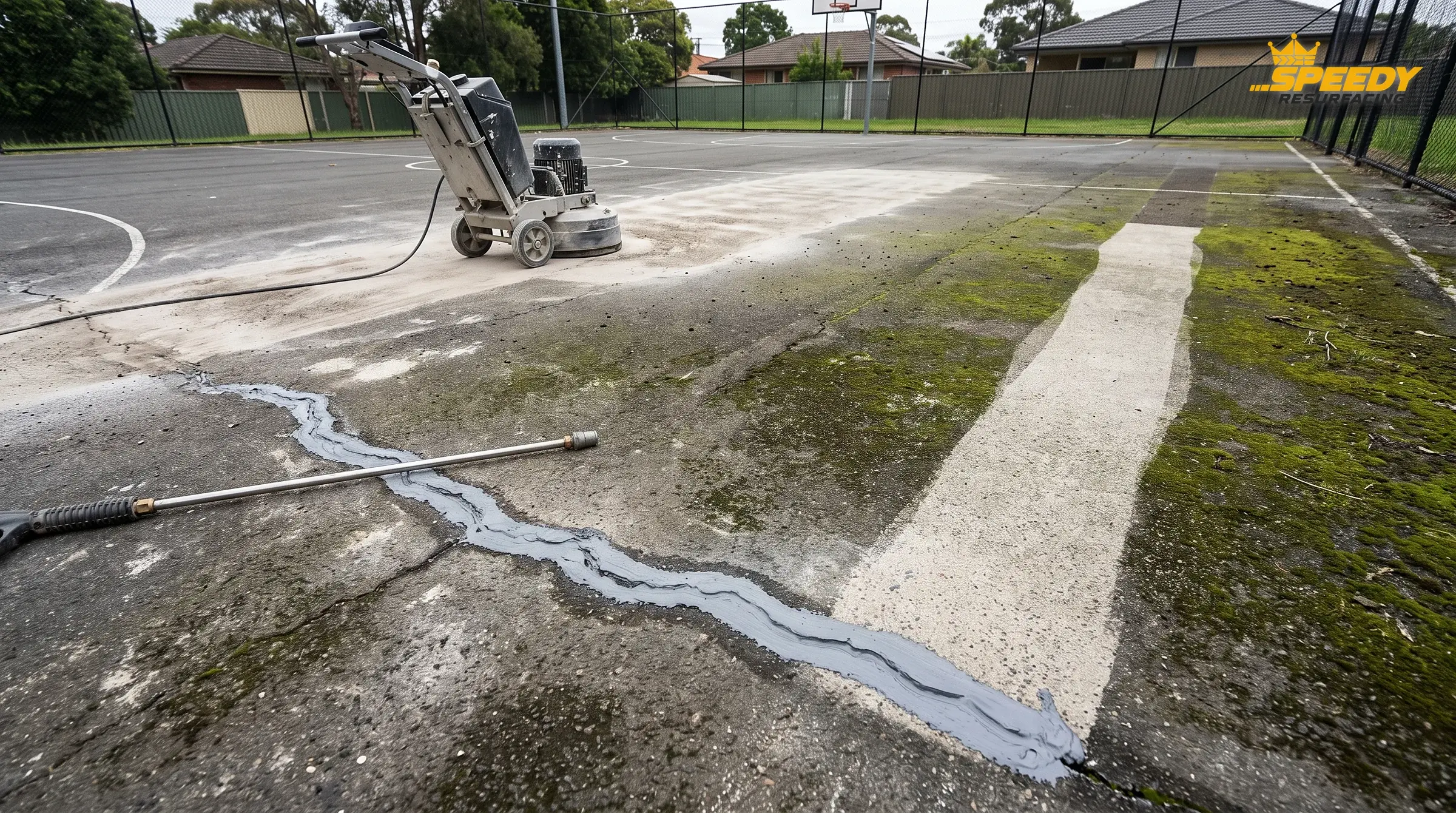
Western Sydney experiences high summer temperatures and intense UV exposure. Acrylic court surface systems require application within specific temperature ranges and drying windows to ensure long-term bonding and colour stability. Existing asphalt or concrete surfaces must be inspected for cracking, structural movement, low spots or surface contamination. The surface preparation protocol includes:
- Industrial pressure washing: To strip dirt, moss and oil contamination.
- Precision grinding: To level surface irregularities and smooth old coatings.
- Crack filling and patching: Filling structural cracks and patching low areas prone to standing water.
Scheduling Around Site Usage
For Western Sydney schools, sporting clubs and community centres, timing resurfacing work during school-holiday breaks or low-use periods avoids operational disruption and allows acrylic coatings to cure properly before reopening for full play.
Start Your Custom Court Project
Transforming an existing court or laying out a multi-sport space requires proper surface evaluation, surface preparation, precision line marking and high-quality coatings. To get an accurate assessment and quote for your Sydney property, send through:
- Site address or general location: Merrylands, Western Sydney or anywhere across Greater Sydney.
- Clear photographs: Of the current court surface and surrounding access — or upload them to the free Court Scan.
- Approximate surface dimensions: In square metres, or length × width.
- Your preferred sports mix: Colour preferences and any school or brand logo requirements.
Ensure long-term playability, structural integrity and regulatory compliance for your sports facility with heavy-duty acrylic surfacing systems engineered specifically for Australian environmental conditions. Leave your name, mobile and email below, email info@speedyresurfacing.com.au or call 0466 495 495. Speedy Resurfacing is the specialist court division of Speedy Line Marking.
Frequently Asked Questions
Know a school, club or court owner who needs this?
Send them the article in one tap, and follow Speedy Resurfacing on Instagram @speedyresurfacing and Facebook for before-and-after court transformations across Sydney.