
Cracks, Low Spots & Worn Coatings: What Gets Repaired Before Court Resurfacing?
A professional court transformation does not start with fresh acrylic — it starts with engineering the foundation underneath. Here is the technical breakdown of every repair executed on a Sydney sports court before the colour coats and line markings go down: crack routing and flexible patching, the one-hour flood test and birdbath levelling, removal of unstable coatings, and substrate profiling.
- Cracks let water into the sub-base; every one is routed to a clean V-groove, blown clear and filled with flexible silica-blended acrylic filler so it moves with the slab instead of pushing through the topcoats.
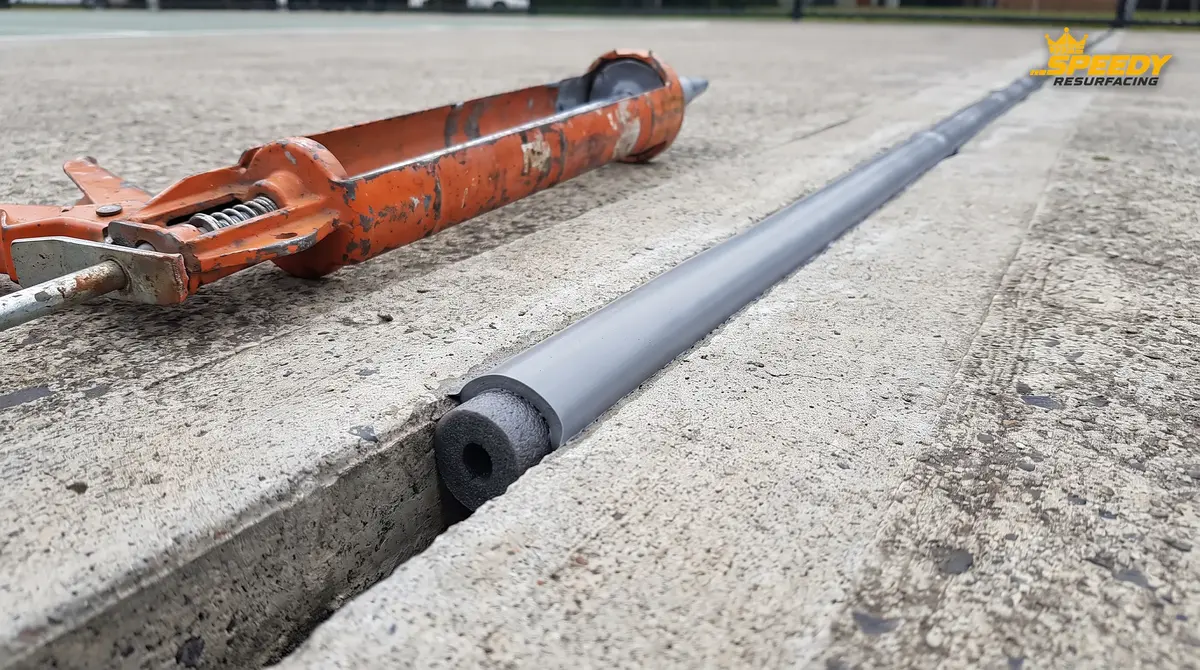
- True expansion joints are never just painted over — they are cleared and sealed with elastomeric sealant that absorbs slab movement while staying watertight.
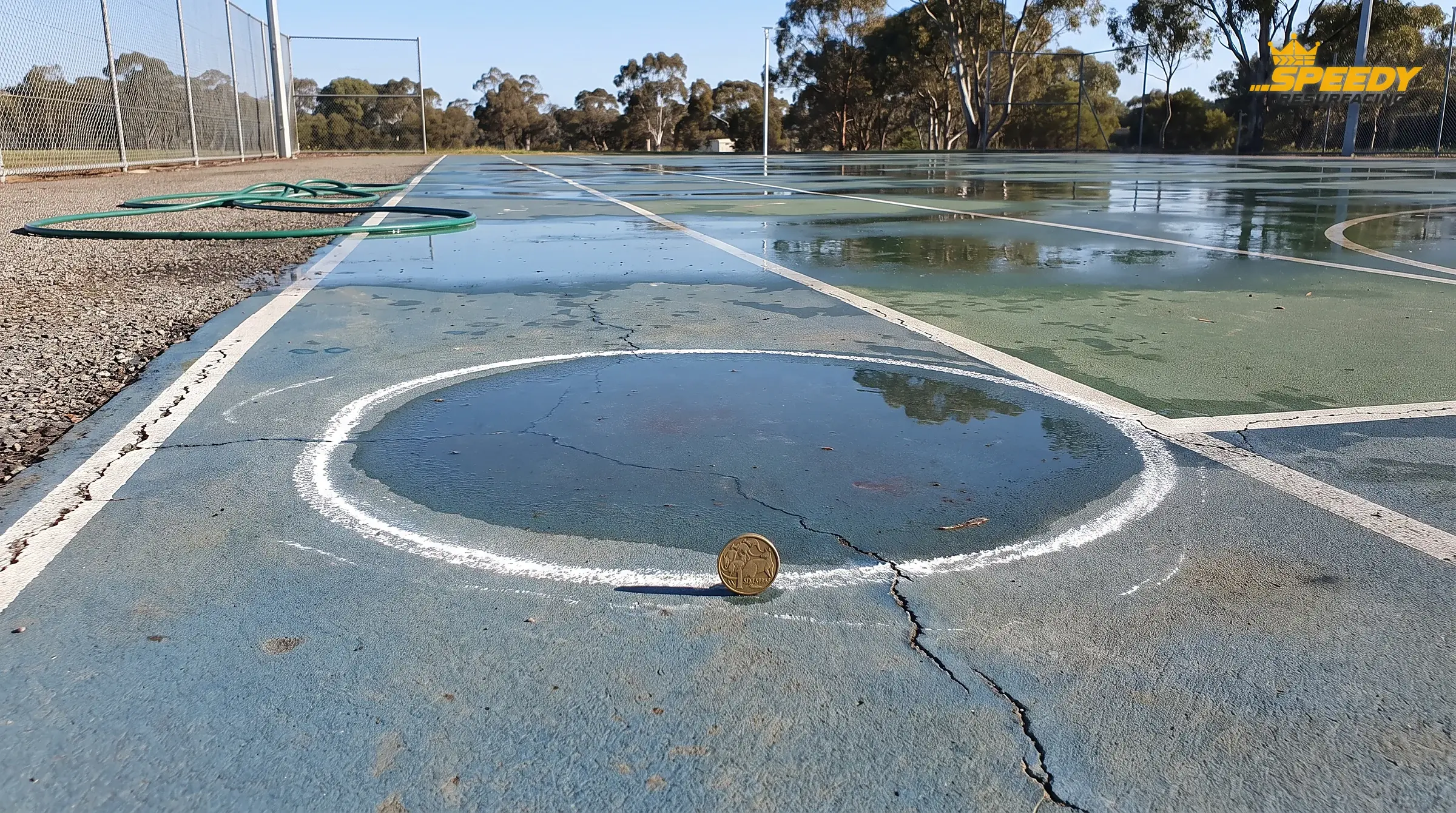
- The one-hour flood test finds every birdbath: any pool deeper than a coin after 60 minutes is perimeter-marked and levelled with acrylic patch binder, feather-edged to zero.
- Peeling, chalking, efflorescence and algae each have a specific corrective method — grinding, scarification, acid etching with vapour-barrier primer, or biocide and mechanical scrubbing.
- Concrete is diamond-ground and primed; asphalt receives a silica-filled acrylic resurfacer coat to fill voids and create a uniform texture.
- Only when every crack is filled, every low spot levelled and the surface primed does the court move to multi-layer acrylic colour and laser-guided line marking.
Speedy Resurfacing acknowledges the Traditional Custodians of the land on which we live and work, including the Gadigal people of the Eora Nation across the Sydney basin. We pay our respects to Elders past, present, and emerging, and recognise their continuing connection to the land, waters, and culture of New South Wales.
Technical Substrate Preparation & Repair Standards for Sports Courts Across Sydney
A professional sports court transformation does not start with applying fresh acrylic paint. It begins with understanding and engineering the foundation underneath.
When facility managers, schools, councils or homeowners across Sydney plan a court restoration project, the most critical decision involves how the underlying surface is inspected, repaired and stabilised before any finishing coats are applied. Applying new acrylic coatings over untreated cracks, uneven depressions or failing old paint inevitably leads to premature bubbling, delamination and structural breakdown.
At Speedy Resurfacing, working alongside our parent company Speedy Line Marking, we treat court resurfacing as a comprehensive structural restoration process. Here is a detailed, technical breakdown of every key repair executed on a court before the final surface coats and line markings are laid down.
Structural Crack Identification & Repair Systems
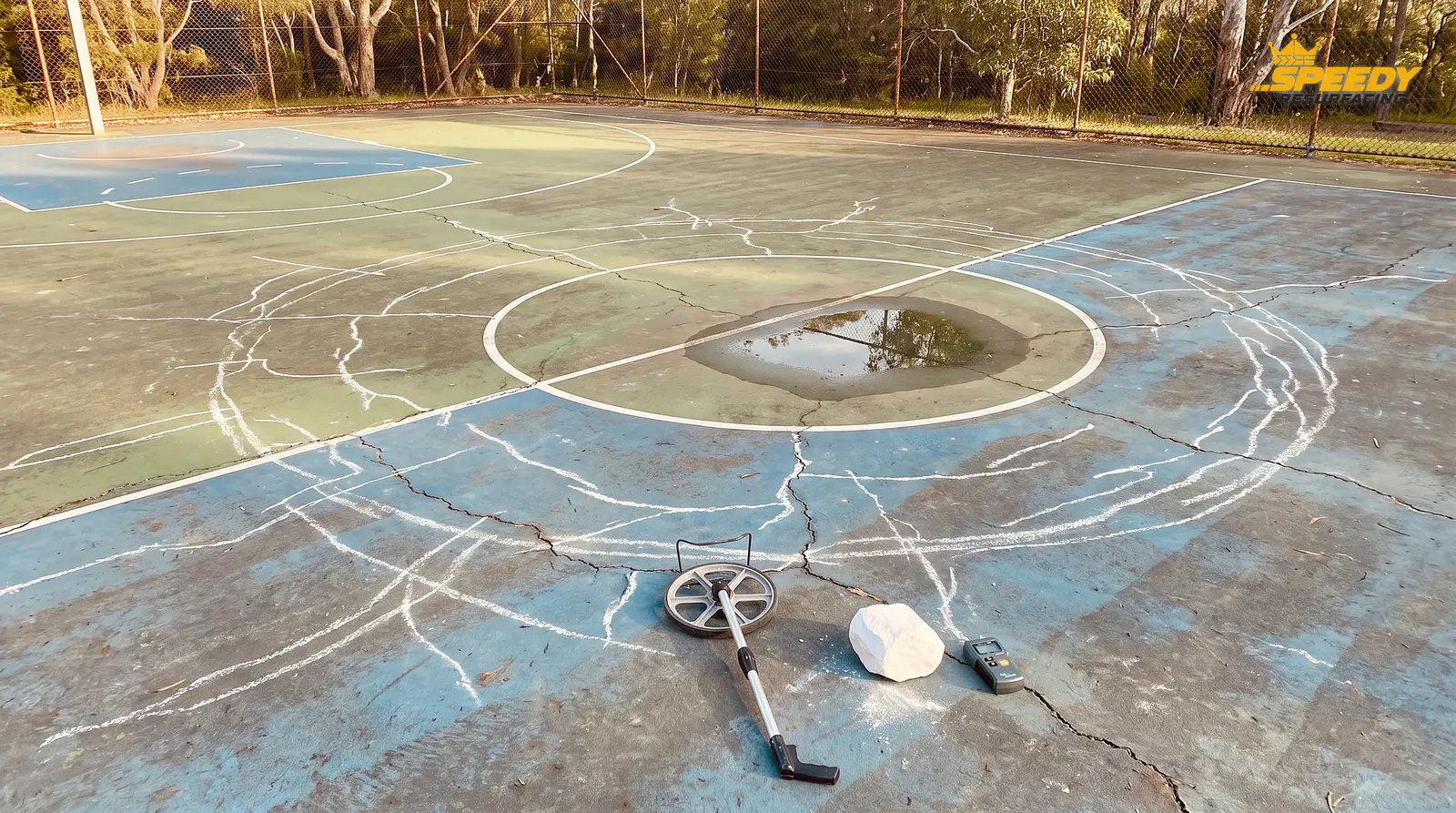
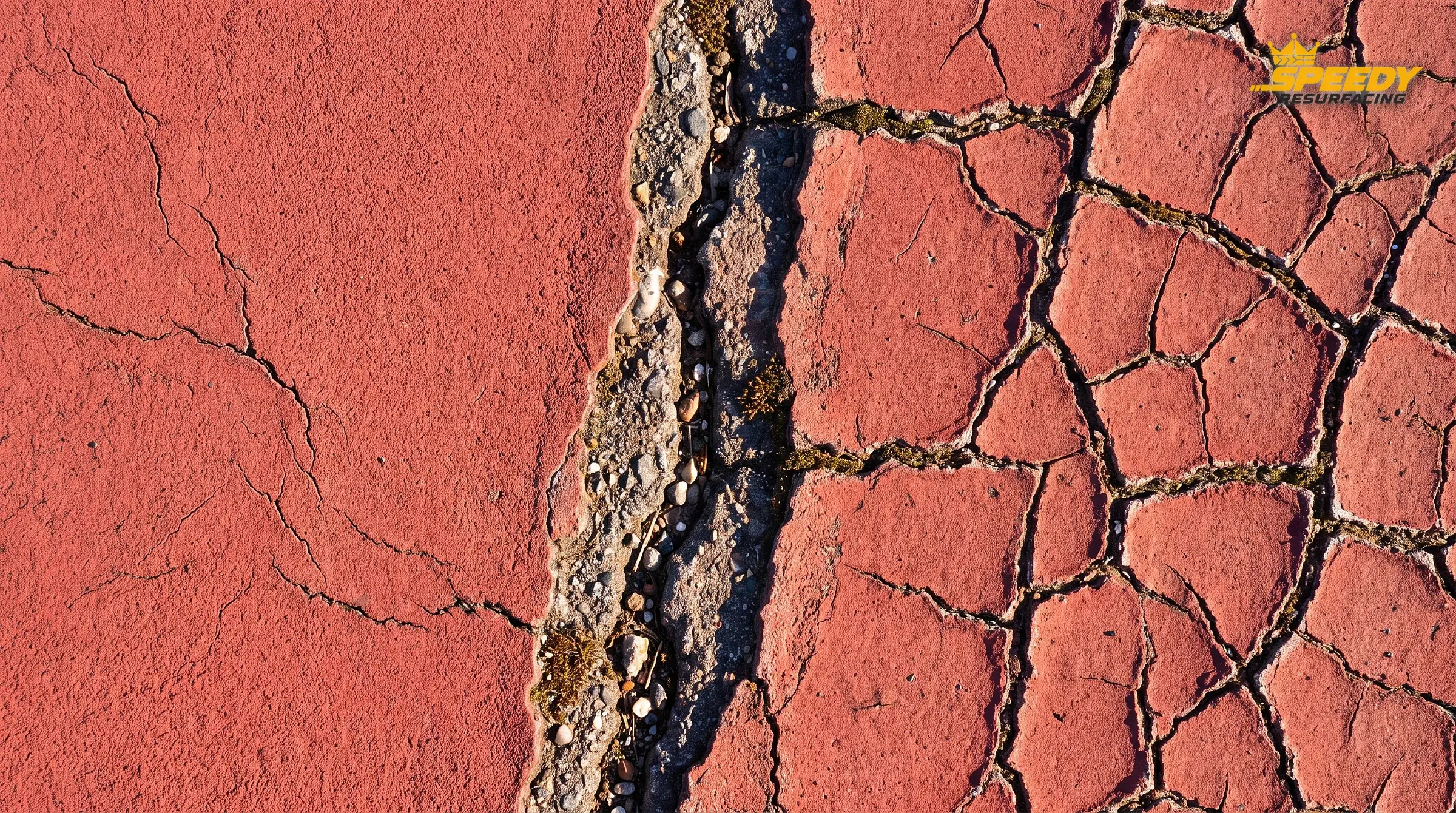
Cracks in asphalt or concrete courts are more than visual defects; they allow water penetration that weakens the underlying sub-base, leading to major structural failure if ignored. Three categories are assessed on every court:
- Shrinkage and surface cracks: Fine hairline fractures caused by sun exposure, thermal expansion or natural age.
- Structural deep cracks: Wider fractures penetrating through the concrete or asphalt slab, often linked to ground movement or sub-grade settling.
- Alligatoring or crazing: Networked patterns of interconnected micro-cracks indicating advanced surface fatigue.
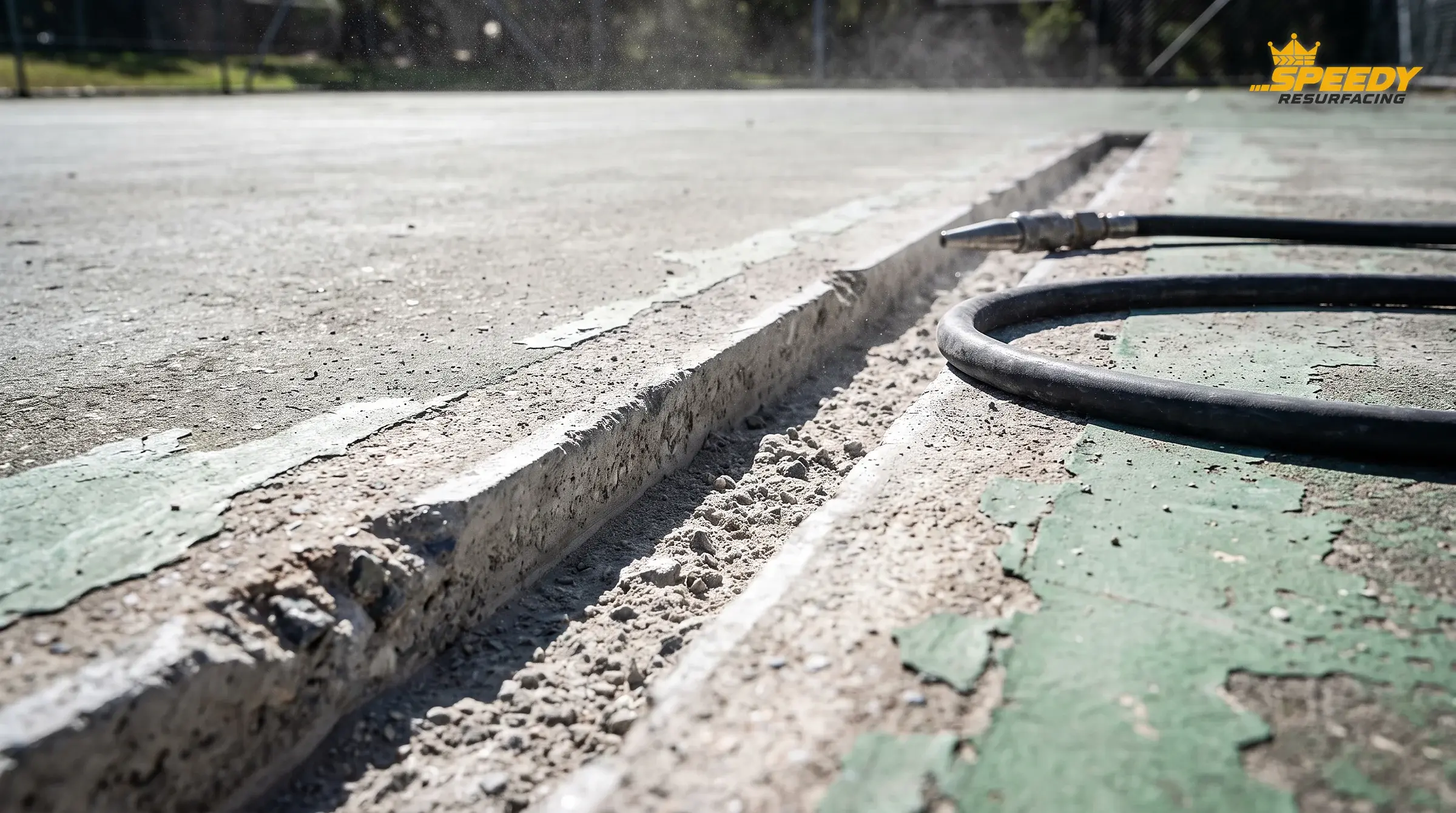
The repair method itself follows three stages:
- Routing and cleaning: Every crack is mechanically routed using specialised equipment to form a clean V-groove channel. All loose debris, vegetation, dirt and moisture are extracted using high-pressure air compressors.
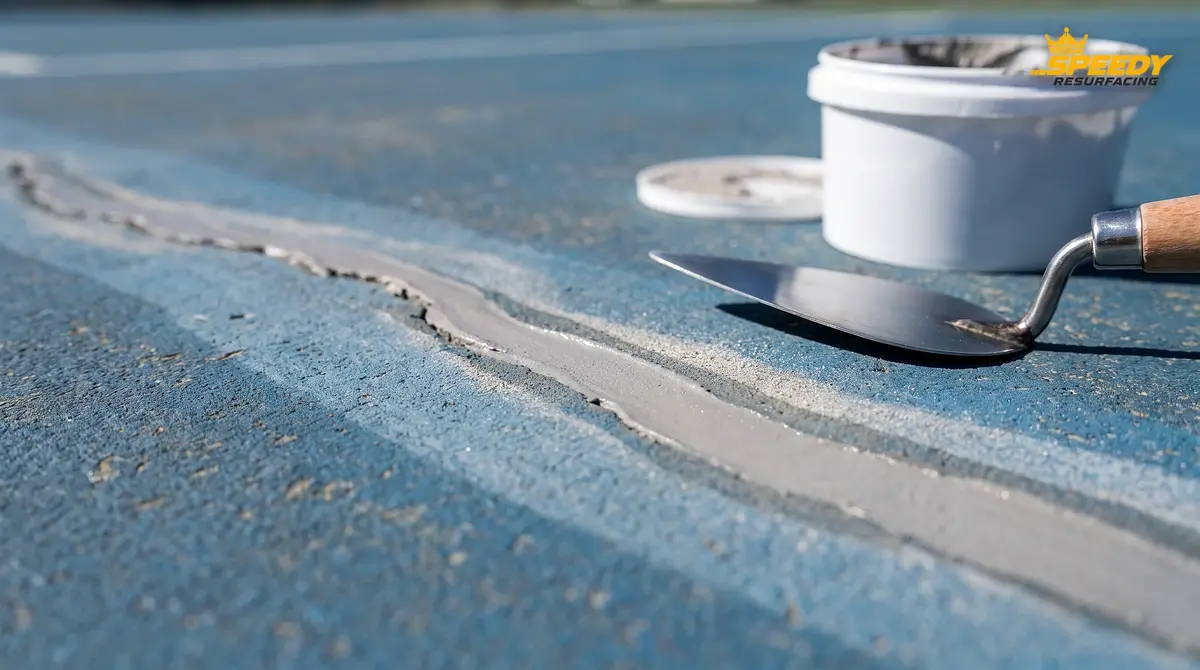
- Flexible acrylic patching compounds: Hairline and mid-sized cracks are filled with high-performance acrylic crack fillers blended with targeted silica sands. This creates a dense, flexible matrix that moves slightly with temperature shifts without pushing through the topcoats.
- Structural expansion joint treatment: True structural expansion joints in concrete must be cleared, prepared and sealed with elastomeric sealants engineered to absorb slab movement while maintaining a watertight barrier.
Levelling Low Spots and Eliminating "Birdbaths"
Standing water on a sports court creates major safety hazards, promotes algal growth and accelerates coating degradation. Depressions that collect water are commonly referred to as "birdbaths". Before applying base coats, the court undergoes a standardised one-hour flood test.
- 01
Flood and drain
The entire court area is flooded with water and allowed to drain naturally for 60 minutes in ambient conditions.
- 02
Mark every pool
Any remaining pool deeper than the thickness of a standard coin is marked around its exact perimeter.
- 03
Build up with acrylic patch binder
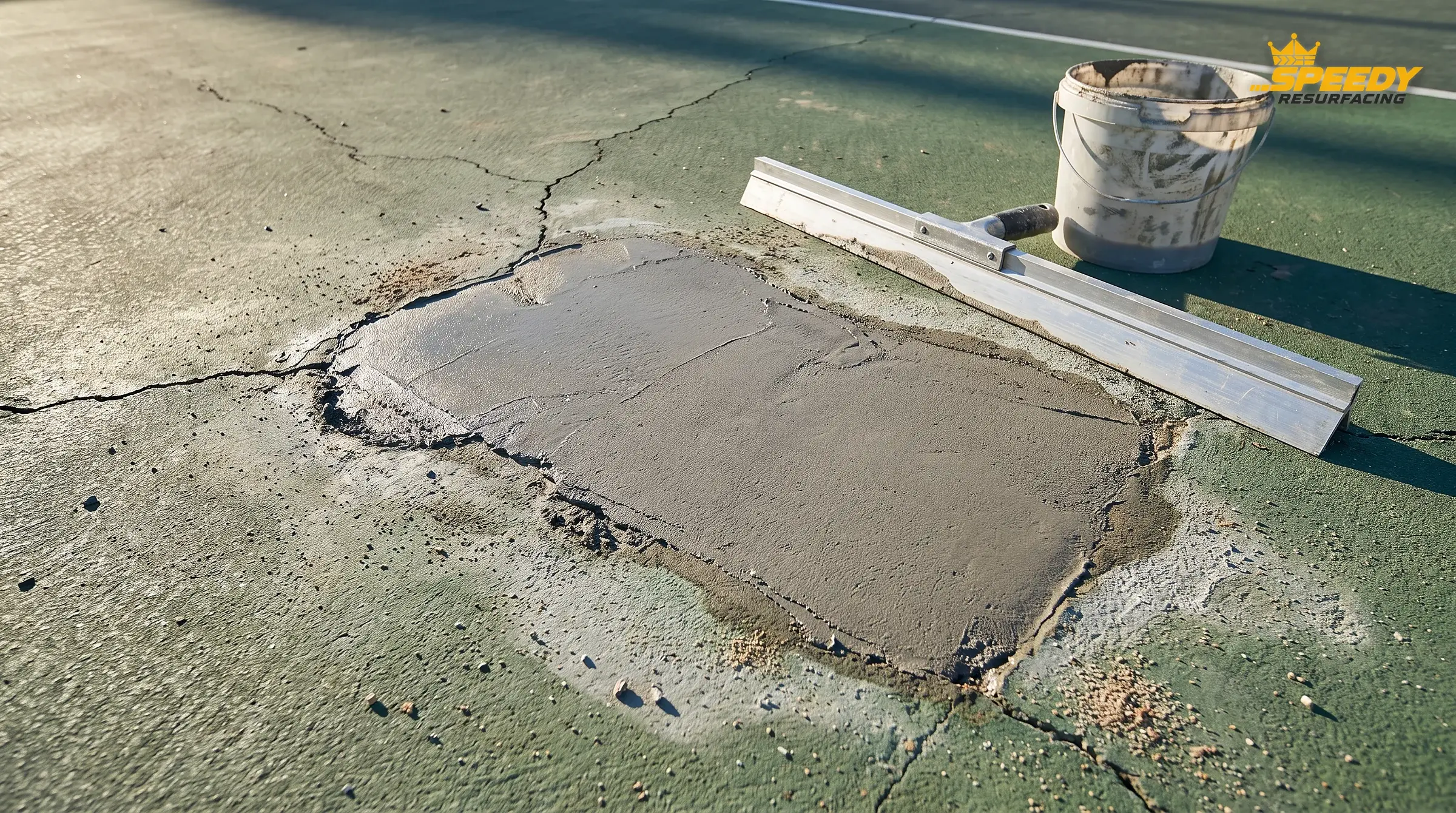
Low spots are built up using a specialised acrylic patch binder mixed with graded Portland cement, silica sand and clean water.
- 04
Squeegee and feather-edge
The patching mixture is applied layer by layer using broad straight-edge squeegees, gradually feathering the edges to zero so the repair blends seamlessly into the surrounding surface without creating high spots or ridges.
Removal of Worn, Flaking and Unstable Coatings
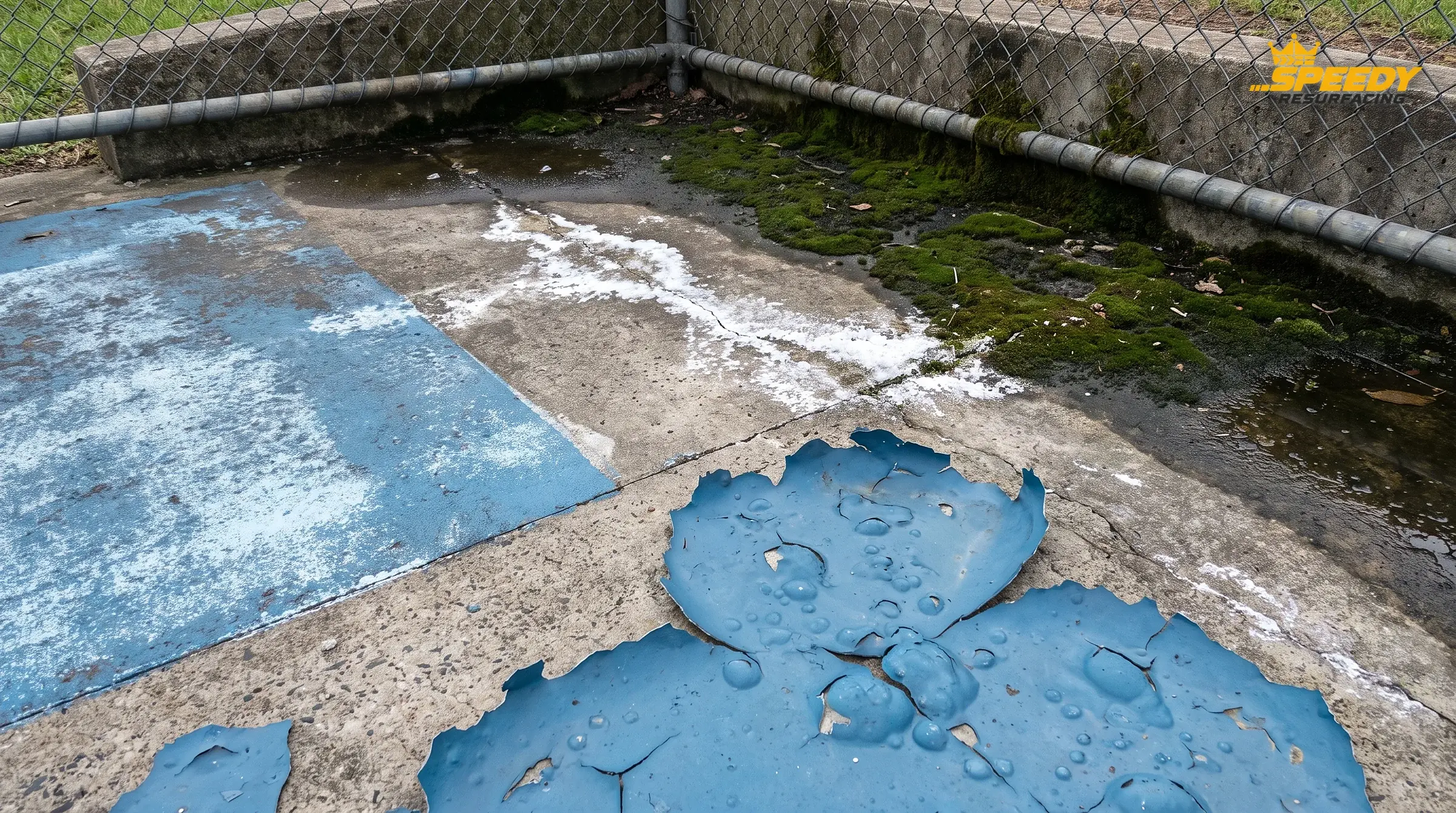
A common cause of resurfacing failure is applying new acrylic systems over old coatings that have lost their bond to the concrete or asphalt underneath. Each defect has a specific cause and a specific corrective method:
| Existing Surface Defect | Cause of Failure | Corrective Preparation Method |
|---|---|---|
| Peeling or bubbling paint | Moisture pressure, improper historical priming, or oil contamination | Mechanical grinding or shot blasting to remove unbonded paint layers |
| Chalking or UV breakdown | Severe sun exposure breaking down old binder resins | High-pressure power washing and surface mechanical scarification |
| Efflorescence (concrete) | Water-soluble salts migrating through concrete to the surface | Acid etching, neutral cleaning, and specialised vapour-barrier primers |
| Algae, moss & mould growth | Shaded conditions, trapped moisture, or poor drainage | Chemical biocide treatment followed by deep mechanical scrubbing |
Substrate Mechanical Grinding & Surface Profile Creation
Once repairs and cleaning are completed, the substrate must be given the correct mechanical profile to guarantee long-term adhesion for the upcoming acrylic layers.
- Concrete substrates: Concrete courts require diamond grinding to open up the concrete pores, smooth out rough patches and eliminate laitance (thin, weak surface layers). Concrete surfaces are then treated with specialised acrylic concrete primers formulated to anchor deep into the pores.
- Asphalt substrates: Asphalt courts are mechanically cleaned and inspected for oxidation or loose aggregate. An acrylic resurfacer base coat embedded with silica sand is applied across the entire site to fill surface voids and yield a uniform texture.
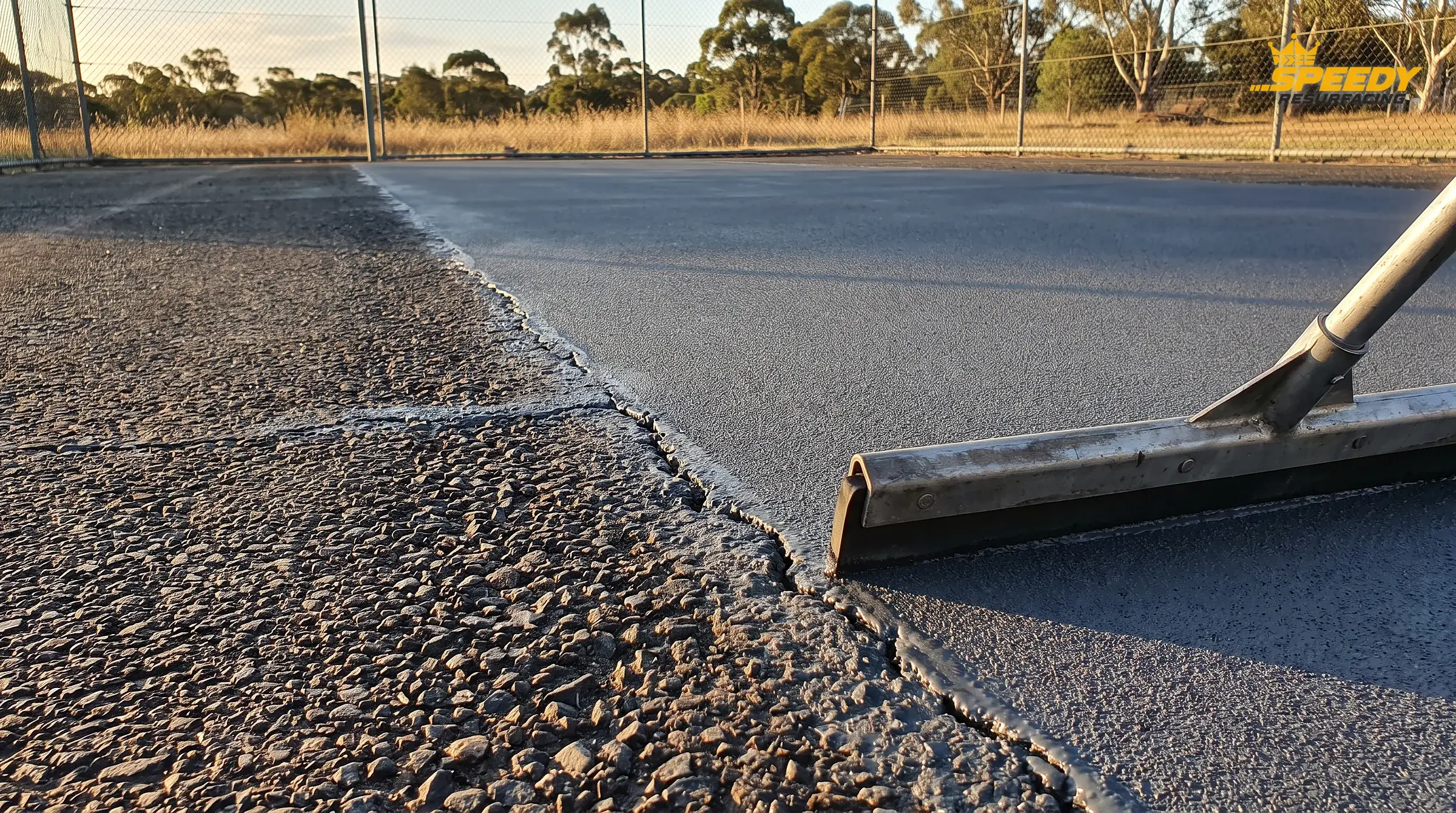
Every crack filled, every low spot levelled, every square metre primed — only then does a court earn its colour.
Speedy Resurfacing
Transition to Acrylic Resurfacing and Precision Line Marking
Only after every crack is filled, every low spot levelled and the entire surface correctly primed does the court advance to multi-layer acrylic colour application.
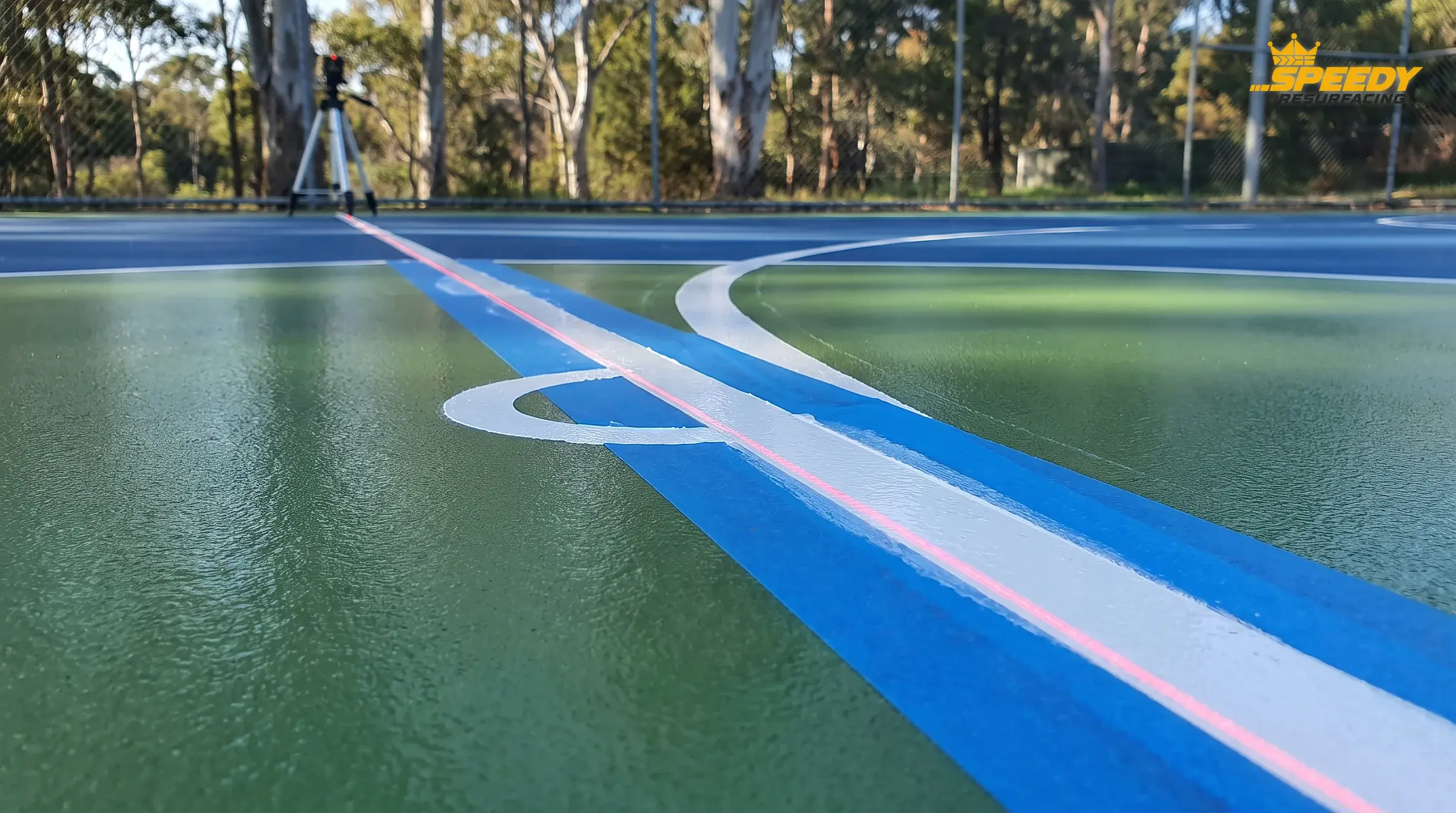
When the specialised colour system is fully cured, Speedy Line Marking executes the final, critical step. Using laser-guided measurements and athletic regulation standards, precise game boundaries, keys, arcs and multi-sport layouts are delineated.
Benefits of Correct Pre-Resurfacing Repairs
- Enhanced safety: Eliminates tripping hazards, uneven footings and slippery water pools.
- Consistent game play: Ensures predictable ball bounce, reliable foot traction and clear line visibility.
- Maximum durability: Extends the useful lifespan of your sporting asset by years.
- Visual excellence: Delivers a smooth, professional, high-contrast finish for schools, clubs, commercial hubs or private courts.
Ready to Restore Your Court in Sydney?
Whether managing a school basketball court, a commercial facility or a multi-sport community space, do not settle for a short-term repaint over damaged foundations. Partner with Sydney's sports court resurfacing and line marking authority.
- 01
Send site photos
Email photographs of your court's current surface to info@speedyresurfacing.com.au — or upload them to the free Court Scan — highlighting visible cracks, water pooling or worn areas.
- 02
Book an on-site inspection
Our technical team inspects the site, evaluates the substrate and provides a clear repair and resurfacing scope. Leave your name, mobile and email below, or call 0466 495 495.
Frequently Asked Questions
Know a school, club or court owner who needs this?
Send them the article in one tap, and follow Speedy Resurfacing on Instagram @speedyresurfacing and Facebook for before-and-after court transformations across Sydney.