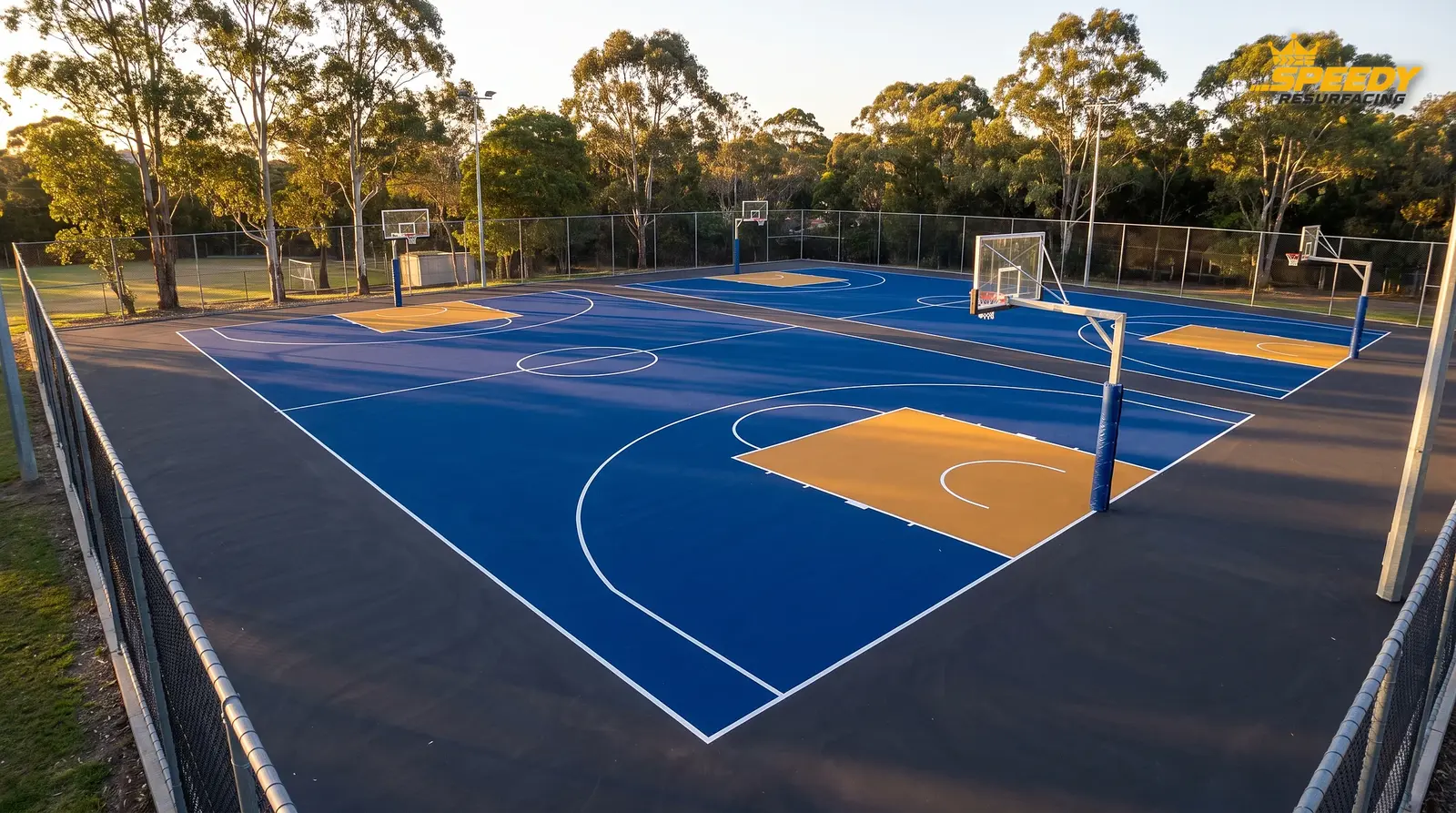

Basketball Court Resurfacing for Schools, Councils & Private Properties: Dimensions, Requirements & Scoping Guide
Schools, councils and homeowners resurface basketball courts for very different reasons — holiday shutdown windows, public-safety run-off and handover documentation, or a backyard squeezed between a fence and a retaining wall. This guide compares the three buyer groups, sets out FIBA full-court, half-court and custom compact dimensions, explains multi-sport line hierarchy, and lists exactly what a professional resurfacing quote must itemise.
- Schools need holiday-window execution and wear resistance; councils need FIBA layouts with certified run-off and handover documentation; homes need custom footprints that respect fences, walls and setbacks.
- A FIBA full court is 28 × 15 m with a minimum concrete footprint of about 32 × 19 m once the 2 m perimeter run-off is included.
- A standard half-court is 14 × 15 m (or scaled to 10 × 12 m) with a full three-point arc, free-throw line, charge circle and key; custom compact pads run from about 6 × 8 m to 9 × 10 m.
- A backyard court does not need competition dimensions — keep the 4.6 m rim-to-free-throw distance and 4.9 m key width true, then scale the perimeter to the pad.
- Multi-sport overlays use a strict colour hierarchy: primary sport in 50 mm white or yellow, secondary in orange or blue, tertiary in muted or broken lines.
- A professional quote itemises six stages: inspection, surface preparation, structural repairs, acrylic coating, line marking, and clean-up and handover.
Speedy Resurfacing acknowledges the Traditional Custodians of the land on which we live and work, including the Gadigal people of the Eora Nation across the Sydney basin. We pay our respects to Elders past, present, and emerging, and recognise their continuing connection to the land, waters, and culture of New South Wales.
Planning a basketball court resurfacing project in Greater Sydney requires balancing athletic performance, site availability and spatial constraints. Whether managing a high-traffic educational campus in Blacktown, a public council facility in Penrith or a residential backyard court on the North Shore, every buyer group faces distinct operational priorities.
At Speedy Resurfacing, we specialise in professional acrylic court resurfacing, structural preparation and precision line marking across Sydney. Requesting a site assessment proposal? Submit court photography, structural dimensions and site location to info@speedyresurfacing.com.au or call 0466 495 495.
How Buyer Needs and Layouts Compare
A successful court project starts by matching the physical footprint with the site's intended operational use:
- Schools: Require rapid execution during school-holiday shutdown windows, maximum durability for daily recess traffic, and multi-sport line marking overlays.
- Councils & public facilities: Prioritise formal handover documentation, compliance with public safety standards, perimeter run-off clearances, and heavy-duty, weather-resistant acrylic coatings.
- Residential properties: Work within strict boundary constraints, retaining walls and custom dimensions — where a tailored half-court or custom key layout is far more practical than forcing full competition measurements.
| Buyer Category | Primary Constraint | Recommended Layout | Key Focus Area |
|---|---|---|---|
| Schools & education | Strict holiday timeframes & high foot-traffic wear | Full court or multi-court complexes | Surface preparation, wear resistance and multi-sport clarity |
| Local councils | Public safety standards & site access protocols | Standard FIBA full courts with certified run-off | Comprehensive site documentation, run-off compliance and drainage |
| Private properties | Spatial footprint, slope and boundary setbacks | Half-court, key-only or custom compact dimensions | Custom colour integration, noise reduction and efficient spatial use |
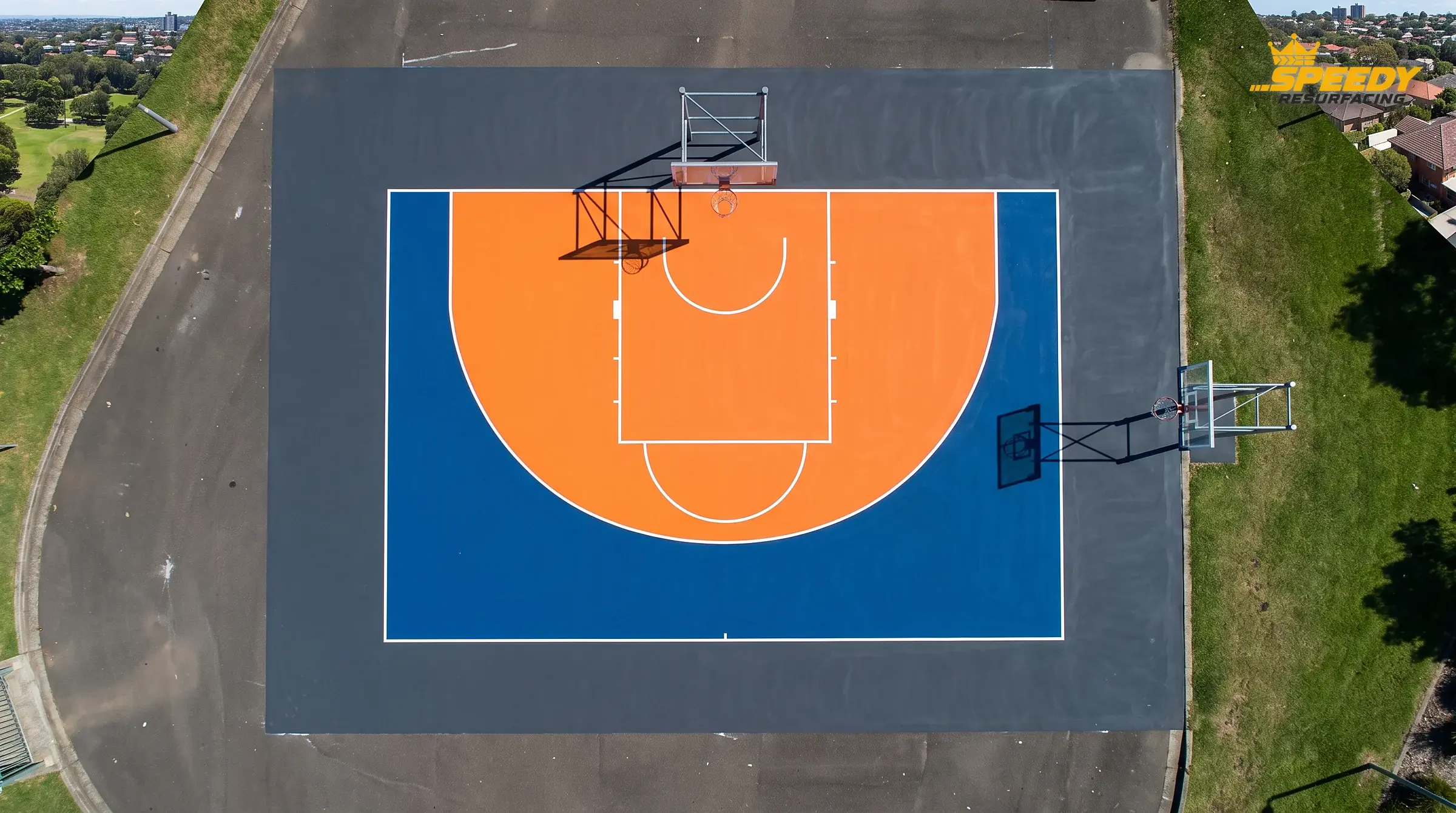
Comparing Buyer Requirements Across Sydney Sites
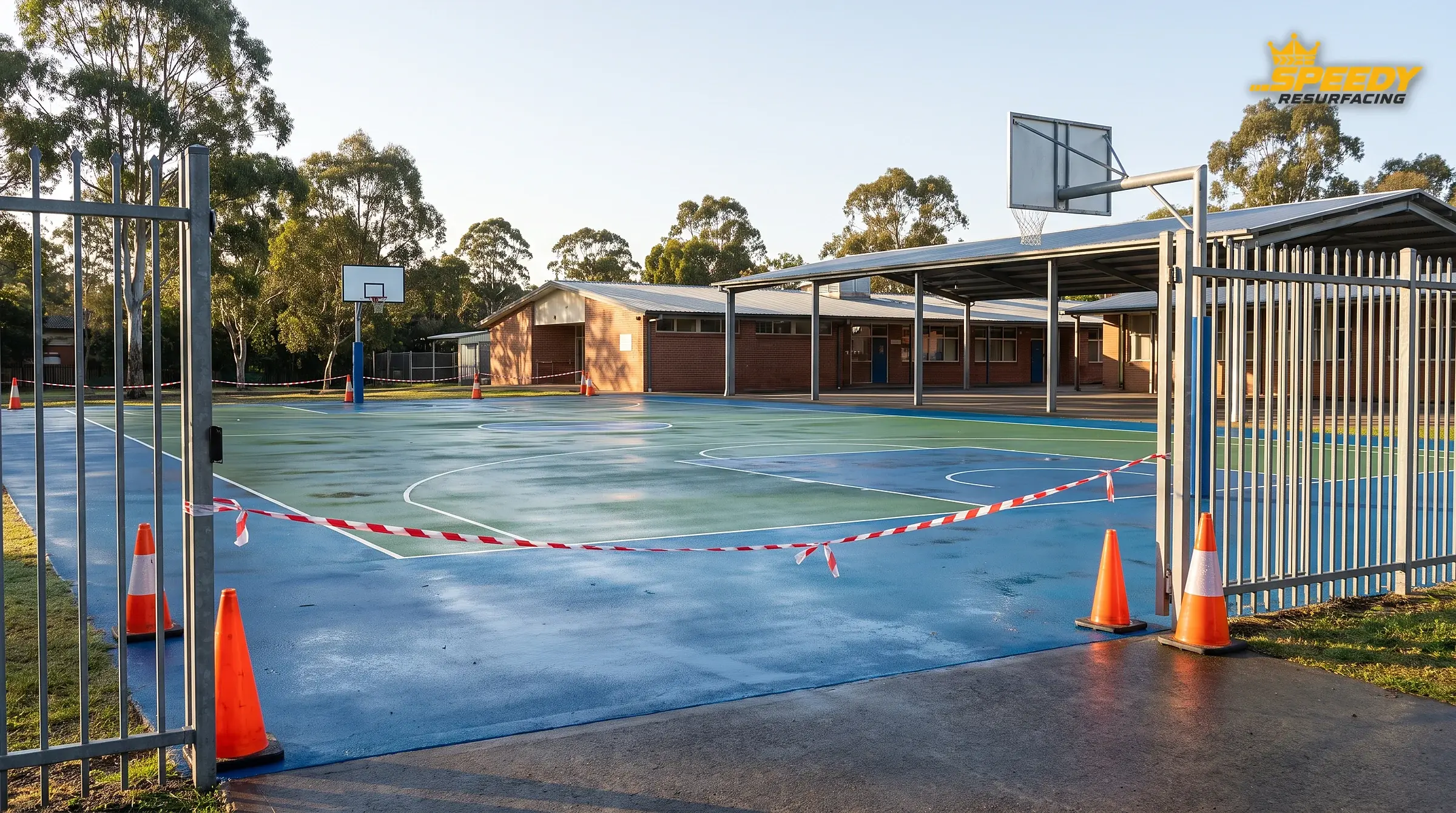
School Access and Holiday Scheduling Windows
Educational facilities require careful project timing. Carrying out heavy surface grinding, pressure washing and acrylic coating application during normal school-term hours creates safety risks and operational disruption.
- Execution windows: Work is ideally programmed during term breaks, such as two-week holiday periods or summer shutdowns.
- Curing & application conditions: Acrylic sports systems require strict temperature thresholds (typically above 10 °C and dry conditions) and specific drying intervals between base levelling, colour coats and line marking. Schedules must account for both active work days and the ambient drying periods required before student access is restored.
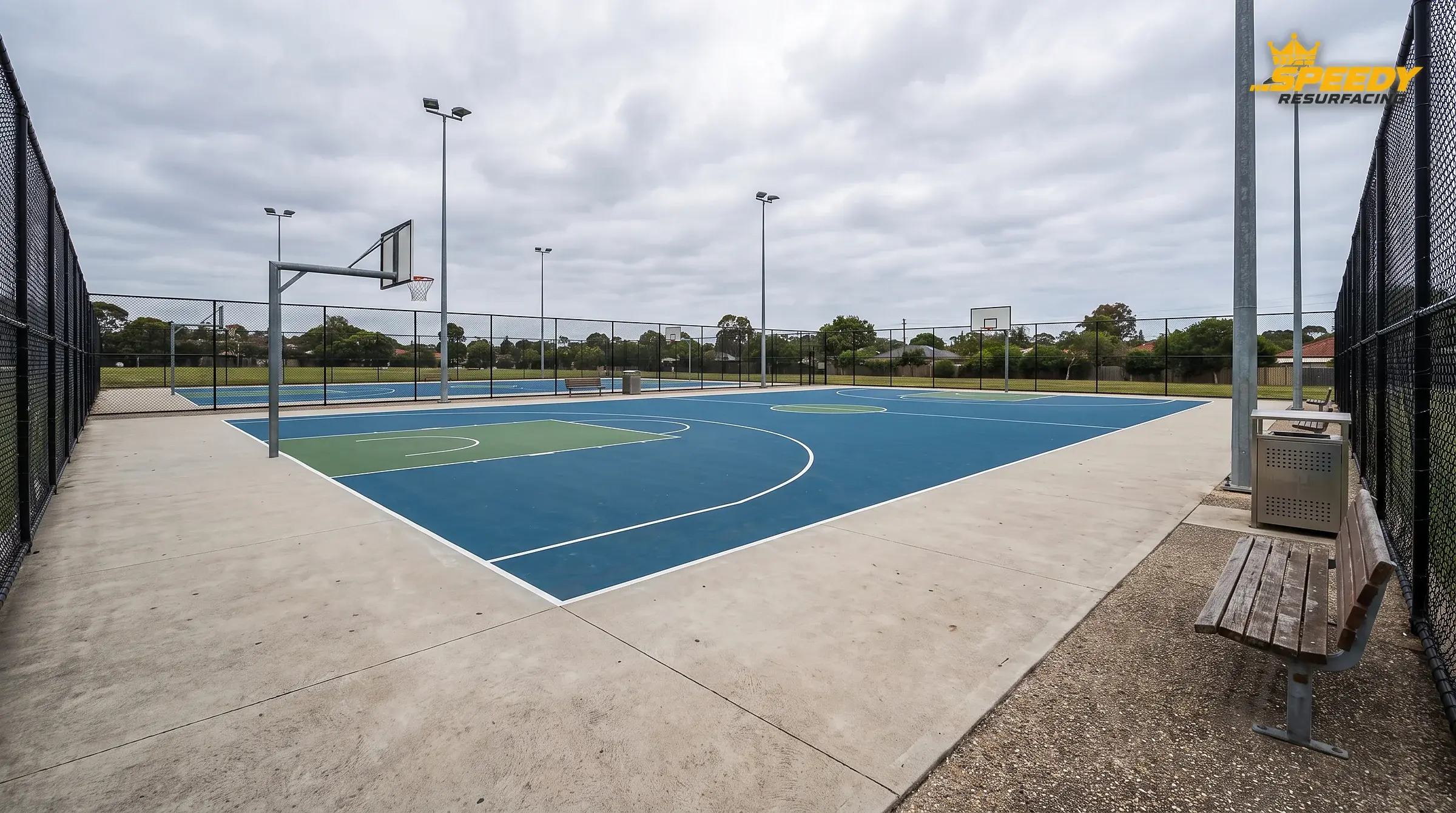
Public Council Facilities and Handover Standards
Municipal basketball courts in public parks and community leisure centres endure continuous, unsupervised public use and extreme weather exposure.
- Safety & compliance: Local government procurements require clear documentation covering surface slip resistance, structural defect repairs and verified site clearances.
- Run-off & surrounding infrastructure: Official FIBA standards specify a 28 m × 15 m playing boundary, but council facility guidelines mandate an additional unobstructed safety boundary — typically 2 m along sidelines and 2–3 m behind baselines. Fencing, lighting posts and access gates must sit safely outside this active playing zone.
Residential Footprints and Property Boundaries
Backyard installations across Sydney residential properties are almost always defined by physical site limitations such as property fences, retaining walls, garden beds or sub-base drainage restrictions. Rather than forcing standard commercial dimensions into a tight residential yard, private court owners benefit from custom-engineered footprints that optimise the usable paved space.
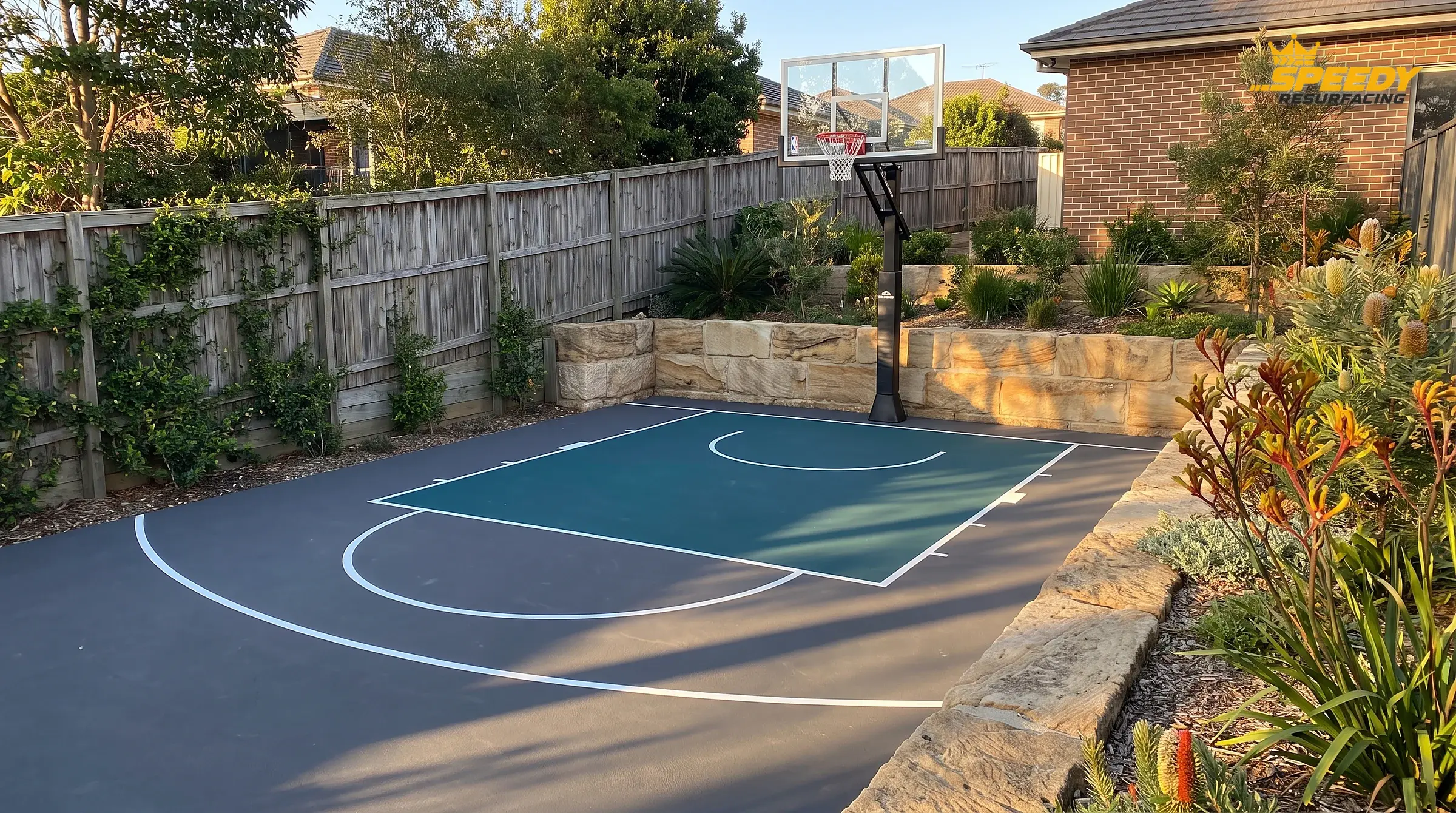
Distinguishing Court Layouts: Full-Size, Half-Court & Custom Spaces
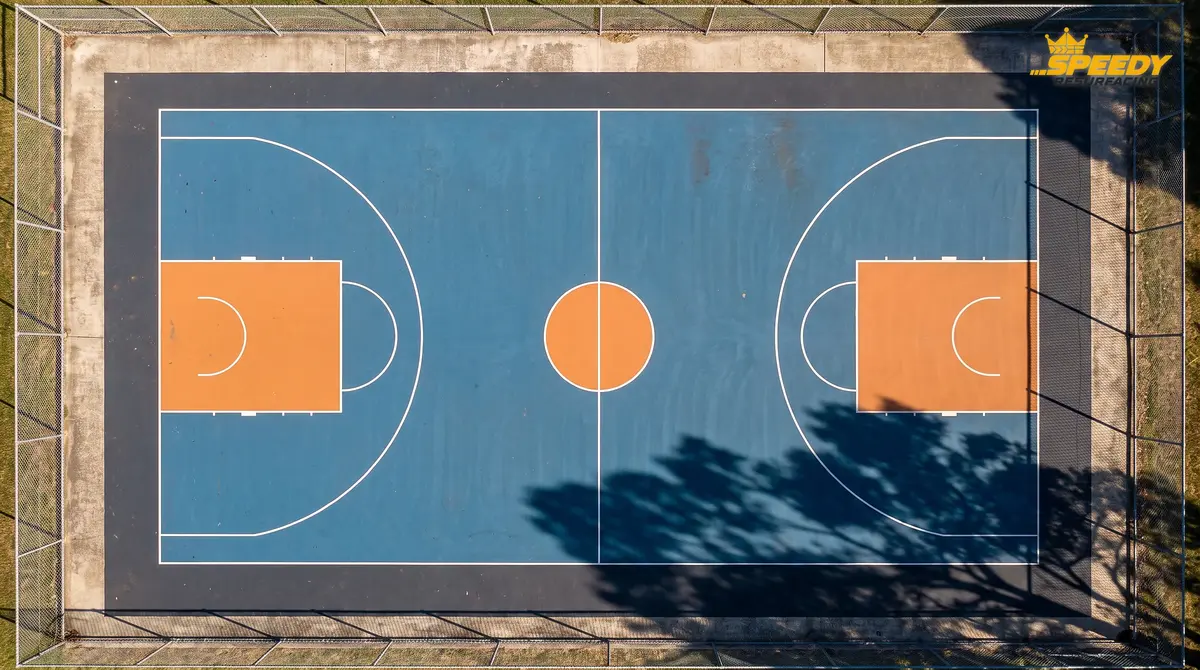
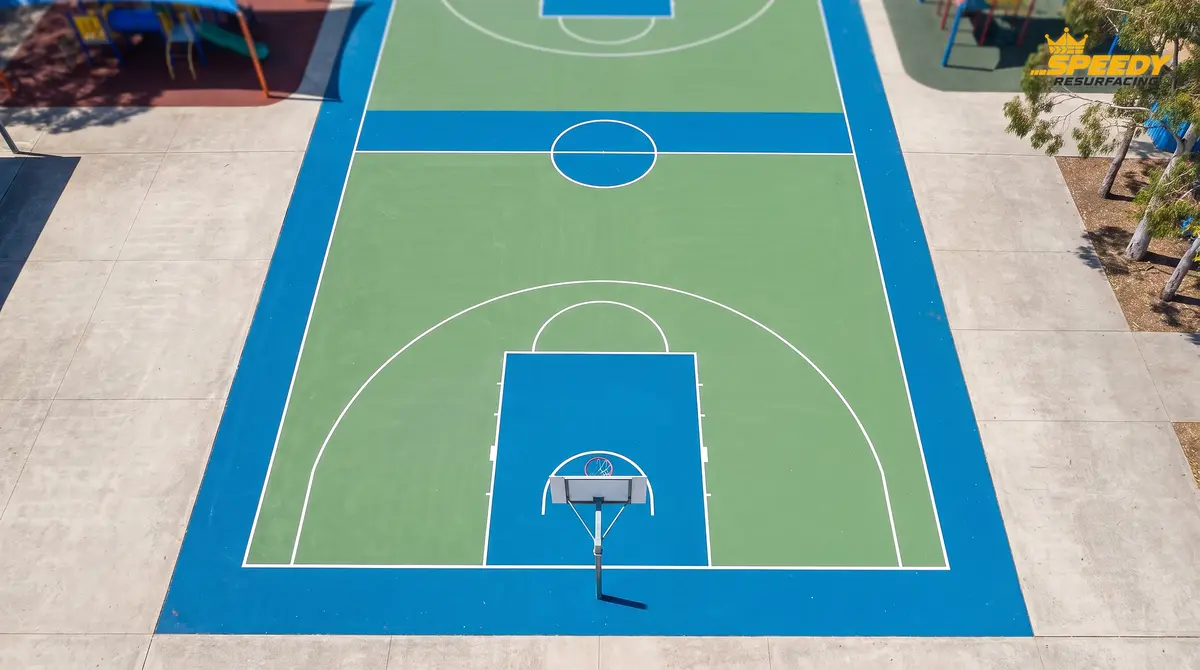
- FIBA full-size competition court: Playing area 28 m long by 15 m wide. Total minimum concrete footprint approximately 32 m × 19 m, inclusive of mandatory 2 m perimeter safety run-off zones. Best suited to high schools, sports complexes, council parks and professional training venues.
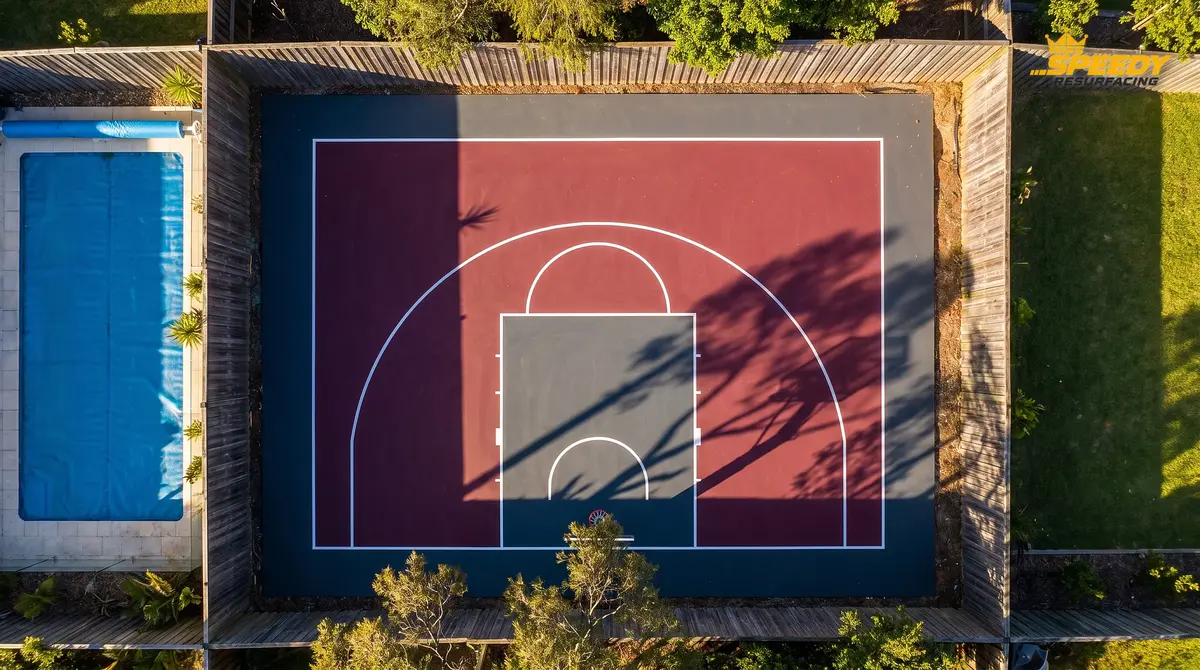
- Standard half-court: Playing area 14 m long by 15 m wide (or scaled down to 10 m × 12 m). Includes a full three-point arc, free-throw line, charge circle and key. Best suited to primary schools, community parks, residential backyards and multi-use recreational areas.
- Custom & compact recreational layouts: Variable playing area, for example 6 m × 8 m or 9 m × 10 m. Features a standard key and free-throw line with a modified or scaled three-point boundary to fit the available concrete pad. Best suited to residential backyards, tight suburban properties and specialised training zones.
Does a Backyard Court Need Full Competition Dimensions?
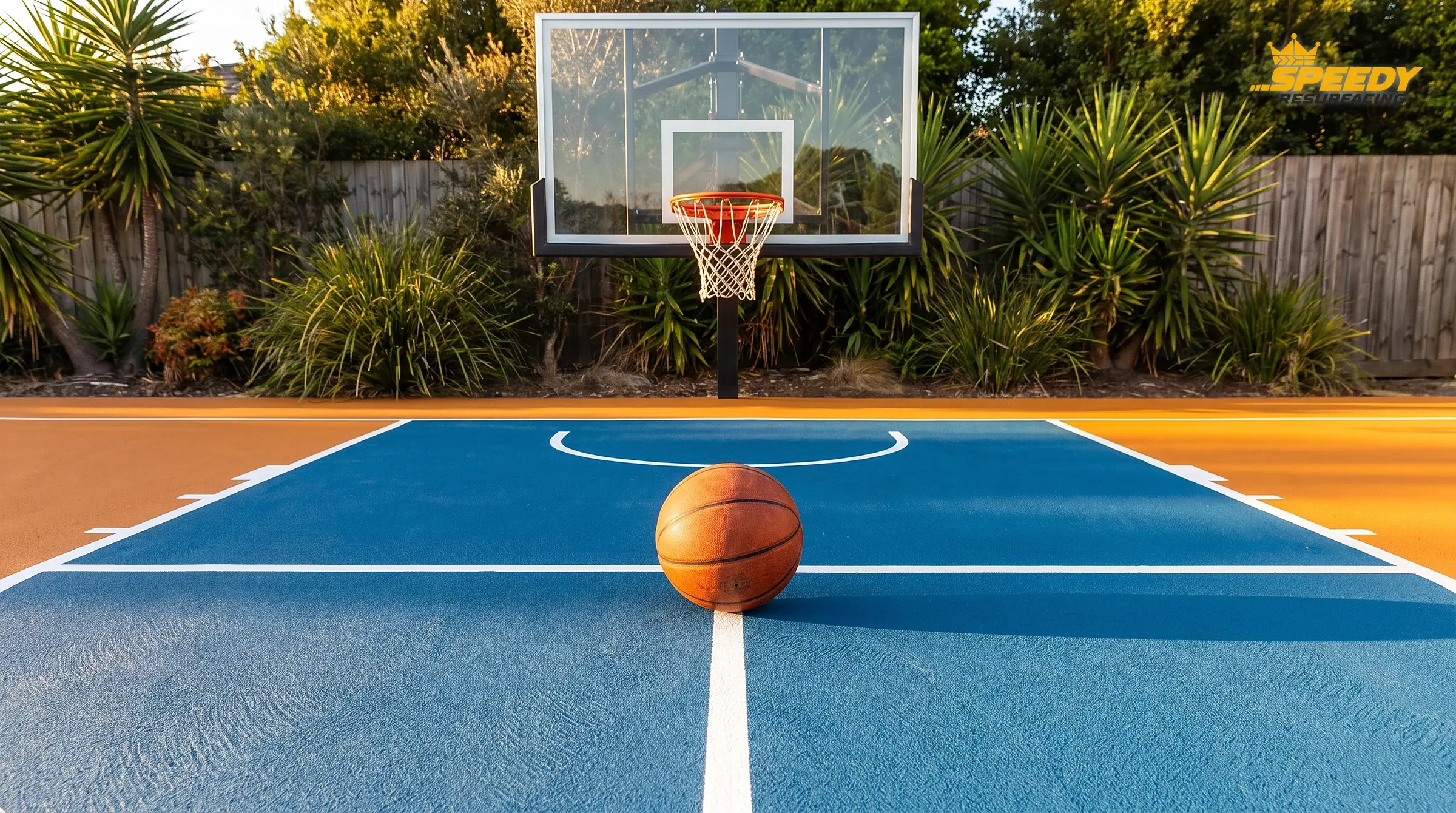
No. A backyard basketball court does not require official competition dimensions to provide an elite playing experience. In fact, attempting to fit a full-size 28 m × 15 m court into a standard residential yard often leaves insufficient perimeter run-off, placing players dangerously close to walls, fences or garden edges. For residential properties, half-court configurations or custom-scaled key layouts are the standard choice:
- 01
Preserves regulatory ring proportions
The distance from the rim to the free-throw line (4.6 m) and the key width (4.9 m) can remain 100% true to regulation, allowing authentic shooting practice.
- 02
Maximises available pavement
Scaled perimeter lines ensure that play stays centred safely on the engineered concrete sub-base.
- 03
Reduces overall material and sub-base costs
Focuses the resurfacing investment into a high-performance, vibrant playing zone without requiring extensive additional excavation.
Can Other Sports Be Included? Multi-Sport Overlays & Line Hierarchy
Yes. Existing basketball courts can easily be transformed into versatile multi-sport spaces incorporating netball, tennis or pickleball markings on a single acrylic surface. To keep the playing space clear and visually understandable, professional line marking relies on a strict colour hierarchy:
- Primary sport (e.g. basketball): Marked in standard 50 mm high-contrast solid lines, such as white or bright yellow.
- Secondary sport (e.g. netball or tennis): Marked in a distinct, complementary colour such as orange or blue to establish immediate visual separation.
- Tertiary sport (e.g. pickleball): Marked in subtle or muted tones such as soft green or light grey, or in broken lines, to prevent visual clutter.
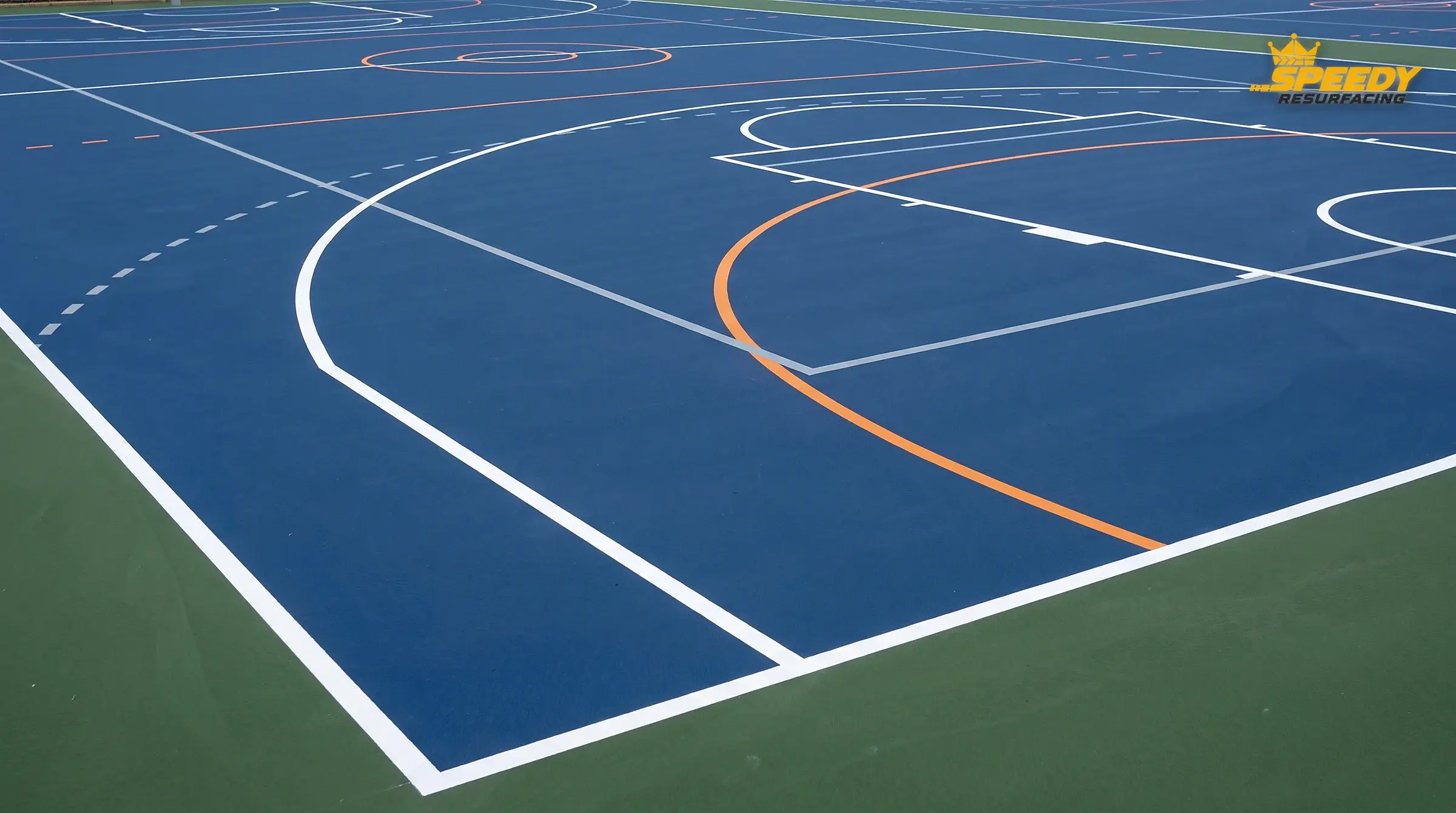
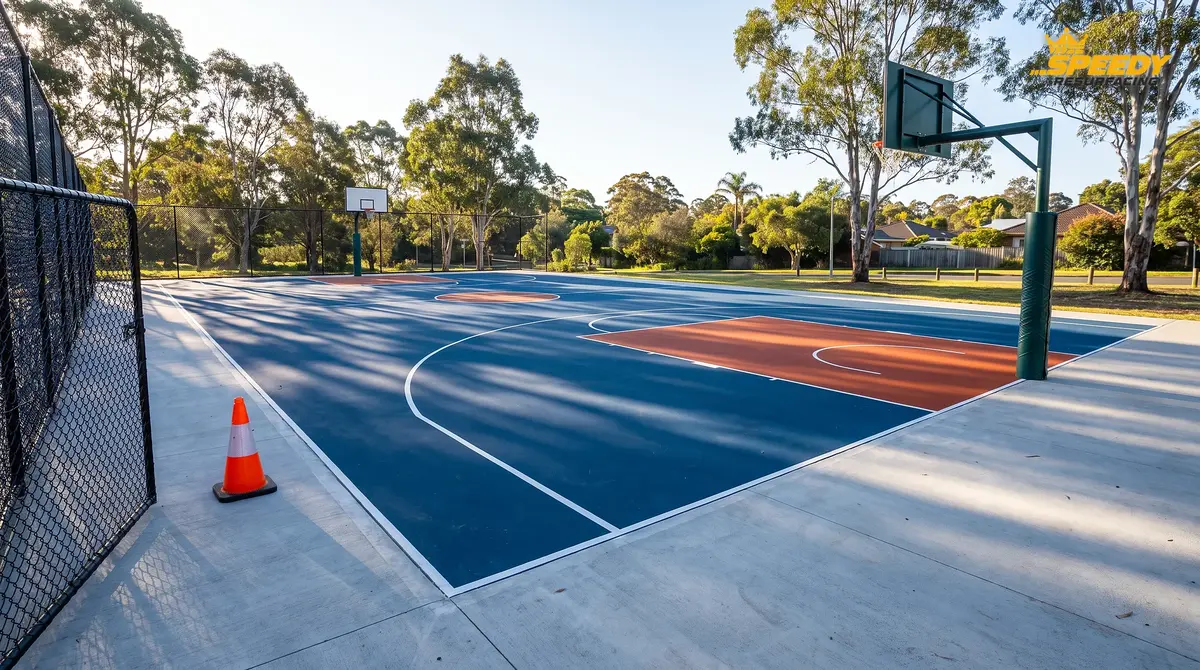
Colour-zone resurfacing — where the basketball key, court perimeter and outer apron use contrasting acrylic shades — further enhances visual clarity while adding a professional, custom finish.
A quote that says "paint court" is not a scope. If the preparation isn't itemised, it isn't priced — and it probably isn't happening.
Speedy Resurfacing
What Belongs in a Professional Resurfacing Quote?
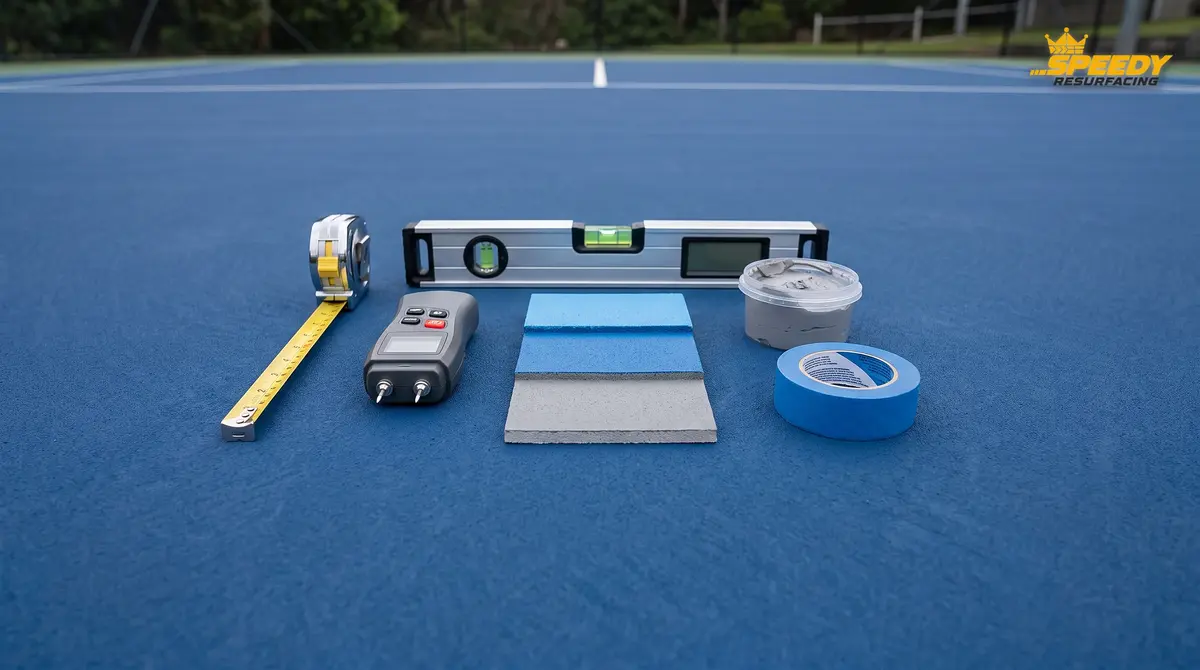
A professional court resurfacing proposal should never be a single, vague dollar figure for "painting a court". Because long-term court performance depends heavily on sub-base preparation, a detailed scope of work must itemise every stage of the process:
- 01
Site inspection & assessment
Evaluation of base stability, surface slope, drainage issues and existing coating adhesion.
- 02
Surface preparation
High-pressure industrial washing, mechanical grinding, and removal of loose, flaking paint or surface contaminants.
- 03
Structural repairs & patching
Filling surface cracks, repairing low spots (ponding areas where water pools), and applying specialised primer or acrylic base coat systems.
- 04
Acrylic coating application
Textured acrylic resurfacer and colour coats incorporating specialised non-slip silica aggregates for optimal traction and UV stability.
- 05
Precision line marking
Mathematical measurement and application of heavy-duty, crisp line markings for basketball and optional multi-sport overlays to regulatory guidelines.
- 06
Site clean-up & handover
Complete clearing of project debris, an outline of recommended curing times, and care guidance.
Request Your Sydney Court Resurfacing Proposal
Whether managing a school precinct, scoping a public council park or upgrading a residential court, Speedy Resurfacing provides expert surface assessment, tailored design layouts and lasting acrylic application across Greater Sydney. Our team works alongside facility managers, school executives and property owners to deliver custom court transformations built for precision, durability and athletic performance. To receive an obligation-free site evaluation and tailored proposal, please provide:
- Site suburb & location: Blacktown, Penrith, the North Shore — anywhere across Greater Sydney.
- Surface type & condition: Asphalt or concrete; existing cracks or wear.
- Court dimensions or estimated square meterage: Length and width of the paved area.
- Intended uses: Basketball-only or multi-sport integration.
- Current site photos: Or upload them to the free Court Scan.
Contact Speedy Resurfacing today — leave your name, mobile and email below, email info@speedyresurfacing.com.au or call 0466 495 495. Line marking division: Speedy Line Marking.
Frequently Asked Questions
Know a school, club or court owner who needs this?
Send them the article in one tap, and follow Speedy Resurfacing on Instagram @speedyresurfacing and Facebook for before-and-after court transformations across Sydney.