
7 Things We Assess Before Resurfacing a Sports Court
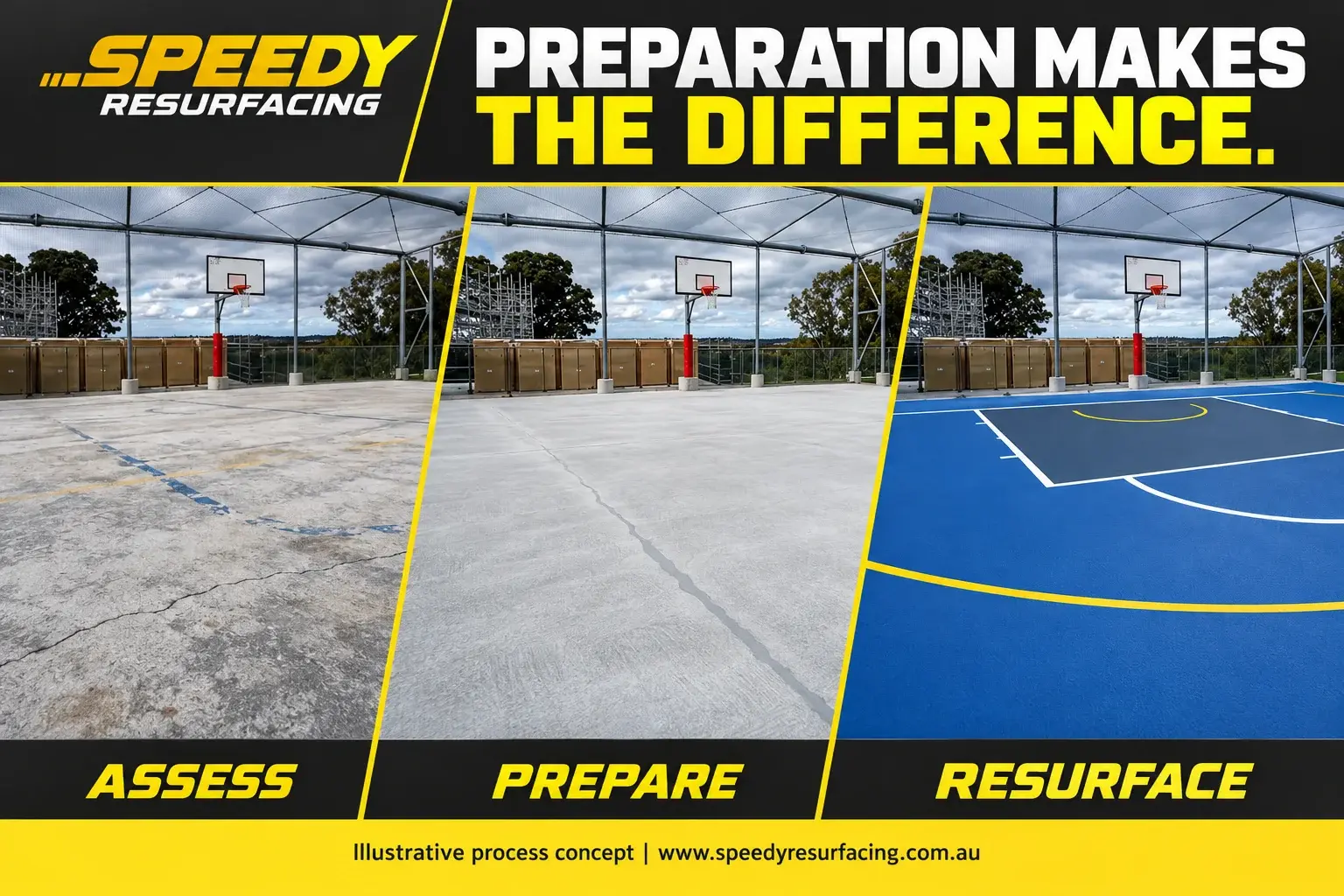
A high-performance court is far more than a fresh coat of colour. Before a single litre of acrylic goes down, Speedy Resurfacing runs a 7-point site assessment — substrate, cracks, coating history, water, contamination, sport and layout — because painting over an unexamined slab is a guaranteed recipe for failure.
- Coatings applied over an unexamined substrate fail early — true surface performance starts with understanding the foundation.
- Asphalt oxidises and ravels; concrete transmits vapour and carries laitance — each base needs a different priming and profiling protocol.
- Cracks are triaged as hairline, stress or structural: resurfacing bridges minor movement but cannot fix active sub-base subsidence.
- Incompatible or delaminating old coatings must be ground off, or the new acrylic will pull away with them.
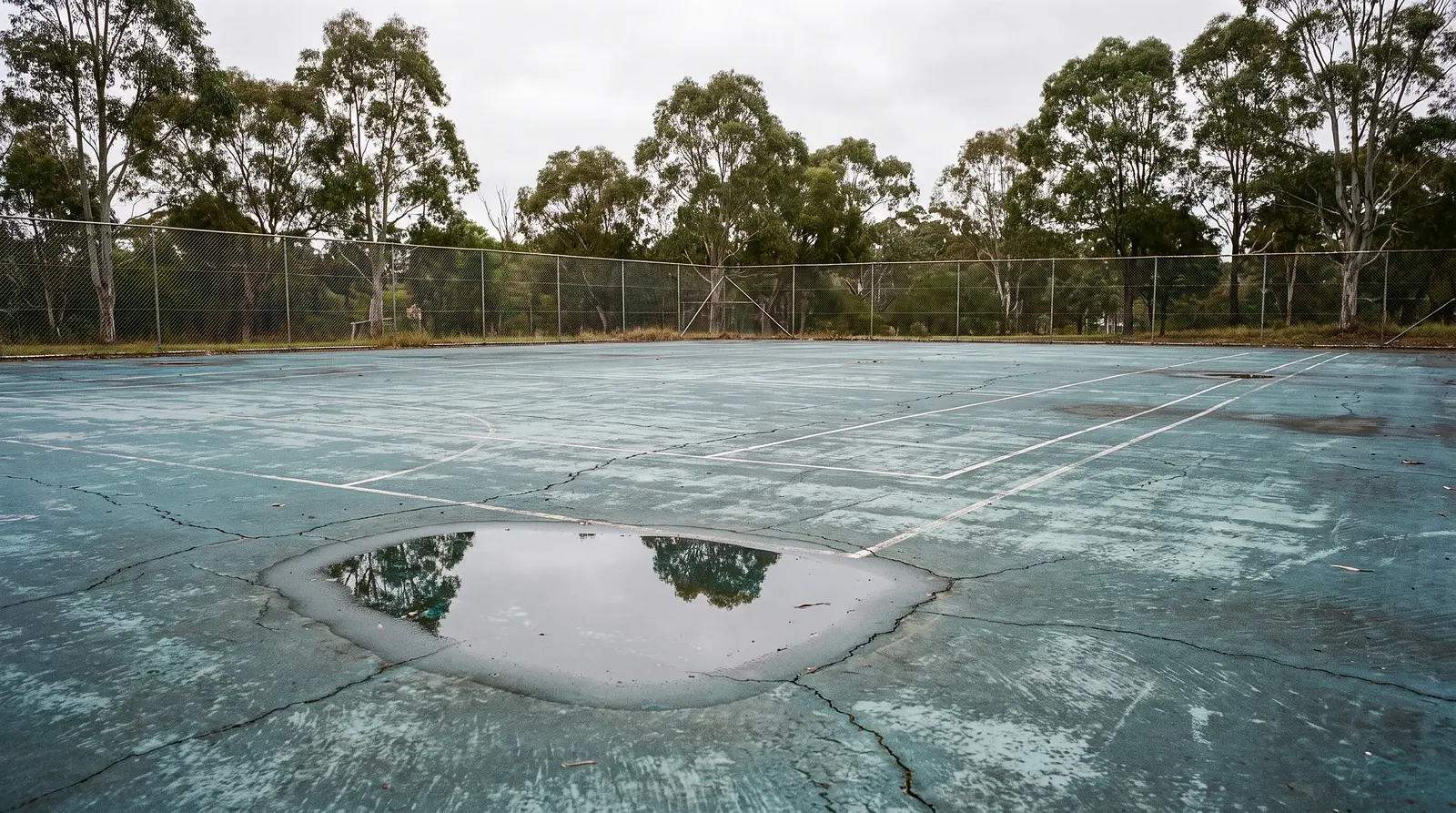
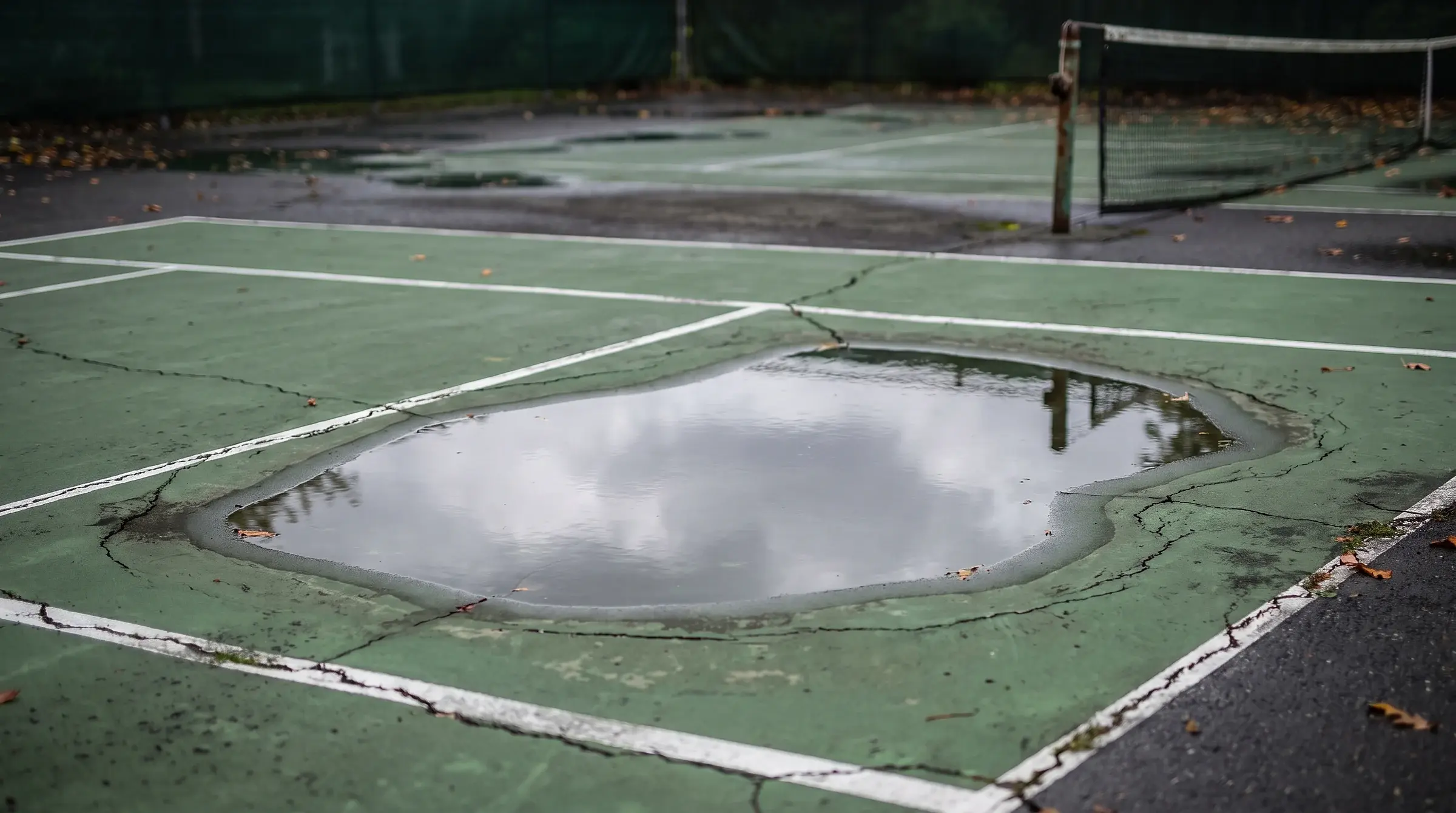
- Standing water ('birdbaths') destroys binders and traction — low spots are levelled before any colour coat.
- Sport, usage and colour-coded layout dictate texture, grit and line hierarchy on the finished court.
Speedy Resurfacing and its parent division, Speedy Line Marking, acknowledge the Traditional Custodians of the lands across the Sydney basin. We pay our deepest respects to the Gadigal people of the Eora Nation, as well as Elders past, present, and emerging. We honour their unbroken connection to the ancient land, waterways, and community. Just as Sydney is built upon the enduring foundation of Hawkesbury Sandstone, we commit to building sports infrastructure with integrity, longevity, and profound respect for the sacred ground upon which our children learn and play.
Beyond the Paint: Why Thorough Site Evaluation is the Key to Long-Lasting Court Restoration in Sydney
A high-performance sports court is far more than just a fresh coat of colourful paint. Whether managing a primary school playground in Parramatta, a private tennis court in the Eastern Suburbs, a commercial facility or a local council sporting complex, applying new coatings over an unexamined substrate is a guaranteed recipe for failure.
At Speedy Resurfacing, we treat court restoration as a technical engineering challenge. True surface performance comes from understanding the court's foundation before any acrylic materials or custom colours are applied. When delivering sports court resurfacing Sydney-wide, our specialised team conducts a thorough 7-point site assessment to ensure every project delivers safety, playability and long-term durability.
Existing Substrate Condition (Concrete vs. Asphalt)
The underlying foundation determines how a court behaves under thermal expansion, heavy foot traffic and moisture exposure. Before planning any coating system, we determine whether your court is built on an asphalt or concrete base.
- Asphalt substrates: Over time, asphalt oxidises under Sydney's harsh sun, leading to surface ravelling and loss of flexibility. We evaluate the binder integrity to ensure the asphalt isn't crumbling beneath the surface.
- Concrete substrates: Concrete requires careful evaluation for vapour transmission, surface laitance and movement joints. Without specialised priming and mechanical profiling, coatings applied to concrete risk delamination and bubbling.
Cracks, Deterioration and Surface Damage
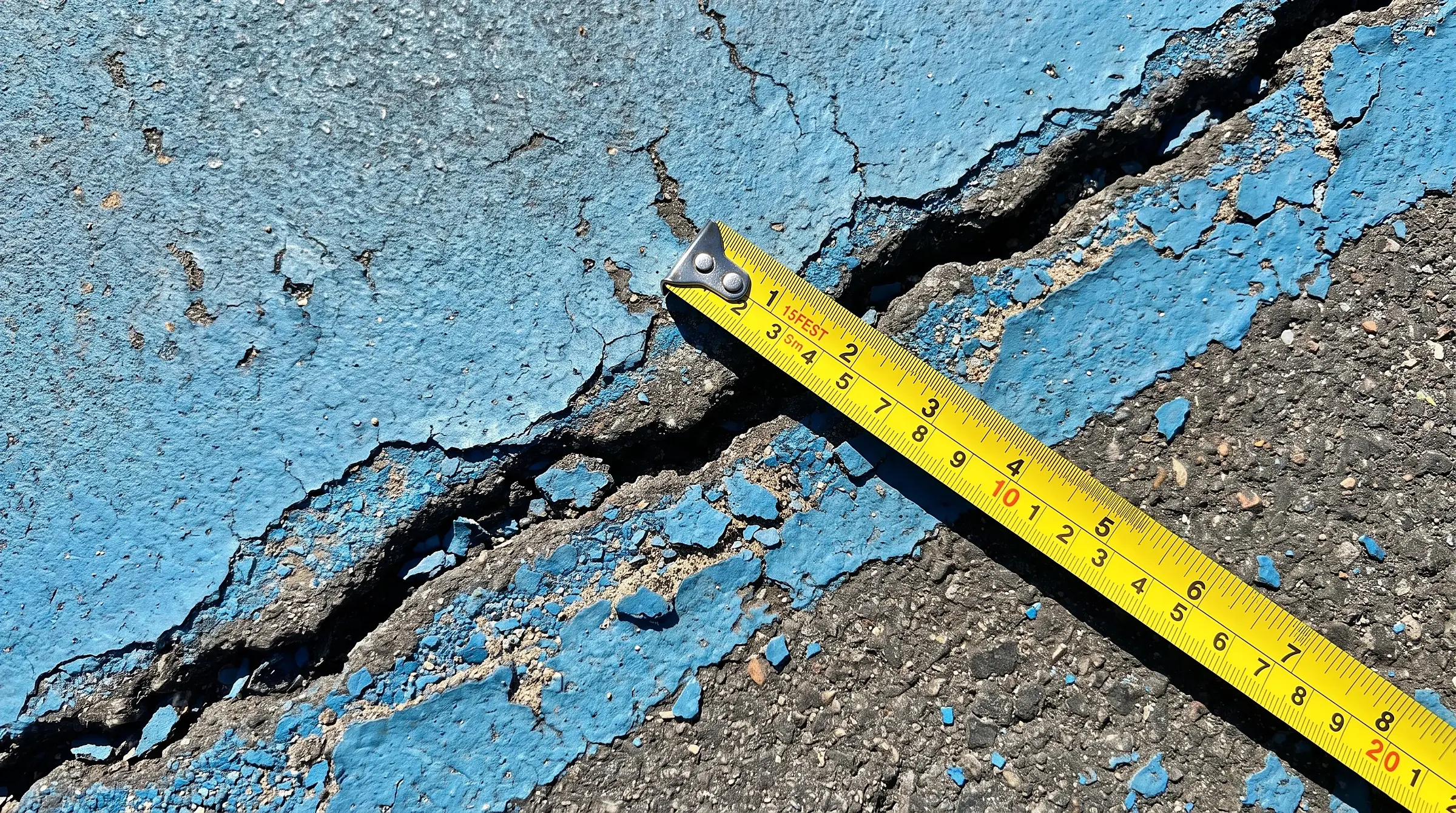
Not all cracks are created equal. During our assessment, we categorise surface defects into hairline shrinkage cracks, stress fractures or deep structural failures.
For routine court repairs across Sydney, we utilise specialised acrylic patch binders and flexible membrane systems designed to bridge minor movement. However, we maintain realistic expectations: resurfacing alone cannot permanently fix underlying sub-base subsidence or major active structural shifting. Identifying these limitations early prevents wasted investment and allows us to advise on the most practical long-term approach.
Previous Coatings and Surface History
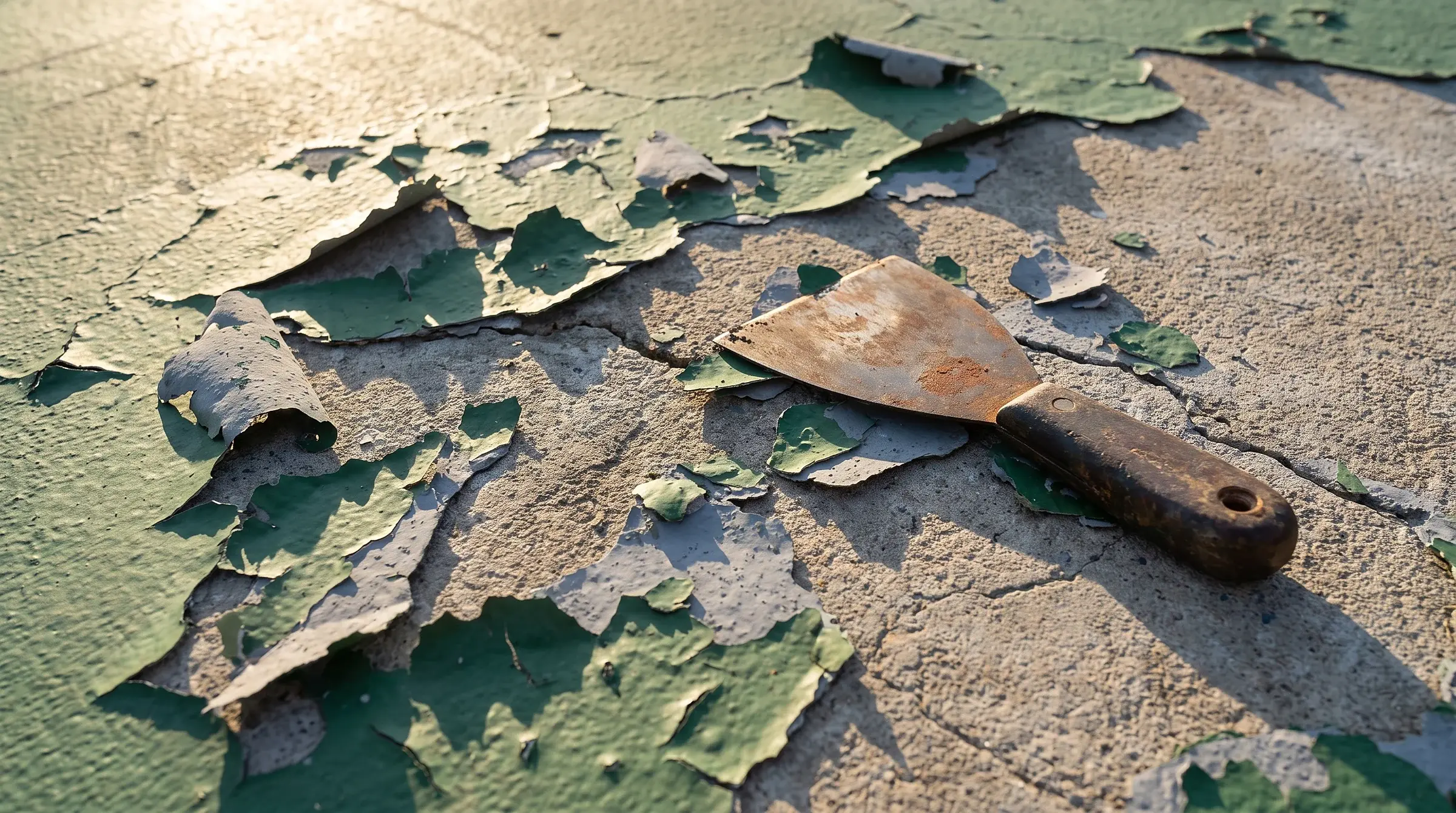
Understanding what is already on your court is vital. Has the court been previously restored using a professional acrylic system, or was it coated with an incompatible oil-based paint or silicone sealer?
Multiple layers of flaking paint or incompatible previous coatings impair adhesion. If existing layers are peeling or delaminating from the base, applying new acrylic coatings directly over them will cause the new surface to pull away. We test the existing surface's sound integrity to establish whether localised patching or complete mechanical grinding is required.
| Assessment Area | What We Look For | Why It Matters |
|---|---|---|
| Substrate Integrity | Concrete vs. asphalt, sound strength, chalking | Determines priming & prep protocol |
| Defect Analysis | Structural vs. hairline cracks, low spots | Selects correct repair compounds |
| Coating History | Layer count, existing adhesion, past paint types | Prevents delamination & coating failure |
| Water Dynamics | Pooling ('birdbaths'), slope, drainage runoff | Ensures safe play and weather resistance |
Drainage and Water Management
Sydney's weather patterns bring intense summer downpours and periods of lingering humidity. Water is the single greatest enemy of any outdoor sports surface.
During our assessment, we check for proper fall, localised depressions (often called 'birdbaths') and surrounding site drainage issues. Standing water breaks down acrylic binders, reduces traction and creates dangerous slippery zones. Identifying low areas allows us to level depressions using specialised acrylic levelling reserves prior to final resurfacing layers.
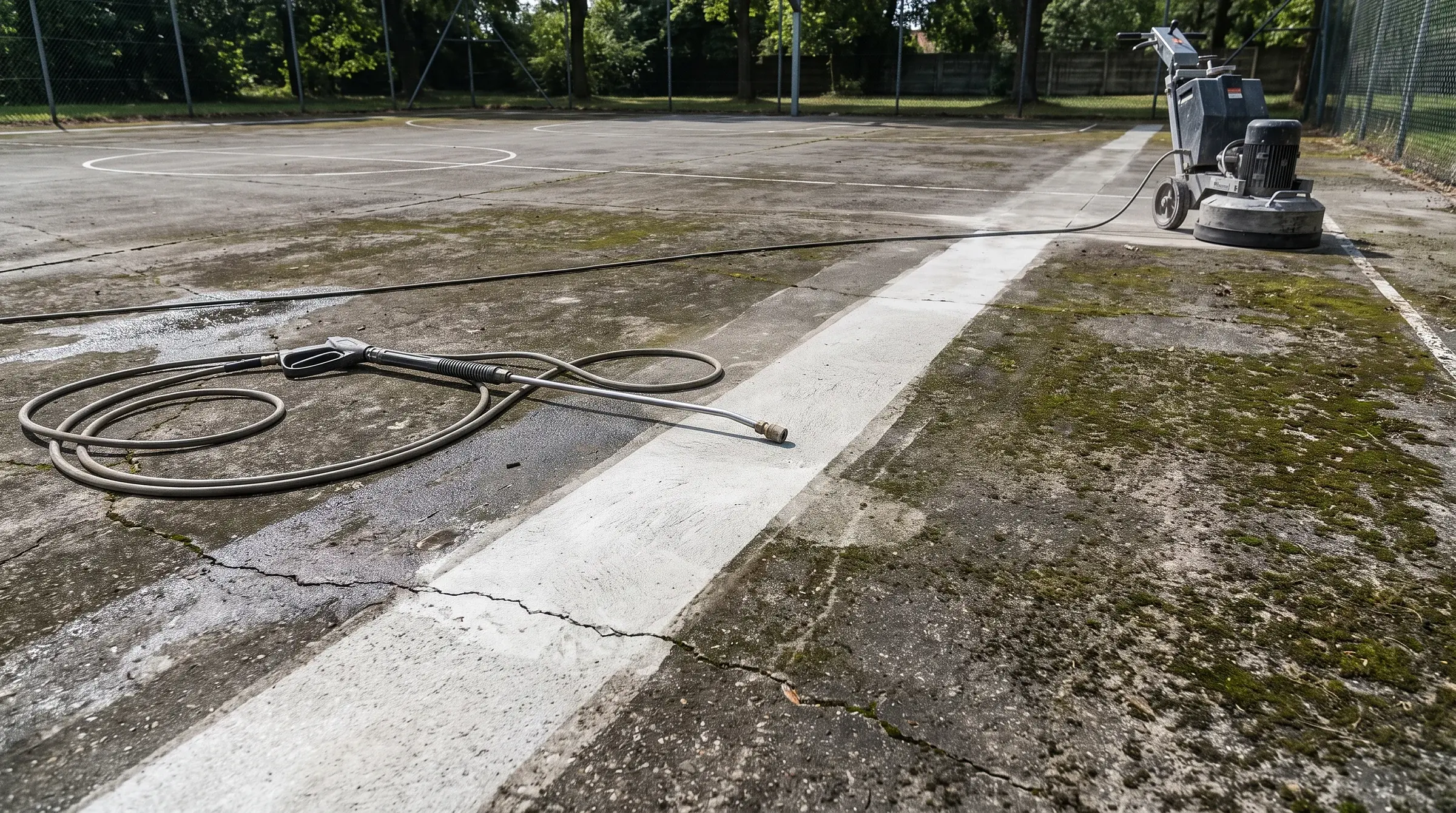
Surface preparation is the majority of the job. The colour coat is just the last ten percent you get to see.
Speedy Resurfacing
Cleaning and Preparation Requirements
Surface preparation accounts for the majority of a successful resurfacing job. We assess the level of accumulated organic matter, moss, algae, oils and atmospheric grime present on the court.
Before any new acrylic court resurfacing application begins, the court must be thoroughly decontaminated. Our assessment establishes whether the site requires high-pressure industrial washing, chemical mould treatment or mechanical scarification to create a clean, porous profile that guarantees maximum coating adhesion.
Intended Sport and Usage Requirements
How the court will be used dictates the texture, grit and resilience required in the resurfacing system. Different athletic disciplines demand distinct surface friction coefficients:
- Tennis court resurfacing Sydney: Requires a balanced, predictable pace and true ball bounce.
- Basketball court resurfacing: Demands exceptional traction for rapid directional changes, pivots and heavy footfall.
- Netball court resurfacing: Places supreme emphasis on non-slip safety during sudden stops to protect player joints.
- Multi-sport courts: Requires customised texture blends suitable for shared school and community recreational use.
Colour Schemes, Layout Configuration and Precision Markings
The final step of our pre-resurfacing assessment is visual and spatial planning. Modern courts are no longer restricted to traditional green and blue palettes. We assess how two-tone keyway designs, contrasting perimeter borders and custom branding can elevate the asset.
For facilities adapting an existing slab for multi-sport use — such as combining basketball, netball and pickleball — we evaluate spatial dimensions to design a clear, colour-coded line hierarchy. This ensures boundaries remain intuitive and clean without creating visual confusion for players.
Transform Your Sports Court with Sydney's Surface Specialists
Resurfacing an ageing sports court is an investment in your facility's safety, utility and visual presentation. By conducting a thorough site evaluation first, Speedy Resurfacing delivers custom-engineered surface solutions built to withstand Sydney's climate and heavy daily play. Whether managing a school oval court, a strata complex, a sports club or a private court, don't leave your surface restoration to chance.
Ready to evaluate your sports court? Send your name, mobile and email through the form below to arrange an expert site assessment — or run your court photos through our free Court Scan to get started. Call 0466 495 495 or email info@speedyresurfacing.com.au.
Frequently Asked Questions
Know a school, club or court owner who needs this?
Send them the article in one tap, and follow Speedy Resurfacing on Instagram @speedyresurfacing and Facebook for before-and-after court transformations across Sydney.